-
by sayum
22 August 2026 8:42 AM







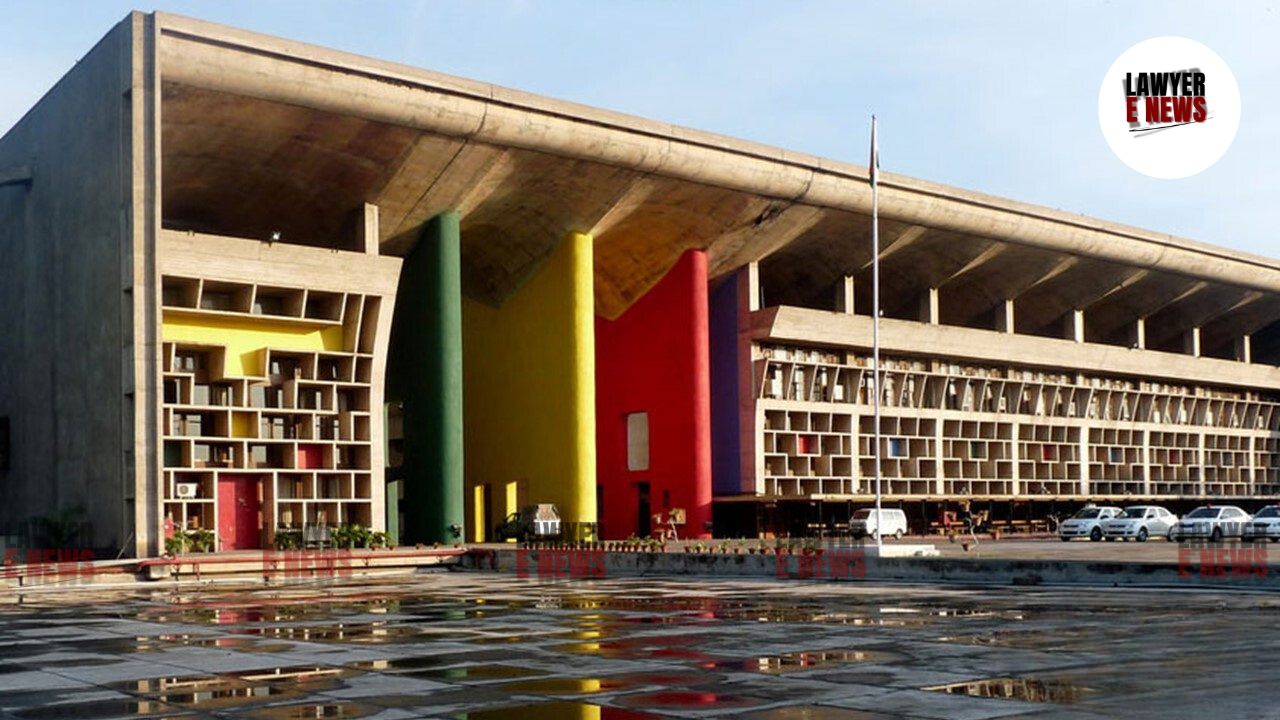
"Complaint to Police Is Not a Public Document Under Section 74 of the Indian Evidence Act" – Punjab and Haryana High Court held that a private complaint to the police does not qualify as a public document under Section 74 of the Indian Evidence Act, and a mere allegation of alteration in such a complaint does not disclose a prima facie cognizable offence. Accordingly, the Court allowed the criminal revision petition, setting aside the Additional Sessions Judge’s order which had remanded the matter for fresh consideration under Section 156(3) of the CrPC.
The Court restored the order of the Judicial Magistrate First Class, Gurugram, dated 11.06.2024, which had declined to direct the registration of an FIR, holding that the complaint failed to make out a cognizable offence and that the respondent was free to proceed under Sections 200 and 202 CrPC.
"At Best, a Case Under Section 465 IPC Is Made Out – Which Is Non-Cognizable": Court Refuses Registration of FIR for Alleged Tampering
Magistrate's Refusal to Order FIR Under Section 156(3) Was Lawful, Revisional Court's Intervention Unwarranted
The revision petition arose out of a dispute between a husband (respondent) and his wife (petitioner no. 1), and her father (petitioner no. 2). The respondent alleged that the petitioners had committed forgery by altering a complaint made to the police, which later formed the basis of FIR No.98 dated 07.05.2022 under Sections 498-A, 323, 406, 509, 313, 34 IPC. The core allegation was that Section 313 IPC (causing miscarriage without consent) was added later, amounting to forgery under Sections 420, 467, 468, 471, 120-B IPC.
The Judicial Magistrate declined to direct police investigation under Section 156(3) CrPC, holding that no prima facie cognizable offence was disclosed and that the complainant had adequate evidence in hand to pursue a private complaint. However, the Additional Sessions Judge, Gurugram, in revision, set aside this order and directed reconsideration.
Justice Subhas Mehla, however, found the revisional court had overstepped its jurisdiction:
“Even if for a moment, the complaint is considered to be a public document, at best a case under Section 465 IPC, as defined under clause ‘secondly’ of Section 464 IPC, could be made out — which is a non-cognizable offence,” the Court held at para 9, thereby rejecting the need for police investigation under Section 156(3) CrPC.
No Prima Facie Case Made Out for Cognizable Offence
The petitioners (wife and father-in-law) had originally filed FIR No. 98 against the respondent (husband), which was already at the stage of prosecution evidence. The respondent later, upon receiving copies of the original complaint through multiple RTI applications, alleged that Section 313 IPC had been inserted later by forgery.
He sought registration of FIR under Sections 420, 467, 468, 471 IPC, through an application under Section 156(3) CrPC. The Magistrate, while dismissing the complaint, observed that the complainant already had material to proceed under Sections 200 and 202 CrPC and that the allegations did not disclose a cognizable offence.
Complaint to Police Is Not a Public Document Under Section 74 of the Evidence Act
The core legal issue before the Court was whether a private complaint submitted to the police could be treated as a public document, and whether alleged tampering in such a document would give rise to a cognizable offence justifying FIR under Section 156(3) CrPC.
Justice Subhas Mehla categorically rejected this contention:
“The complaint made to the police is not a public document as per Section 74 of the Indian Evidence Act,” the Court held at para 7, relying on the Supreme Court’s ruling in Saurav Das v. Union of India, (2023) 11 SCC 154, which clarified that even a charge-sheet is not a public document.
Reproducing the relevant portion from the apex court’s judgment, the High Court noted:
“Copy of the chargesheet along with the necessary documents cannot be said to be public documents within the definition of public documents as per Section 74 of the Evidence Act. All other documents other than those mentioned in Section 74 are private documents.”
Thus, the High Court reasoned that a police complaint — which is even less formal than a charge sheet — could not be elevated to the status of a public document. Consequently, alleged interpolations in such a document could not attract the serious charges under Sections 467 or 468 IPC, which require that the forged document be one that creates or extinguishes legal rights.
Revisional Jurisdiction Cannot Be Used to Substitute Magistrate’s Opinion
Justice Mehla also addressed the limited scope of revisional powers, stating that the Additional Sessions Judge had erred in re-evaluating the facts and substituting the Magistrate’s well-reasoned conclusion with its own. Citing Amit Kapoor v. Ramesh Chander (2012) 9 SCC 460 and Chandra Babu v. State AIR 2015 SC 3566, the Court observed:
“Revisional jurisdiction should not be exercised merely because a different opinion is possible unless the findings are perverse or suffer from jurisdictional error,” said the Court in para 11 and 12, reiterating that interference by revisional courts is limited to "patent defect or error of law", and cannot be used to re-appreciate facts unless findings are manifestly arbitrary or unsupported by evidence.
No FIR Permissible Under Section 156(3) Where Offence Is Non-Cognizable
Reinforcing the settled principle that Section 156(3) CrPC applies only where a cognizable offence is disclosed, the Court relied on Madhao v. State of Maharashtra 2013 (2) RCR (Criminal) 975, to hold:
“If on a reading of the complaint, the Magistrate finds that the allegations disclose a cognizable offence... he will be justified in forwarding it for investigation. But if the offence is non-cognizable, as in the present case, such power cannot be exercised.”
Thus, the High Court held that at best, a Section 465 IPC offence (forgery) might be arguable, but that too is non-cognizable, and hence, FIR registration was impermissible under Section 156(3).
Final Verdict: Magistrate’s Decision Upheld, Revisional Order Quashed
Concluding the matter, Justice Subhas Mehla held:
“The revisional court erred in holding that an alteration in the police complaint constituted tampering with a public document. This averment is a matter of trial and not for decision under revisional jurisdiction.”
Accordingly, the High Court allowed the criminal revision petition, set aside the Additional Sessions Judge’s order dated 02.12.2024, and restored the Magistrate’s order dated 11.06.2024, thereby declining registration of FIR against the petitioners.
Date of Decision: December 1, 2025