Wife Is Absolute Owner Of Streedhan, Taking It Away Does Not Attract Criminal Breach Of Trust Under Section 406 IPC: Allahabad High Court Government Need Not Adjudicate If Employee Is 'Workman' Before Referring Dispute To Labour Court: Gujarat High Court Bidder Cannot Be Disqualified For Submitting Certificate From Unspecified Agency If Tender Document Is Silent: Delhi High Court Driver Clicking Selfies With Licensed Firearm Doesn't Make Owner Liable Under Arms Act: Punjab & Haryana High Court Quashes FIR High Court Imposes Blanket Ban On Tree Felling In Haryana, Cites Impending Ecological Catastrophe Due To Dismal Forest Cover No Fresh Summons Needed For Legal Heirs If Suit Was Already Proceeding Ex-Parte Against Deceased Defendant: Allahabad High Court Serving Judicial Officer's Anticipatory Bail Denied in Theft From Deceased Judge's Home: "No Person, Whatever His Rank, Is Above Law" Missing Murder Weapon Not Fatal When Eyewitnesses Are Reliable - Brother Stabs Brother: Tripura High Court Advocate and Cop Conspired to Frame Innocent Witness in Fake Gang Rape Case: Delhi High Court Upholds Conviction, Calls It "Clear Abuse of Process of Law" Direction To 'Act In Accordance With Law' Does Not Determine Substantive Rights, Non-Impleadment Not A Ground For Review: Chhattisgarh High Court State Cannot Grab Citizen's Land For Road Construction Pleading Delay And Laches: Himachal Pradesh High Court "Bail Is Rule, Jail Is Exception" Principle Does Not Apply Post-Conviction: Jharkhand High Court Failure To Furnish Written Grounds Of Arrest Renders Arrest Illegal, Entitles Accused To Bail In NDPS Case: Supreme Court Medical Certificate On Reverse Side Of Dying Declaration Does Not Affect Its Sanctity: Supreme Court Supreme Court Directs All State Capitals To Conduct Inquiry Into Misuse Of Residential Areas For Commercial Purposes Tolls Collected By NHAI On National Highways Fall Exclusively Under Union List: Supreme Court Family Courts Lack Jurisdiction To Transfer Cases Inter-Se Under Section 24 CPC: Rajasthan High Court Section 138 NI Act | Cheque Bounce Complaint Cannot Be Dismissed At Threshold Merely For Non-Production Of Postal Track Report: Madhya Pradesh High Court Departmental Dismissal Based On Identical Evidence Discarded By Criminal Court Amounts To 'No Evidence': Orissa High Court Kerala Lok Ayukta Amendment Upheld: High Court Rules Lok Ayukta Is Not A Court, Its Declaration Can Be Changed To Recommendation Chief Minister's Press Conference Assurance Not Legally Enforceable Without Formal Executive Order: Delhi High Court Irretrievable Breakdown Of Marriage Amounts To Cruelty, Court Cannot Grant Permanent Alimony Suo Motu: Calcutta High Court Minor Contradictions In Wife's Evidence Are Usual In Cruelty Cases, Do Not Vitiate Prosecution Under Section 498A: Kerala High Court

No Interim or Final Orders in Ongoing Worship Site Cases Until Further Notice: Supreme Court

12 December 2024 5:56 PM

By: Deepak Kumar


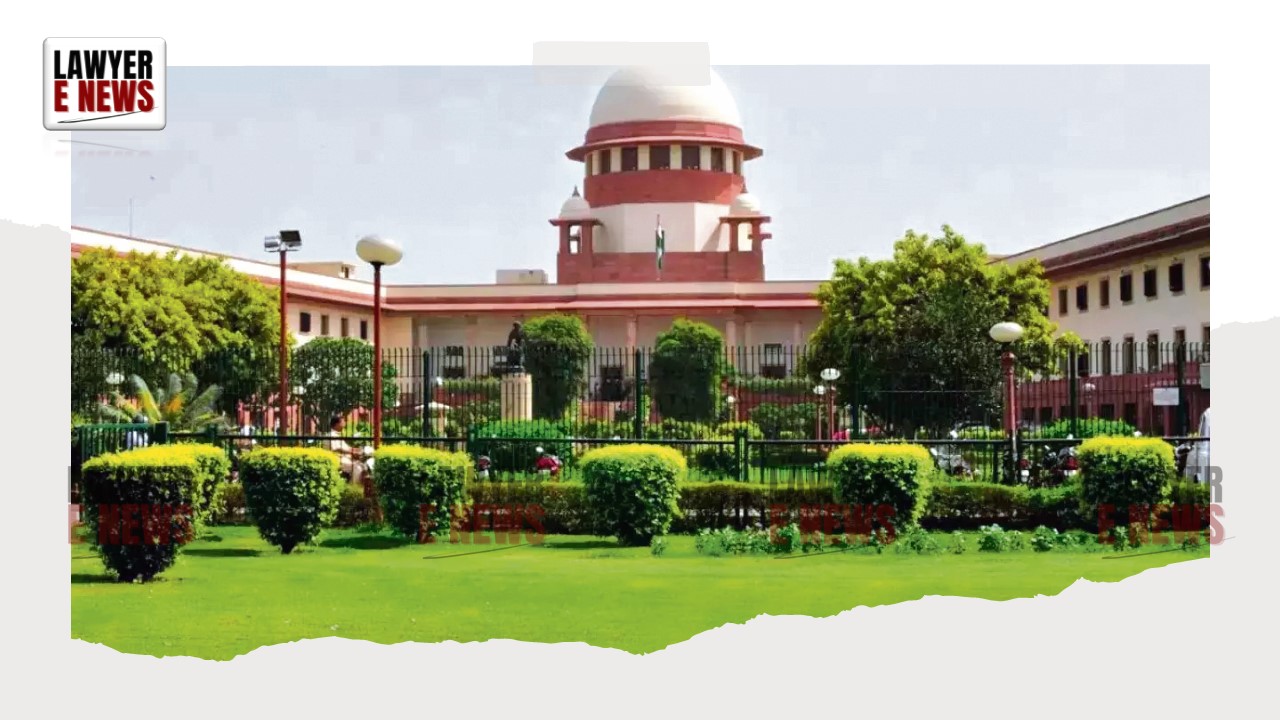
Supreme Court Halts Registration of New Suits Against Places of Worship Pending Further Orders

On Thursday, December 12, the Supreme Court issued a significant order prohibiting the registration of new suits concerning places of worship across the country until further notice. The directive aims to address the increasing number of legal disputes over religious sites.

The Court also restricted lower courts from passing effective interim or final orders, including survey orders, in ongoing cases such as those related to the Gyanvapi mosque, Mathura Shahi Idgah, and Sambhal Jama Masjid. This interim order was issued while hearing petitions challenging the Places of Worship (Special Provisions) Act, 1991.

The Court's intervention follows heightened tensions triggered by disputes over medieval mosques and dargahs. Notably, a trial court's survey order for a 16th-century mosque in Sambhal, Uttar Pradesh, led to violence in November, resulting in four deaths.

While staying new registrations, the Court declined to halt proceedings in existing cases. The Union Government was directed to submit its counter-affidavit within four weeks, with instructions to upload the document online for public access.

The bench noted that 18 suits are currently pending against 10 places of worship. During the hearing, Justice Viswanathan remarked on the constitutional questions involved, stressing the importance of judicial consistency: 

Civil courts cannot run parallel to the Supreme Court. There must be a stay to maintain coherence in judicial processes.

The Places of Worship Act, 1991, prohibits altering the religious character of any place of worship as it existed on August 15, 1947. The lead petition, filed by BJP leader Ashwini Kumar Upadhyay in 2020, challenges the Act's constitutional validity. Several similar petitions and a writ petition by Jamiat Ulema-i-Hind seeking the Act's implementation were also heard.

Political parties, including CPI(M), DMK, and NCP, have intervened to support the Act. Despite repeated extensions, the Union Government has yet to file its response.

The Act has gained renewed attention following the violence in Sambhal. Advocates Kanu Agarwal, Vishnu Shankar Jain, and Ejaz Maqbool were appointed as nodal counsel to compile submissions from the Union, petitioners, and parties supporting the Act.

Ashwini Kumar Upadhyay v. Union of India and Others (WP(C) No. 1246/2020)

A special bench comprising Chief Justice of India Sanjiv Khanna, Justice Sanjay Kumar, and Justice K.V. Viswanathan emphasized the need for judicial restraint. The bench stated: 

As the matter is sub-judice before this Court, we direct that while suits may be filed, no suits shall be registered or proceedings undertaken until further orders. In pending suits, no effective interim or final orders, including survey orders, should be passed until the next hearing.

Latest Legal News