-
by sayum
26 August 2026 6:42 AM







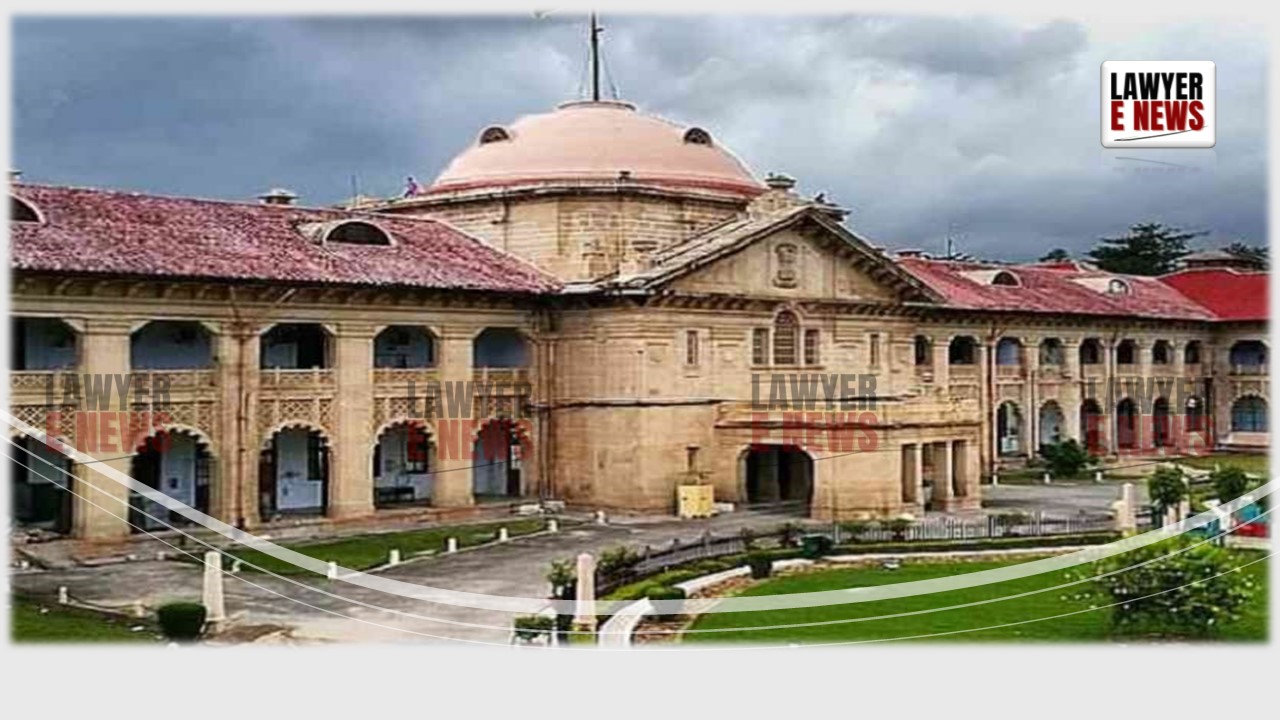
“Delay defeats equity—the State cannot seek shelter under red tape and file movements for over 15 years”, In a strongly-worded judgment reinforcing the finality of litigation and the equal application of the law of limitation, the Allahabad High Court dismissed a Review Petition filed by the State of Uttar Pradesh against a 2009 judgment, citing an inordinate and unexplained delay of 5743 days. The Court held that the State's explanation—centered around administrative procedures, legal opinions, and file movements—was a manifestation of “proverbial bureaucratic red-tapism” and did not amount to ‘sufficient cause’ under Section 5 of the Limitation Act, 1963.
Division Bench comprising Justice Neeraj Tiwari and Justice Vivek Kumar Singh categorically rejected the plea of condonation, holding that no separate standard of diligence applies to the State, and that litigation must end somewhere.
The Court noted that the Special Leave Petition (SLP) filed earlier against the same 2009 judgment had already been dismissed by the Supreme Court on 3 May 2024, not only for delay of 1633 days but also on merits, thus rendering the impugned judgment final and conclusive.
“State’s delay is a textbook case of manifest negligence and administrative apathy”: Court finds no justification for review after 15 years
The original case dated back to Writ Petition (C) No. 34974 of 2001, filed by Mohan Lal, in which he had sought mutation of land in his name following the repeal of the Urban Land (Ceiling and Regulation) Act, 1976. On 13 November 2009, the High Court had allowed the petition, holding that the land in question was not to be treated as ‘vacant land’ under the Urban Land (Ceiling and Regulation) Repeal Act, 1999, particularly in view of Section 3 of the said Act, and thus directed mutation in the petitioner’s favour.
That decision remained uncontested for nearly five years until the State filed an SLP in 2014, which was itself delayed by over four years (1633 days). The Supreme Court dismissed the SLP, finding no merit in the case and expressing clear displeasure at the lack of follow-up from the State authorities. Now, with a further delay of 489 days post the SLP dismissal, the State approached the High Court again—this time seeking review of the 2009 judgment.
The High Court was unequivocal in rejecting the State’s justification, observing:
“What has been stated in the affidavit reflects proverbial bureaucratic red-tapism wherein the Review Petitioners-State has attempted to take shelter in the usual functioning of the administrative machinery.”
The Court noted that the explanation for delay revolved around routine processes such as file movement, legal opinion from Advocate-on-Record, and inter-departmental communication, none of which qualified as sufficient cause. The explanation, according to the Bench, merely revealed a “casual and callous” approach.
“Litigants cannot fix their own limitation periods—Finality of litigation is not optional”: Review jurisdiction cannot override SC order
A striking feature of the case was that the same judgment had already been considered on merits by the Supreme Court, even while refusing to condone the delay. The Allahabad High Court emphasized that once the Apex Court has dealt with the matter, no High Court can indirectly overturn that by entertaining a review:
“We have observed that the Hon’ble Supreme Court has considered the merit of the case while passing the order dated 03.05.2024 and therefore, by allowing this Review Petition, we cannot review the judgment and order of Hon’ble Supreme Court.”
Accordingly, the Court held that allowing the Review Petition would be “tantamount to reopening a matter that has attained finality”, a step that would erode the judicial discipline mandated under Article 227 of the Constitution.
“Law shelters everyone under the same light—it should not be swirled for the benefit of the Government”: Reliance on Supreme Court precedents
The Court buttressed its findings with a host of Supreme Court precedents, reiterating that delay by Government departments is not entitled to automatic condonation. Citing the celebrated case of Office of the Chief Post Master General v. Living Media India Ltd. [(2012) 3 SCC 563], the Court recalled:
“All the government bodies… need to be informed that unless they have reasonable and acceptable explanation for delay… the usual explanation that the file was kept pending due to procedural red tape cannot be accepted.”
Further quoting from Union of India v. Central Tibetan Schools Admin [SLP (C) Diary No. 19846/2020], the Bench noted that the Supreme Court had openly criticized the government’s “preposterous” excuses, calling them “a mockery of justice” and lamenting the failure to ensure internal accountability despite repeated judicial warnings.
The High Court also invoked Basawaraj v. Special Land Acquisition Officer [(2013) 14 SCC 81] to reiterate:
“If a party is found to be negligent or lacks bona fides… there cannot be a justified ground to condone the delay.”
It concluded that the State’s conduct showed gross negligence and inaction, wholly unworthy of judicial indulgence.
“Condonation of delay is an exception—not a matter of routine or generosity”: Final relief denied
Relying on Union of India v. Jahangir Byramji Jeejeebhoy (D) [2024 SCC OnLine SC 489], the Court underlined that public interest cannot justify procedural lapses of such magnitude, particularly when private rights stand crystallized after decades of litigation.
The Court decisively held:
“The State has grossly failed to offer any proper explanation… the approach of the State all along has been casual and that of manifest negligence.”
Therefore, both the application seeking condonation of delay and the Review Petition itself were dismissed. The High Court made it clear that finality of litigation cannot be endlessly deferred at the whims of bureaucratic inefficiency.
In sum, the Allahabad High Court refused to condone the State’s delay of over 15 years in seeking review of a settled matter that had also been heard and dismissed by the Supreme Court. Emphasizing that “limitation binds everyone equally”, the Court sent a clear message: Government departments cannot expect indulgence when they are negligent, lackadaisical, or indifferent in pursuing legal remedies.
Date of Decision: 15 December 2025





