-
by sayum
25 August 2026 11:12 PM







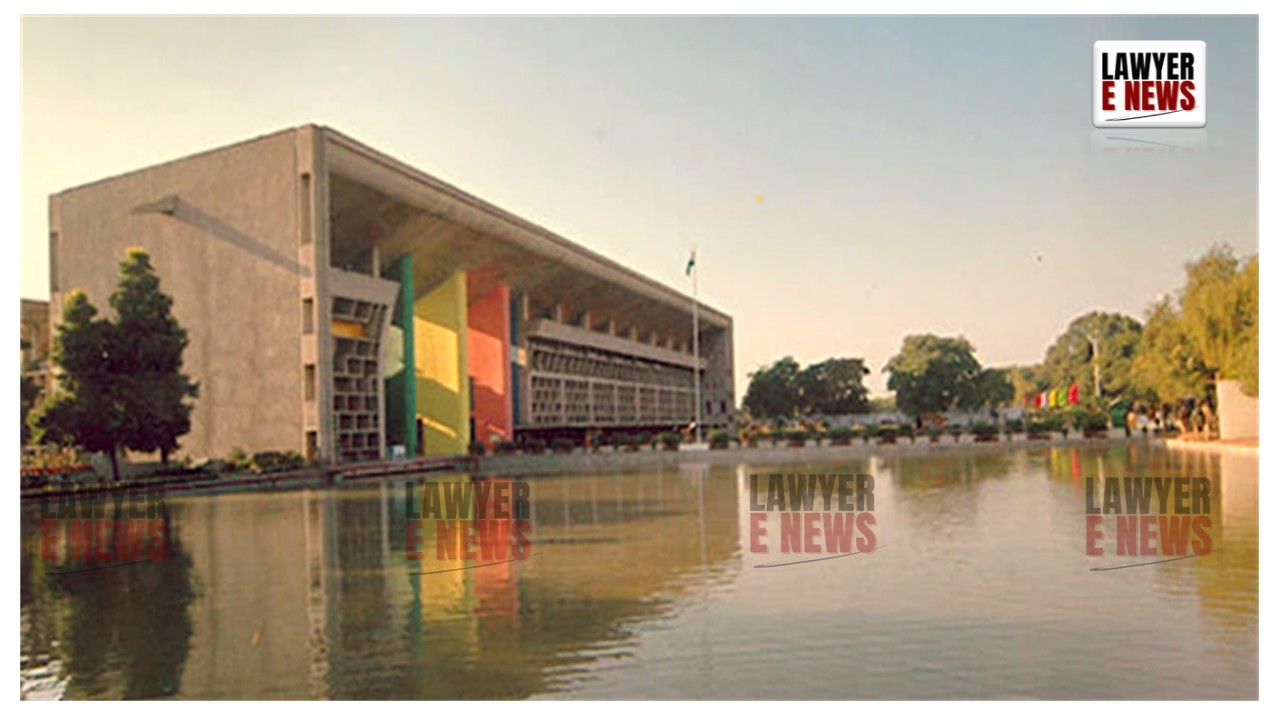
“Th e real victim is the deceased — consent of family members cannot substitute consent of the dead”, In a decisive and reasoned ruling on the limits of compromise-based quashing, the Punjab and Haryana High Court has held that an FIR registered under Section 106 of the Bharatiya Nyaya Sanhita, 2023 (corresponding to Section 304-A IPC) for causing death by rash and negligent driving cannot be quashed merely on the basis of a private settlement with the victim’s family.
Justice Sumeet Goel dismissed a petition under Section 528 of the BNSS, seeking quashing of FIR No.187 dated 04.09.2025 registered under Sections 281, 125(a), and 106 BNS, despite a compromise deed entered into by the petitioner with the complainant and family members of the deceased.
The Court categorically ruled:
“In offences involving death due to negligence, the deceased is the real victim. His consent is irreplaceable. A compromise with the family cannot extinguish the offence under Section 106 BNS, which remains a public wrong against society.” [Para 13]
Fatal Accident Led to Death of Rasid — Compromise Reached With Complainant’s Family
The case arose from an incident on 03.09.2025, when the petitioner allegedly caused a fatal road accident by driving rashly and hitting a motorcycle near Bharat Gas Agency in Yamuna Nagar. The accident resulted in the death of one Rasid and injuries to another person, Asad.
Subsequently, FIR No. 187/2025 was registered under Sections 281 (rash driving), 125(a) (causing hurt by rash act), and 106 BNS (causing death by negligence) at Police Station Jathlana, Yamuna Nagar.
The petitioner, Anmol, sought to quash the FIR and all subsequent proceedings on the basis of a compromise deed dated 14.11.2025, entered into with the complainant and family of the deceased.
Inherent Powers Cannot Be Used to Privatize Grave Offences — Section 528 BNSS to Be Exercised with Judicial Restraint
The petitioner invoked Section 528 of BNSS, which preserves the inherent powers of the High Court (analogous to Section 482 CrPC) to quash proceedings in the interest of justice. However, the Court emphatically reiterated that such powers must be exercised cautiously, especially when dealing with serious offences that affect public interest.
Justice Goel observed:
“The inherent powers of the High Court are aimed at securing the ends of justice. However, they cannot be misused to privatize criminal liability for serious public wrongs such as causing death by negligence. This would erode public confidence in the rule of law.” [Para 11.2]
Victimology and Societal Impact Cannot Be Ignored in Death Cases
In a compelling analysis on victimology and the moral limits of compromise, the Court held that in cases of death caused by negligence, the deceased is the true victim, and his inability to consent renders any compromise inconsequential.
Justice Goel wrote:
“In such cases, the FIR complainant or the deceased's legal heirs cannot substitute themselves for the deceased as the real victim. Their consent to settle the matter cannot extinguish the societal interest or the gravity of the offence.” [Para 13]
The Court cautioned that allowing quashing in such instances would send the dangerous message that penal consequences can be neutralized by pecuniary compensation, thereby trivializing the seriousness of the crime.
“The law cannot afford to be subjugated to the influence of wealth, lest it compromise its sacrosanct essence and institutional integrity.” [Para 13.2]
Supreme Court and High Court Precedents Bar Quashing in Section 106 BNS (304-A IPC) Cases
The judgment relied heavily on binding precedents, including the Supreme Court’s landmark decisions in:
Daxaben v. State of Gujarat, (2022) AIR SC 3530
State of M.P. v. Laxmi Narayan, (2019) 5 SCC 688
Narinder Singh v. State of Punjab, (2014) 6 SCC 466
Gian Singh v. State of Punjab, (2012) 10 SCC 303
As well as a Division Bench ruling of the same High Court in Baldev Singh v. State of Punjab, where it was held that compromise-based quashing is impermissible in 304-A IPC cases.
Reiterating this view, Justice Goel noted:
“The jurisprudence is crystal clear — FIRs involving offences under Section 304-A IPC / 106 BNS cannot be quashed solely on the basis of compromise with the legal heirs.” [Para 15]
The Court further emphasized that while quashing on merits is maintainable, a plea founded solely on compromise with the family is legally unsustainable.
“Even if a plea on merits is raised, that is to be adjudicated separately. But quashing based purely on compromise with the surviving relatives is impermissible.” [Para 14]
Petition Dismissed — Trial to Proceed Uninfluenced by Observations
In conclusion, the Court held that the petition lacked merit, and declined to quash the FIR. It made it clear that the ongoing investigation/trial should continue uninfluenced by the present ruling, which only adjudicated on the narrow issue of compromise.
The operative directions read:
“The petition in hand is dismissed. FIR No.187 dated 04.09.2025 under Sections 281, 125(a), 106 BNS and proceedings arising therefrom are not quashed. Observations made shall not affect the merits of the case. Pending applications stand disposed of.” [Para 9]
Date of Decision: December 11, 2025