-
by sayum
26 August 2026 6:42 AM







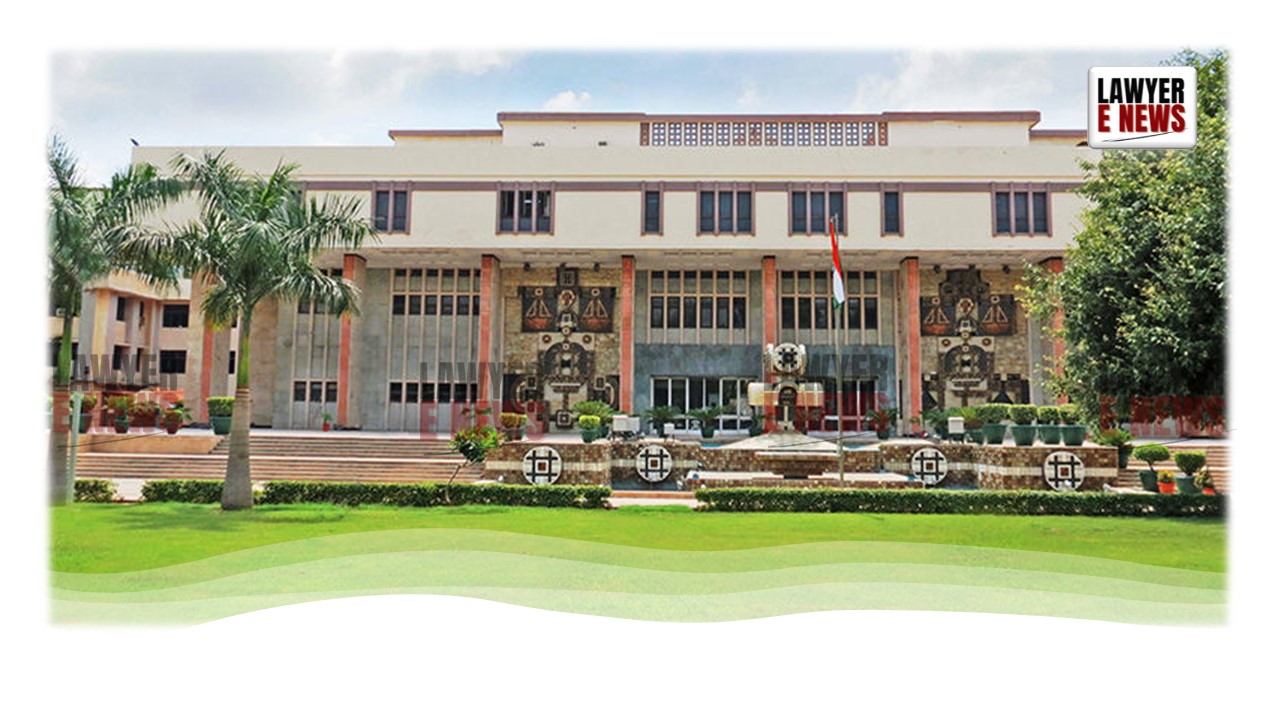
"A Petition Based on Fabricated Documents Without the Petitioner's Knowledge Is Not Just an Abuse—It's a Fraud on the Court", Delhi High Court, in a scathing ruling delivered by Justice Mini Pushkarna, dismissed a writ petition in Adity Shivcharan Rathod v. Municipal Corporation of Delhi & Ors., uncovering a disturbing misuse of judicial process involving impersonation, forged documents, and a potential racket involving advocates. The Court found that the petition was filed without the petitioner’s knowledge or consent, using forged property papers and misused Aadhaar credentials, and ordered criminal and professional misconduct investigations into the advocates involved.
The case has now triggered formal directions to the Delhi Police and the Bar Council of India (BCI) to investigate the forgery, impersonation, and serious breaches of legal ethics allegedly committed in filing this petition.
"Fraud on the Court Cannot Be Tolerated: Judicial Process Must Be Protected from Abuse"
The writ petition purportedly filed by Adity Shivcharan Rathod sought action against alleged unauthorized construction in Zakir Nagar, Delhi. However, what began as a routine PIL soon unravelled into a blatant fraud. On investigation, it came to light that Ms. Rathod had neither filed the petition nor owned the property mentioned.
The Court emphasized: “The present petition has been filed on the basis of forged documents, without any authorization from the petitioner.” This finding was supported by a Status Report filed by the DCP (South-East) which revealed that Ms. Rathod had no knowledge of the petition, denied all property claims, and confirmed misuse of her Aadhaar and forged documentation.
The Status Report reproduced by the Court showed that forged General Power of Attorney (GPA), Agreement to Sell, and other documents dated 16 July 2010 had been fabricated and submitted in support of the writ. Ms. Rathod categorically denied all signatures and knowledge of the transaction, asserting her identity was misused by "unknown persons" to pursue litigation with ulterior motives.
“The Legal Profession Is Not Immune from Criminal Accountability” — SC Judgment Cited on Role of Advocates
In addressing the involvement of advocates, the Court relied heavily on the Supreme Court's recent judgment in Bhagwan Singh v. State of Uttar Pradesh, (2025) 6 SCC 416, where it was held:
“To assist in creating false documents and to use them as genuine in court proceedings is a fraud not just on the litigants but on the courts themselves… No court can allow itself to be used as an instrument of fraud.”
The High Court noted that the named counsel in the present petition, Ms. Awanitika, had admitted to taking the matter from another lawyer, Mr. Suraj Singh, who allegedly introduced her to such cases in the Delhi High Court. While Ms. Awanitika was traced and examined, Mr. Suraj Singh remains untraceable, raising further red flags.
Quoting the Supreme Court, the Delhi High Court emphasized: “The Bar being an integral part of the justice delivery system… lawyers are responsible officers of the court and crucial for preserving the independence of justice.”
Highlighting the growing erosion of legal ethics, the Court directed the Bar Council of India to initiate proceedings under the Advocates Act, 1961, against the involved counsels, stating: “No professional, much less legal professional, is immune from being prosecuted for his/her criminal misdeeds.”
The BCI was directed to trace Mr. Suraj Singh, and if necessary, coordinate with the DCP South-East District, New Delhi, who has been ordered to cooperate fully with the BCI in tracing records and persons responsible.
Multiple Petitions Filed Using Similar Forged Documents
Justice Pushkarna also noted that this was not an isolated incident. Multiple writ petitions had been filed using similar forged documents and nearly identical claims of ownership. These included petitions filed under the names of “Jyoti”, “Seema”, and “Pushpa Pandey”, all targeting alleged unauthorized constructions and all strangely based on the same property transaction narrative.
This indicated a deliberate and systemic misuse of the High Court's PIL jurisdiction for personal, and possibly fraudulent, objectives. The Court remarked:
“The petitioner has approached this Court with unclean hands.”
Significantly, in one of these petitions—W.P.(C) 12607/2025, also under the name Adity Shivcharan Rathod—the same set of fabricated documents was used, and the petitioner had claimed ownership of yet another property, again falsely.
FIR Directed Against Those Responsible for Misuse of Aadhaar and Forged Pleadings
The Court ordered the police to lodge an FIR and continue their investigation to unearth the full chain of individuals involved, including those responsible for manufacturing forged documents and misusing Ms. Rathod’s Aadhaar identity.
“The police is directed to carry out further proceedings in accordance with law, including lodging of FIR and subsequent appropriate proceedings,” the Court ordered.
Construction Issue Rendered Moot — MCD Directed to Follow Tribunal’s Stay
While the fraudulent petition was dismissed, the Court noted that the Appellate Tribunal of the MCD (ATMCD) had already stayed action on the disputed property via order dated 27 October 2025. Hence, the MCD was directed to proceed in accordance with that order, making the present writ unnecessary and moot in any case.
Petition Dismissed, Fraud Unveiled, Profession Under Scrutiny
In conclusion, the Delhi High Court has sent a strong message against fraudulent litigation, particularly misuse of identity, forged documents, and abuse of PILs by unscrupulous actors within the legal profession.
Justice Mini Pushkarna’s order, drawing upon the Supreme Court’s clear stance, reasserted the judiciary’s duty to preserve its sanctity:
“A petition or an affidavit containing a misleading and/or inaccurate statement, only to achieve an ulterior purpose, amounts to an abuse of process of the court.”
The matter now lies before the police and the Bar Council of India for criminal prosecution and disciplinary action. The case stands as a potent reminder that abuse of court processes will not go unchecked, especially when the legal profession itself is implicated in such acts of deception.
Date of Decision: 11 December 2025