-
by sayum
24 August 2026 6:22 AM







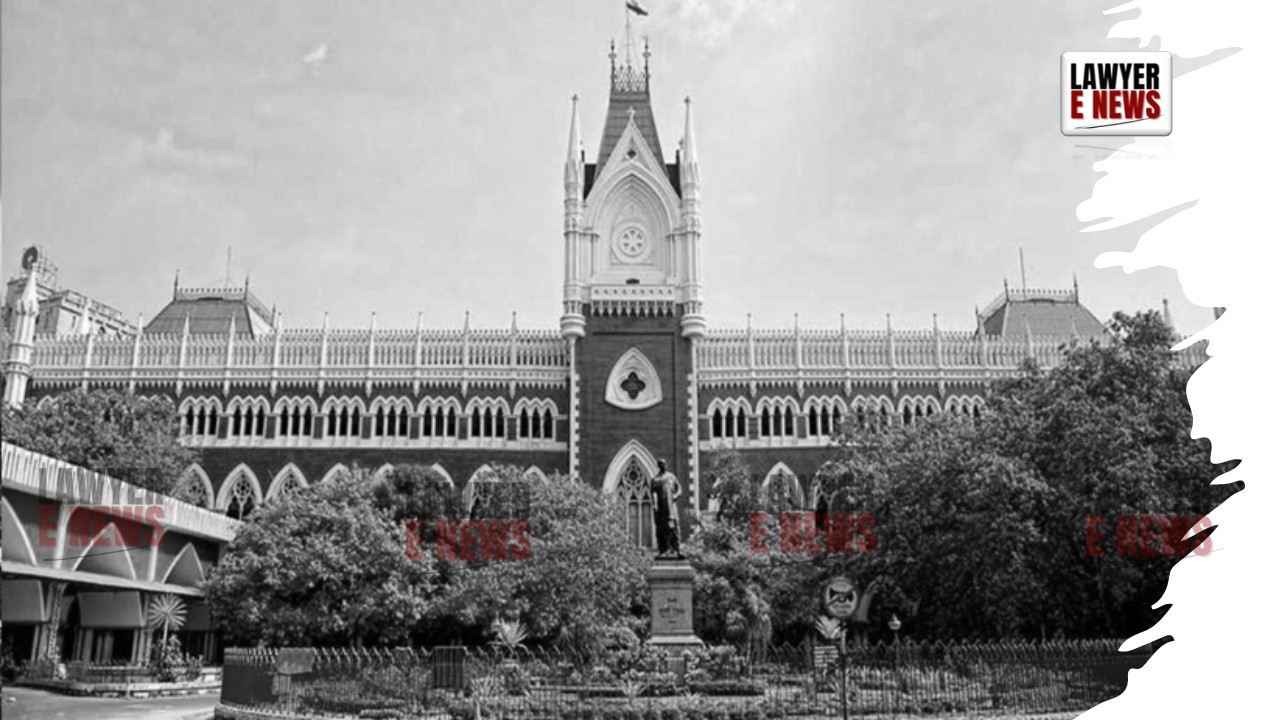
Calcutta High Court allowed the All India Secular Front (ISF) to hold a public meeting at Shahid Minar Maidan, Kolkata, on January 21, 2025. Justice Tirthankar Ghosh, while hearing W.P.A. No. 1390 of 2025, balanced the petitioners' constitutional rights under Article 19(1)(a) and 19(1)(b) of the Constitution with concerns raised by the State about public order and prior instances of violence.
The High Court granted permission for the assembly but imposed strict conditions to ensure public order and minimize disruption.
Balancing Fundamental Rights and Public Order
The case arose after the Kolkata Police denied permission to the ISF for holding a public meeting at Shahid Minar Maidan, citing prior incidents of violence during their rally in 2023 and logistical concerns due to an international cricket match scheduled at Eden Gardens the following day.
The ISF challenged the denial, asserting their constitutional rights to free speech and peaceful assembly under Article 19(1)(a) and (b). They argued that a political party's right to engage with the public could not be curtailed indefinitely based on a single incident.
The State contended that past violence involving ISF supporters justified restrictions and proposed holding the event at an indoor venue instead.
Constitutional Law – Freedom of Speech and Assembly – Article 19
The Court reaffirmed that the right to hold public meetings and rallies is essential in a democracy but noted that such rights are subject to reasonable restrictions under Article 19(2).
Court's Observation: "One incident of violence cannot indefinitely deprive a political party of its constitutional rights. However, Article 19 rights are not absolute and must be balanced against public order and the convenience of the public."
Citing Amit Sahni (Shaheen Bagh, In Re) v. Commissioner of Police, (2020) 10 SCC 439, the Court emphasized that peaceful protests and assemblies must be held at designated locations and cannot disrupt public ways or order.
The Court criticized the Kolkata Police for failing to consider ISF's conduct during their 2024 assembly. It observed that there were no reported incidents of violence or misconduct during the event held in 2024, which indicated the party's ability to conduct peaceful assemblies.
Key Observation: "The State cannot arbitrarily deny permission without considering recent conduct or relying solely on past incidents of violence. Police discretion must be exercised reasonably and proportionately to balance constitutional rights and public order."
Public Order and Fundamental Rights – Conditions Imposed
The Court allowed the petitioners to hold their public meeting but imposed the following conditions to balance their rights with public order:
Attendance Limit: The assembly was restricted to 3,000 participants.
Venue Compliance: The meeting must take place from 12:00 p.m. to 4:30 p.m. at Shahid Minar Maidan, adhering to police-prescribed routes and designated parking spaces (limited to 30 cars).
Exclusion of Implicated Persons: Individuals implicated in prior violence-related cases were barred from attending.
Noise and Public Order Regulations: Petitioners must ensure compliance with noise pollution rules and avoid public inconvenience.
Police Supervision: The event was to be supervised by adequate police personnel, who could intervene and terminate the meeting in case of any untoward incident.
The Court addressed the State’s reliance on violence during ISF's 2023 rally, where supporters allegedly blocked roads, assaulted police officers, and damaged property. It noted that the 2024 event served as a "litmus test" of ISF's ability to conduct peaceful assemblies and found no evidence of misconduct during that year.
Court's Finding: "Past incidents cannot serve as a perpetual basis for denying constitutional rights. The petitioners have demonstrated responsible conduct in 2024, warranting the opportunity to hold their assembly with safeguards."
The Court disposed of the writ petition by permitting the ISF to hold their public meeting at Shahid Minar Maidan on January 21, 2025, subject to compliance with the imposed conditions. It reiterated that both the petitioners and the police must ensure public order and adhere to the stipulated guidelines.
Operative Part of the Judgment: "The petitioner, being a political party, is entitled to reach the people. However, the right to freedom of speech and assembly is not unilateral and must conform to reasonable restrictions to safeguard public order. The petitioners must conduct their meeting responsibly, as they are answerable to the citizens of the State for their actions."
This judgment reaffirms the judiciary's role in protecting constitutional rights while ensuring that public order is not compromised. By permitting the ISF's assembly with stringent safeguards, the Calcutta High Court struck a balance between democratic freedoms and societal interests.
Decision Date: January 20, 2025