Lethargy Is Not an Exceptional Circumstance: Punjab & Haryana High Court Upholds Striking Off of Defence for Delay in Filing Written Statement Vague Decree of Injunction Can’t Be Executed by Attaching Machines: Rajasthan High Court Strikes Down Execution Order Mere permission to join proceedings without allowing filing of written statement is illusory: Punjab & Haryana High Court Sets Aside Ex Parte Proceedings Unregistered Power of Attorney Can’t Transfer Property: MP High Court Denies Title, Dismisses Ejectment Suit Mere Non-Recovery of Weapon Is Not Fatal When Circumstantial and Medical Evidence Prove Guilt Beyond Doubt: Allahabad High Court Failure to Examine Gazetted Officer and Magistrate Who Certified Seizure Goes to Root of Fair Trial Under NDPS Act : Calcutta High Court Tender Years Doctrine Is No Longer Good Law: Delhi High Court Slams Mother’s Custody Claim Built on Parental Alienation Negation of Bail is the Rule in NDPS Cases Involving Commercial Quantity: Himachal Pradesh High Court Denies Bail Single Stab Injury in Heat of Passion During Sudden Quarrel Is Not Murder: Kerala High Court Section 10 CPC Inapplicable To Labour Court Proceedings; Stay Of Individual Disputes Denied: Karnataka High Court 138 NI Act | Once Issuance and Signature on Cheque Are Admitted, Burden Shifts on Accused to Dislodge Statutory Presumption: Madras High Court Confession Cannot Substitute Proof: Bombay High Court Acquits Husband Convicted of Wife’s Murder "Sole Eyewitness Testimony, Corroborated by Medical and Recovery Evidence, Is Enough to Sustain Conviction Under Section 302 IPC: Allahabad High Court Partition Once Effected Cannot Be Reopened on Vague Allegations of Fraud: Andhra Pradesh High Court Upholds Registered Family Partition Deed Cancellation of Land Acquisition Compensation Without Allegation or Hearing Is Arbitrary: Supreme Court Restores Compensation to Innocent Land Owner Whether Act Was in Discharge of Official Duty Is a Question of Fact — Magistrate, Not High Court, Must Decide: Supreme Court Restricts Writ Interference in BNSS Cases Section 175(4) BNSS | Affidavit Is Not Optional — Even Complaints Against Public Servants Must Follow Procedural Rigour: Supreme Court Magistrate Cannot Be Directed to Recall His Judicial Order by a Writ Court: Supreme Court Warns Against Article 226 Interference in Pending Criminal Proceedings Even In Absence of Written Demand, If Substantial Dispute Exists or Is Apprehended, Reference Under Section 10 ID Act Is Valid: Supreme Court Absence of Classical Signs of Strangulation and Possibility of Hanging Nullifies Homicidal Theory: Supreme Court Holds Medical Evidence Alone Cannot Prove Guilt Confession Must Be Direct Acknowledgment of Guilt, Not Mere Presence at Scene: Supreme Court Slams Misuse of Section 164 CrPC Reversal of Acquittal Without Dislodging Trial Court’s Reasoning Is Impermissible: Supreme Court Restores Acquittal

“Imprisonment for Life in 28-Year-Old Case: ‘Awarding Death Sentence Would Not Be Appropriate,’ Rules Supreme Court”

07 May 2024 8:19 AM

By: Admin


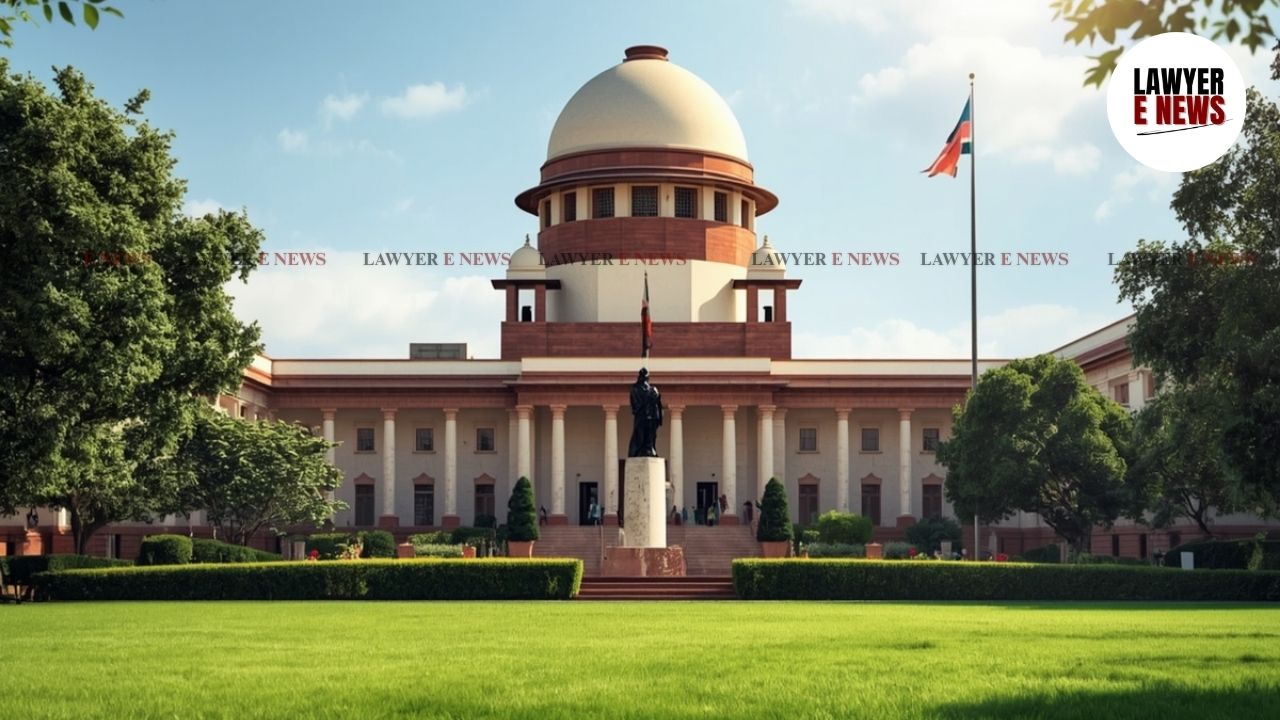
In a significant ruling, the Supreme Court of India today overturned the acquittal of respondent no.2, convicting him under Section 302 and 307 of the Indian Penal Code (IPC). The Court stated, “Considering the facts and circumstances of the case... awarding death sentence would not be appropriate,” settling for life imprisonment and rigorous imprisonment of seven years.

The Bench, comprising Justices SANJAY KISHAN KAUL, ABHAY S. OKA, and VIKRAM NATH, highlighted the age of the case, stating it dated back to the year 1995. They deemed a death sentence to be disproportionate given the case’s age, thereby sentencing the accused to life imprisonment under Section 302 IPC and a fine of Rs. 20 lacs. For the offense under Section 307 IPC, the Court ordered a 7-year rigorous imprisonment along with a fine of Rs. 5 lacs.

The Court took a unique stance on the fine distribution, mentioning that “the fine has been awarded considering the shocking facts and circumstances of the case.” It used Section 357 of the Code of Criminal Procedure (CrPC) to direct that the fine be utilized for compensating the victim’s family and the legal heirs of the deceased.

Adding a further twist, the Court criticized the State’s role in the prosecution. It remarked, “We are not inclined to grant any such expenses to the State considering the fact that the State, in fact, did not prosecute the case fairly, rather throughout assisted the accused.” Consequently, additional compensation was awarded under Section 357-A of the CrPC.

In terms of compliance, the Court ordered the fine and compensation to be deposited within two months, with a compliance report due in four months. The appeal was disposed of as per the guidelines, wrapping up this long-standing case.

Date of Decision: 01 September 2023

HARENDRA RAI vs THE STATE OF BIHAR & ORS.

Latest Legal News