-
by sayum
04 August 2026 1:39 PM







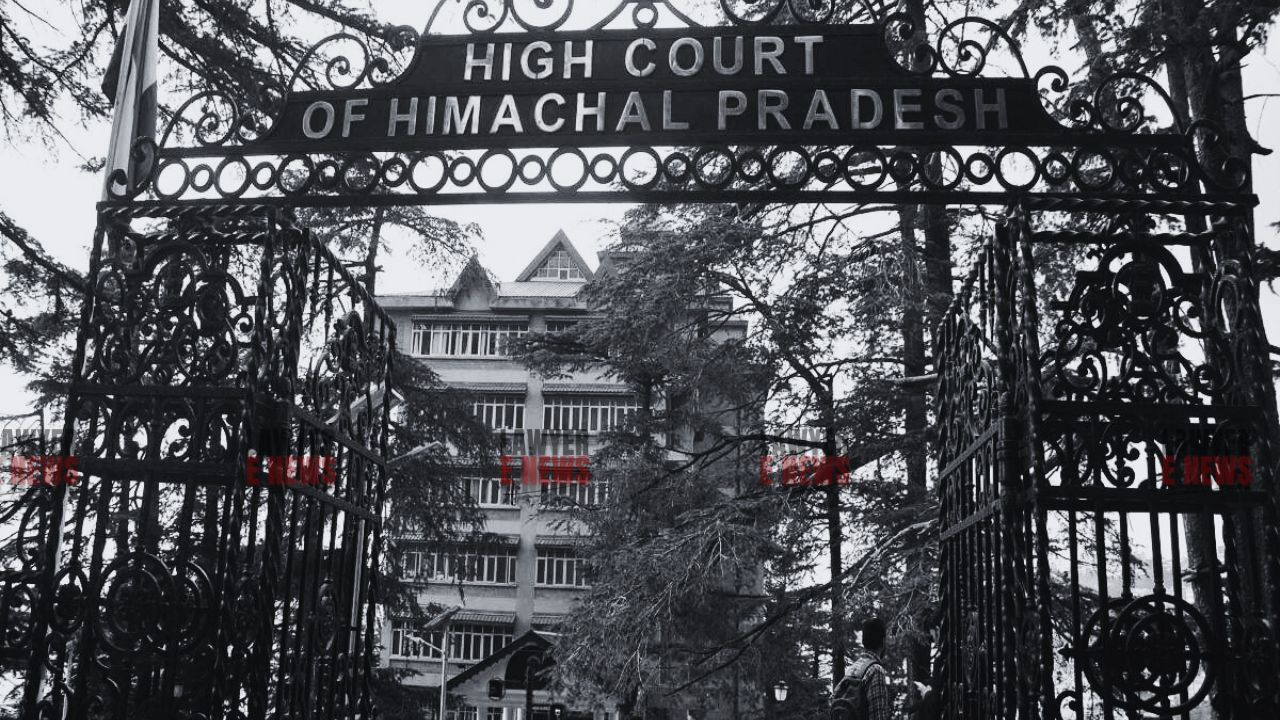
“Section 482 CrPC is not intended to permit a mini-trial… the trial court alone is competent to evaluate the truthfulness of allegations once chargesheet is filed” — Himachal Pradesh High Court refused to quash criminal proceedings against a retired Army personnel accused of submitting forged documents to secure his recruitment into the Indian Army. High Court held that once a chargesheet has been filed, it is not open to the High Court to assess the genuineness of evidence or entertain fresh documents. Justice Rakesh Kainthla ruled that “it is impermissible to quash the FIR on the ground of mala fide when the investigation has resulted in a chargesheet and the matter is seized of by the trial court.”
The petitioner, Hira Singh, approached the Court seeking quashing of FIR No. 0034/2022, registered under Sections 420, 467, 468, and 471 IPC, which alleged that he had submitted fake educational certificates at the time of his recruitment into the Indian Army in 1984. The FIR was lodged by his neighbour, allegedly in retaliation after the petitioner had filed a civil suit and lodged official complaints against the informant regarding an encroachment and illegal construction.
Hira Singh claimed that he was educated up to the 6th standard and had served the Indian Army for 17 years with distinction. He stated that his educational certificates had been lost in an accident and that a local teacher had provided a certificate affirming his education. He argued that the complaint was false, driven by personal enmity, and that the Army itself had validated his documents at the time of enrollment.
The prosecution, however, produced school records from 1971 to 1994 which did not reflect Hira Singh’s name. It argued that the petitioner had failed to produce any original documents and was unable to substantiate his educational qualifications, resulting in a charge-sheet being filed.
Justice Kainthla made it clear that the High Court’s powers under Section 482 CrPC are limited and must be exercised sparingly. Referring to the Supreme Court’s judgment in MCD v. Ram Kishan Rohtagi, he held: “Proceedings against an accused in the initial stages can be quashed only if, on the face of the complaint or the papers accompanying the same, no offence is constituted… it is not permissible to add or subtract anything.”
The Court stressed that it cannot go into the reliability or truthfulness of allegations at this stage. Citing Mahendra K.C. v. State of Karnataka, Justice Kainthla reiterated: “The test to be applied is whether the allegations in the complaint, as they stand, without adding or detracting, prima facie establish the offence alleged… the High Court cannot test the veracity of the allegations.”
On the argument that new documents prove innocence, the Court was emphatic: “Fresh evidence is not permissible under Section 482 CrPC… such a petition cannot be converted into a full-dressed trial.”
On Allegations of Mala Fide and Civil Dispute:
Rejecting the petitioner’s plea that the FIR was a counterblast to pending civil litigation, the Court held: “The plea of mala fide may not per se form the basis for quashing the FIR… when sufficient material has been gathered and a chargesheet is filed, the question of mala fide becomes meaningless.”
Referring to Ramveer Upadhyay v. State of U.P., the Court noted: “A criminal prosecution, if otherwise justified and based upon adequate evidence, does not become vitiated on account of mala fides or political vendetta of the informant.”
Justice Kainthla concluded that the trial court was now the correct forum to test the petitioner’s defence, observing: “Although the petitioner relies heavily on a letter from the Army, the authenticity of this letter has not been established and is a matter for trial… the truthfulness or otherwise of the allegations cannot be determined in a Section 482 petition.”
Reinforcing the settled principle that the High Court should not usurp the role of the trial court by assessing evidence or investigating competing claims of truth, the Himachal Pradesh High Court declined to quash the FIR and charge-sheet. The Court concluded that the petition disclosed no exceptional circumstance warranting interference under Section 482 CrPC.
“The FIR discloses the commission of cognizable offences, and it cannot be quashed at this stage… the trial court is now the appropriate authority to determine the matter based on evidence.”
Date of Decision: 08 May 2025