
-
by sayum
25 August 2026 12:32 PM







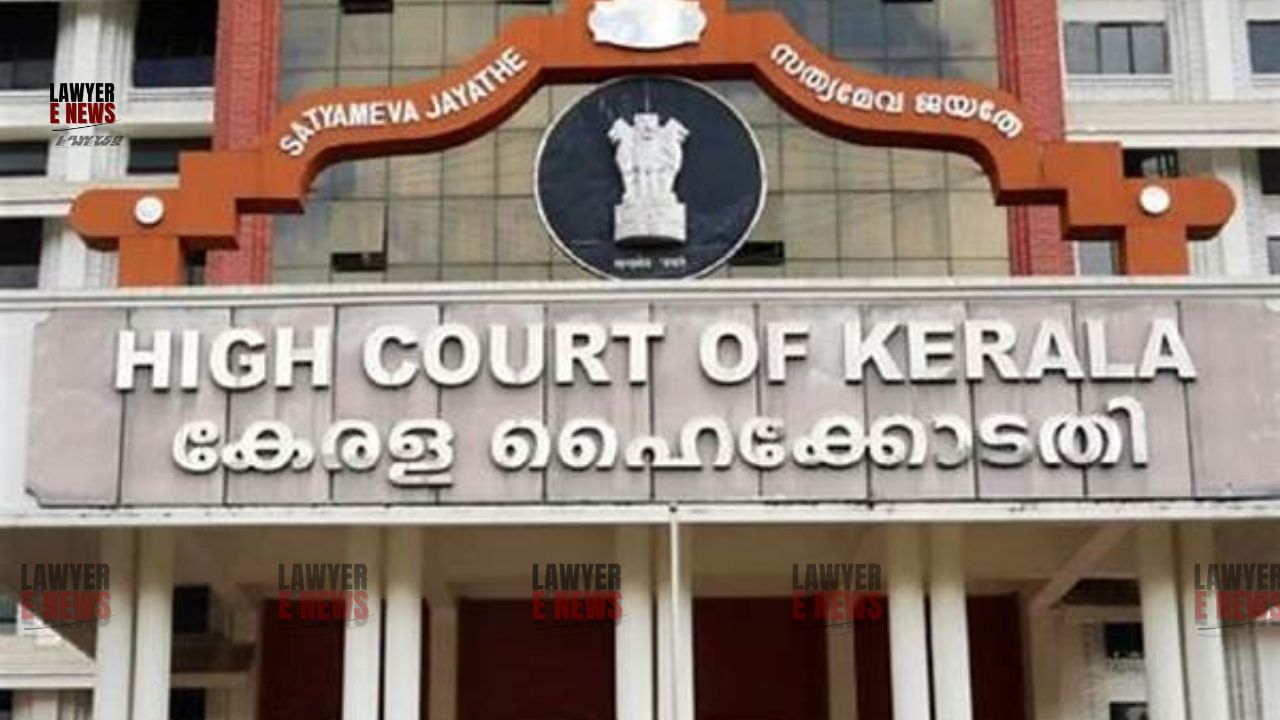
Bail granted with stringent conditions after one month of judicial custody; Court emphasizes Supreme Court precedents on pre-trial detention. The Kerala High Court, presided by Justice C.S. Dias, has granted bail to the accused in a POCSO case, highlighting the principle that "grant of bail is the rule and putting a person in jail is an exception." The accused, detained under allegations of sexually assaulting a minor, was released after one month of judicial custody, with the Court laying out stringent conditions to ensure the integrity of the ongoing investigation.
The case against the petitioner stems from an incident in May 2024, where the accused allegedly groped and touched a 10-year-old girl inappropriately, actions constituting sexual assault under the Protection of Children from Sexual Offences (POCSO) Act. The FIR (Crime No. 57/2024) was filed at Pudur Police Station, Palakkad District, and the accused has been in judicial custody since his arrest on June 1, 2024.
The Court noted that the investigation in the case is complete, including the medical examination and submission of the final report. Justice C.S. Dias emphasized that prolonged detention in the absence of an ongoing investigation is unnecessary. "The petitioner has been in judicial custody for the last 30 days, and the investigation in the case is complete," the Court observed, deeming further detention unwarranted.
Justice Dias referenced several Supreme Court judgments underscoring the importance of granting bail to undertrial prisoners to avoid undue pre-trial detention. Notably, the case of Dataram Singh v. State of U.P. was cited, where the Supreme Court observed that bail is the rule and jail an exception, urging the judiciary to exercise discretion compassionately and judiciously.
Further, in State of Kerala v. Raneef, the Supreme Court declared that indefinite detention of undertrial prisoners violates Article 21 of the Constitution, which guarantees the right to life and personal liberty. Additionally, in Hussainara Khatoon (I) v. Home Secy., State of Bihar, the apex court held that prolonged pre-trial detention is unreasonable and unfair, not conforming with the mandate of Article 21.
The prosecution opposed the bail application, arguing that the accused could intimidate the victim and tamper with evidence if released. The victim, currently residing in a shelter home following her mother's death and her father's abandonment, is particularly vulnerable, the prosecution contended.
The Court balanced the arguments, considering the completed investigation and the fundamental rights of the accused. "Once the charge sheet is filed, a strong case has to be made out for continuing a person in judicial custody," Justice Dias noted. The judgment emphasized that societal sentiments should not override legal principles ensuring fair treatment of the accused.
Justice Dias remarked, "The right to bail cannot be denied merely due to the sentiments of the society. The principle that bail is the rule and jail is an exception is on the touchstone of Article 21 of the Constitution of India."
The petitioner was released on bail upon executing a bond for Rs.1,00,000 with two solvent sureties, under several conditions designed to prevent interference with the investigation:
Regular reporting to the Investigating Officer every alternate Saturday.
Non-inducement or threat to the victim or witnesses.
Non-commission of any offence while on bail.
Surrender of passport.
Restricted entry into the victim's locality, except for reporting purposes.
The High Court's decision to grant bail reinforces the judicial commitment to uphold constitutional rights while ensuring justice. This judgment, aligning with Supreme Court precedents, underscores the principle of bail as the norm, particularly when the investigation is complete and no further detention is justified.
Date of Decision: July 1, 2024
XXXXXXXX vs. State of Kerala