-
by sayum
27 August 2026 3:32 PM







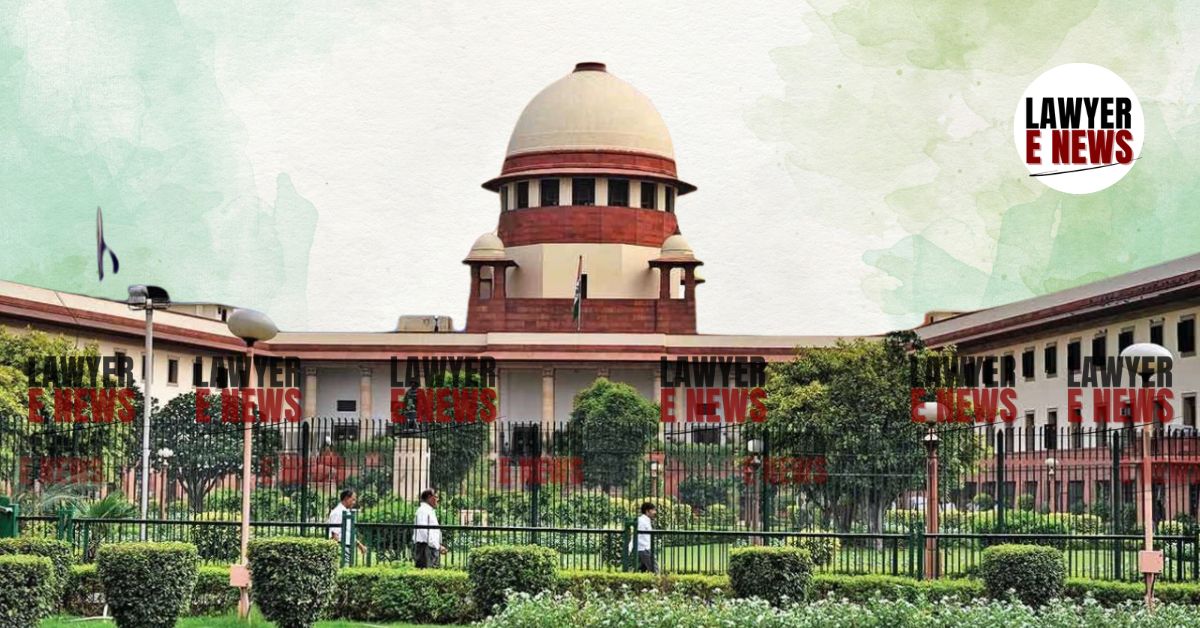
“Fresh Probe Disguised as Further Investigation is Abuse of Law”, In a firm reiteration of the boundaries of lawful investigation under the Criminal Procedure Code, the Supreme Court of India has held that executive-directed investigations that attempt to restart the process from scratch after judicial closure are constitutionally impermissible. Calling out the misuse of Section 173(8) CrPC, the Court ruled that what was portrayed as “further investigation” in the 2013 gang rape case was, in substance, a fresh or de novo investigation camouflaged as continuation — which the law does not permit.
Bench of Justice Rajesh Bindal and Justice Vijay Bishnoi quashed the directives issued in 2019 and 2021 by State authorities and the police to re-open a case that had already culminated in a closure report, accepted by the Magistrate in 2015, with no protest petition filed.
“Investigation cannot be restarted from the beginning years after the final report has been accepted, under the guise of ‘further investigation’. That is not furtherance of truth, it is subversion of process,” the Court observed.
“Further Investigation Must Be Truly Supplemental — Not a Legal Backdoor to Re-Probe What Has Already Been Closed”
The core of the Supreme Court’s reasoning lies in its interpretation of Section 173(8) CrPC, which allows for “further investigation” after a final report has been submitted. But the Court made it emphatically clear that this provision cannot be used to start over, especially years after the closure, and in absence of any fresh material.
“The so-called further investigation was initiated seven years after the acceptance of the closure report, starting from step one — including collection of DNA samples. This clearly amounted to an impermissible de novo investigation,” the Court noted.
It warned that such misuse of CrPC provisions by investigative or executive authorities to “fill gaps in an already failed prosecution case” is legally indefensible and opens the door to harassment of the accused long after the judicial process has ended.
“Criminal law is not a sandbox to repeatedly experiment against individuals until the State builds a case that sticks. Once the process ends in closure with judicial approval, it cannot be casually revived from scratch,” the Bench said.
“DNA Sampling Years Later is Not Continuation — It’s a New Investigation in Disguise”
The facts were particularly troubling to the Court. After the final report absolving the accused was filed and accepted in 2015, fresh investigation orders were issued in 2019 and 2021 — not by any Court, but by the Under Secretary of the State Government and the Superintendent of Police, citing directions of the NHRC.
Under this purported “further investigation,” DNA samples of the accused were collected in 2022, nearly a decade after the alleged incident. The Court found this to be wholly inconsistent with the concept of “further investigation,” which is meant to supplement existing material — not restart the process from the ground up.
“The investigation attempted to revive the case from its origin, not to complete it. That is a reinvestigation, which only a Constitutional Court can order — not the police, not the executive,” the judgment held.
“Law Protects Against Endless Harassment — Finality Cannot Be Undone by Bureaucratic Whim”
The Court's observations carry deep implications for the rights of the accused and the integrity of criminal procedure. Highlighting the danger of executive overreach, the judgment reasserts that closure of a criminal case by judicial order is final, unless challenged through appropriate legal remedies like revision or protest petition.
“After the judicial acceptance of a closure report, restarting an investigation based solely on administrative direction is not only illegal — it is an affront to judicial authority and procedural fairness,” the Court warned.
It clarified that directions of bodies like NHRC may warrant inquiry, but cannot override CrPC or be treated as a basis to reopen criminal investigation without court approval.
Court Draws Line Between Further Investigation and De Novo Inquiry
Relying on established jurisprudence including Vinay Tyagi v. Irshad Ali (2013), Peethambaran v. State of Kerala (2024), and Devendra Nath Singh v. State of Bihar (2023), the Court explained the distinction:
“Further investigation is to fill genuine gaps discovered after closure — not an excuse to begin afresh. It is neither a substitute for reinvestigation nor a device to revive a case by executive order.”
Thus, in recognising that the investigation initiated in 2019 was “not further investigation, but a fresh one in disguise”, the Supreme Court put a decisive halt to the practice of re-prosecution via administrative fiat.
Appeal Allowed, Proceedings Quashed — But Criminal Revision Can Proceed on Merits
The Court allowed the appeal, setting aside both the High Court's order of November 2023 and the State's orders dated 06.06.2019 and 26.04.2021, directing further investigation.
However, the Court clarified that this would not prejudice the outcome of any pending proceedings, including Criminal Misc. Case No. 440 of 2017, a revision filed by the complainant challenging the 2015 acceptance of closure.
“This judgment shall not prejudice the rights of any party in proceedings lawfully pending before the trial court,” the Bench added.
Date of Decision: January, 2026