-
by sayum
27 August 2026 3:32 PM







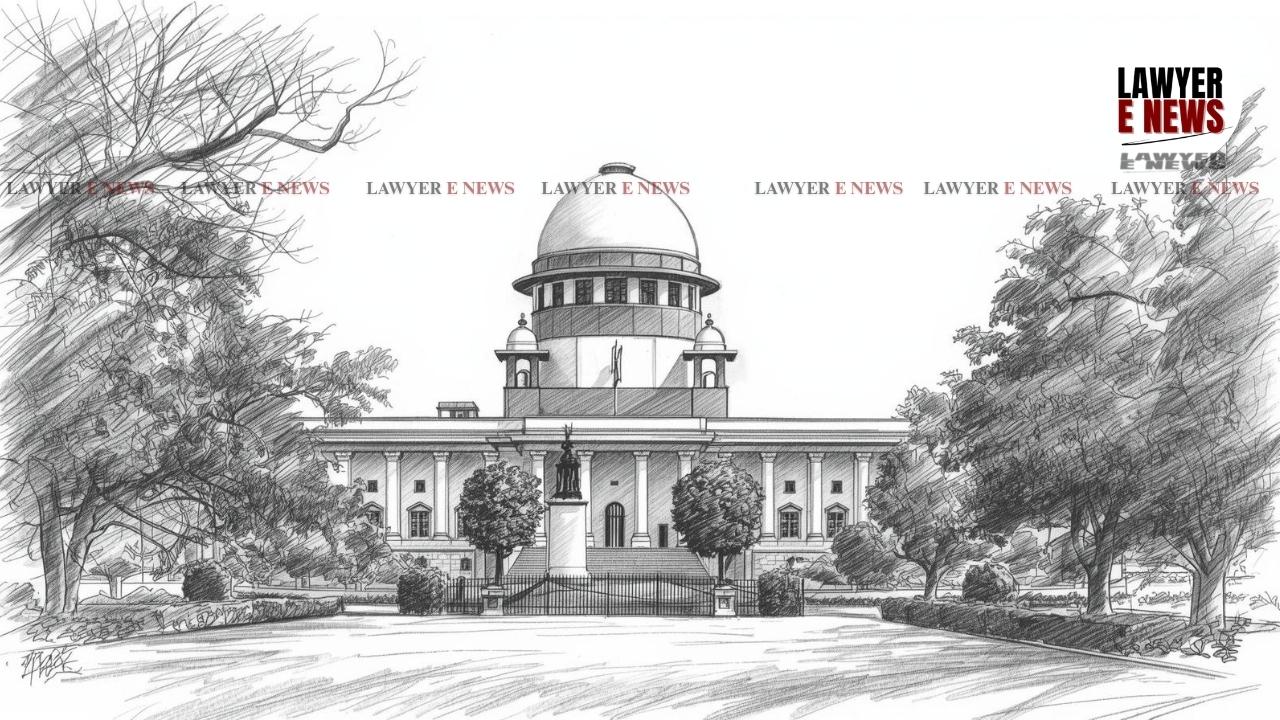
"Supervisory power under Article 227 is not appellate jurisdiction in disguise" – Supreme Court of India decisively holding that the High Court erred in striking off a plaint under Article 227 of the Constitution when a specific and adequate remedy under Order VII Rule 11 of the Civil Procedure Code, 1908 was available to the contesting defendants.
Terming the High Court’s order as a “manifest error”, the Supreme Court restored the original suit and made a strong pronouncement on the limits of supervisory jurisdiction, reinforcing the primacy of statutory remedies.
“Availability of Remedy Under CPC is a Near-Total Bar to Article 227”: Court Emphasizes Judicial Discipline and Legislative Intent
The Apex Court reiterated the established constitutional principle that the supervisory jurisdiction under Article 227 is not meant to supplant statutory civil remedies, especially when the Civil Procedure Code provides a clear mechanism, such as under Order VII Rule 11 CPC, for rejection of plaints.
"When a specific provision under Order VII Rule 11 of the CPC is available, the High Court cannot exercise powers under Article 227 to reject or strike off the plaint. For such relief, the specific provision... will have to be resorted to," observed the Bench of Justices N.V. Anjaria and Aravind Kumar.
The case arose out of Original Suit No. 93 of 2020 before the District Munsif Court, Tambaram, where the plaintiff (appellant), P. Suresh, sought permanent injunction against the defendants, alleging trespass and claiming title through a 1975 registered sale deed in favour of his mother.
The defendants disputed the sale deed, alleging fabrication and asserting title through ancestral possession since 1922. Instead of applying before the trial court under Order VII Rule 11 CPC to reject the plaint, they filed a Civil Revision Petition under Article 227 of the Constitution before the Madras High Court, which struck off the plaint, accepting the defendants’ allegations of fraud and lack of interest by the plaintiff.
The Supreme Court intervened, holding the High Court's approach legally unsustainable, emphasizing that Article 227 cannot be used to bypass detailed procedural safeguards and factual inquiries that the CPC demands.
Rejection of Plaint Requires Factual Inquiry – High Court Cannot Conduct “Mini-Trial” Under Article 227
The Supreme Court held that grounds under Order VII Rule 11, such as absence of cause of action or suit being barred by law, often require a factual determination, which must be undertaken by the trial court and not pre-judged in constitutional jurisdiction.
“Whether cause of action exists... would necessarily require a factual inquiry. The supervisory jurisdiction under Article 227... is not meant to substitute such remedies provided in CPC,” the Court reasoned.
The judgment squarely rejected the High Court's reliance on Order VI Rule 16 CPC, clarifying that the provision only permits striking out specific portions of pleadings, and not the entire plaint. The Court observed:
“It would be stretching beyond the logic of law to interpret and imply that Order VI Rule 16 can be utilised and employed for striking down the entire plaint.”
Title Disputes and Allegations of Fraud Must Be Tried, Not Summarily Decided
Refusing to accept the High Court's factual findings on fraud, the Court observed that such disputed questions of title and possession must be adjudicated upon trial and evidence, not on the basis of pleadings alone or through supervisory intervention.
“Almost all civil suits would involve disputed questions of facts... invocation of Constitutional powers thereover in a routine manner is neither necessary nor advisable,” the Court warned.
High Court Cannot Convert Supervisory Power Into Appellate Review
The Supreme Court relied on a consistent line of precedents, including Shalini Shyam Shetty v. Rajendra Shankar Patil, Radhey Shyam v. Chhabi Nath, and Virudhunagar Hindu Nadargal Dharma Paribalana Sabai v. Tuticorin Educational Society, reiterating that Article 227 cannot be used as “a cloak of an appeal in disguise.”
“Supervisory jurisdiction cannot be used to supplant or circumvent remedies expressly provided under CPC,” the Court firmly declared.
Notably, the judgment overruled the High Court’s assessment of the genuineness of documents and the plaintiff’s conduct, terming such fact-finding as “wholly misplaced in Article 227 proceedings.”
The Supreme Court allowed the appeal, set aside the Madras High Court’s order dated 03.06.2025, and restored the suit to the trial court docket. The defendants were granted liberty to move an application under Order VII Rule 11 CPC, to be considered strictly in accordance with law. The Court refused to award costs, but issued a clear guiding precedent on jurisdictional discipline.
This judgment delivers a resounding message to constitutional courts to respect statutory procedure, and to exercise restraint in invoking Article 227, particularly in routine civil matters. It underlines that judicial discipline and adherence to legislative intent must prevail, even where allegations of fraud or fabricated documents arise.
The ruling restores clarity to the jurisprudential boundary between statutory remedies under CPC and constitutional powers under Article 227, and serves as an important precedent for trial advocacy and appellate litigation alike.
Date of Decision: 03 February 2026