-
by sayum
27 August 2026 3:32 PM







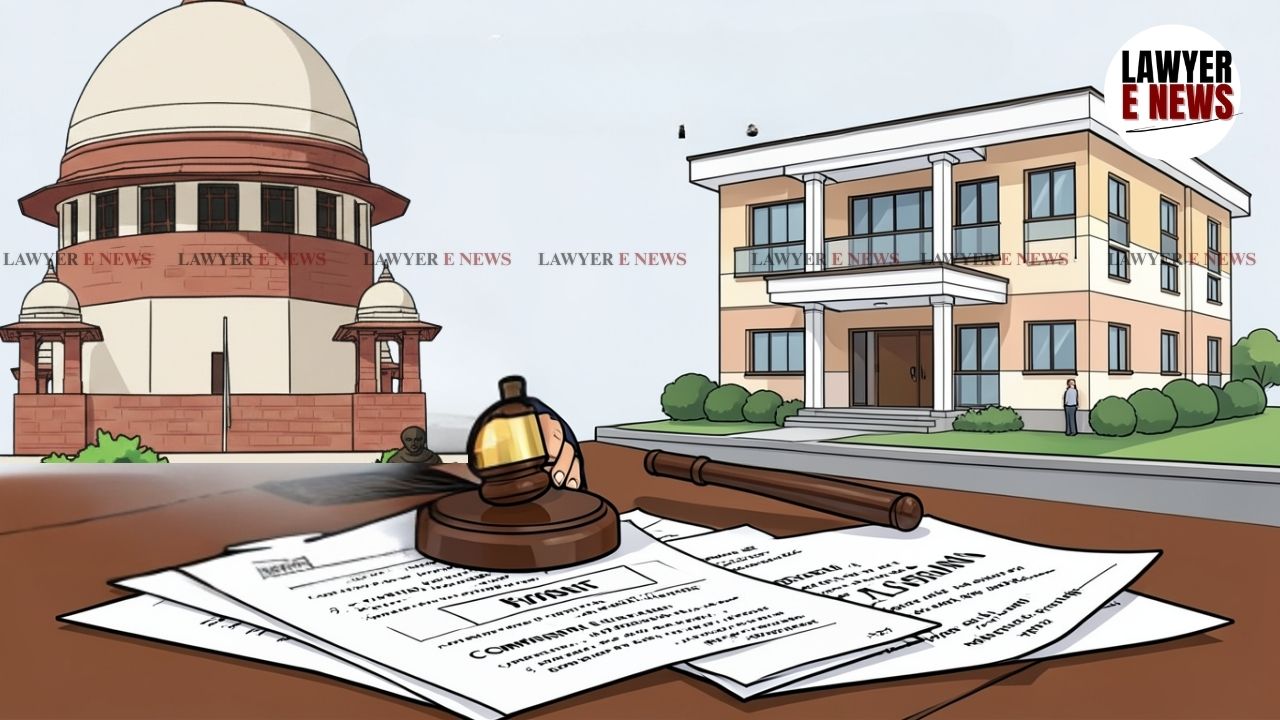
“Dominant intention behind purchase, not later lease, determines consumer status” – In a decision set to have far-reaching implications for real estate litigation under consumer law, the Supreme Court of India held that merely leasing a residential flat after possession does not disqualify a homebuyer from being a ‘consumer’ under the Consumer Protection Act, 1986.
Reversing the National Consumer Disputes Redressal Commission’s (NCDRC) 2023 ruling, the Court held that leasing out a property, without proof of profit-driven intent at the time of purchase, does not attract the exclusion clause for ‘commercial purpose’ under Section 2(1)(d).
“Mere leasing of a residential property does not ipso facto establish that the dominant purpose of the purchase was commercial,” held the Bench comprising Justice Prashant Kumar Mishra and Justice N.V. Anjaria, as it restored the consumer complaint filed by Vinit Bahri and another against MGF Developers Ltd., which the NCDRC had dismissed on the premise that the leased flat was used for commercial gain.
“Burden to Prove Commercial Purpose Lies on the Builder, Not the Buyer”: SC Rebukes NCDRC’s Approach
The controversy arose when the appellants, having purchased a residential flat in MGF Developers’ project ‘The Villas’ in Gurgaon, filed a consumer complaint in 2017 alleging deficiency in service, delayed possession, illegal demands, and unauthorized change in layout.
However, their complaint was thrown out by the NCDRC on the sole ground that the flat had been leased in 2016, which the Commission erroneously concluded amounted to a ‘commercial purpose’ under the Act.
The Supreme Court categorically rejected that conclusion, holding:
“The onus of proving that the appellants fall within the exclusion clause... rests upon the respondents, and the respondents have failed to discharge this onus on a preponderance of probabilities.” The Court emphasized that leasing a property does not by itself prove commercial intent, and that “the question of what constitutes ‘commercial purpose’ is a question of fact to be decided in the circumstances of each case”.
The Court also rebuked the NCDRC’s misplaced interpretation of the statutory burden, stating:
“A negative burden cannot be placed on the complainant to show that the service availed was not for a commercial purpose.”
“Consumer Protection Act is a Beneficial Statute – It Must Be Interpreted to Advance Rights, Not Defeat Them”: SC Cites Line of Precedents
Referring to the definition of ‘consumer’ under Section 2(1)(d) of the 1986 Act, and the Explanation thereto, the Court reiterated that the dominant purpose test is crucial to determining whether a transaction is commercial.
Citing Laxmi Engineering Works v. P.S.G. Industrial Institute and Lilavati Kirtilal Mehta Medical Trust v. Unique Shanti Developers, the Court underscored that “commercial purpose must have a close and direct nexus with a profit-generating activity”, and not every transaction that results in income falls under the exclusion.
It reaffirmed that even large transactions or high-value properties do not automatically fall under ‘commercial use’, unless it can be shown that the original intention was business-oriented.
The bench held, “It is not the value of the goods that matters but the purpose to which the goods bought are put to.”
The respondents failed to establish that the appellants had purchased the unit with a business motive. In fact, the appellants had contended that they bought the flat to live closer to their parents, and only leased it out in 2016 after taking delayed possession.
Complaint Revived, NCDRC to Decide on Merits
Restoring Consumer Complaint No. 74/2017 to the file of the NCDRC, the Court held that the Commission must now adjudicate the grievance on merits, including the claim for over ₹1.5 crore as compensation, refund, and damages.
“The NCDRC has erred in dismissing the appellants’ complaint. The mere act of leasing the flat cannot be construed as commercial purpose without proof of dominant commercial intent at the time of purchase.”
With this, the Supreme Court has reaffirmed the protective ambit of consumer law, sending a clear message that service providers cannot defeat legitimate consumer claims by invoking vague or superficial allegations of commercial use, especially in the housing sector where delays and deficiencies are routine.
Date of Decision: February 4, 2026