-
by sayum
25 August 2026 6:19 AM







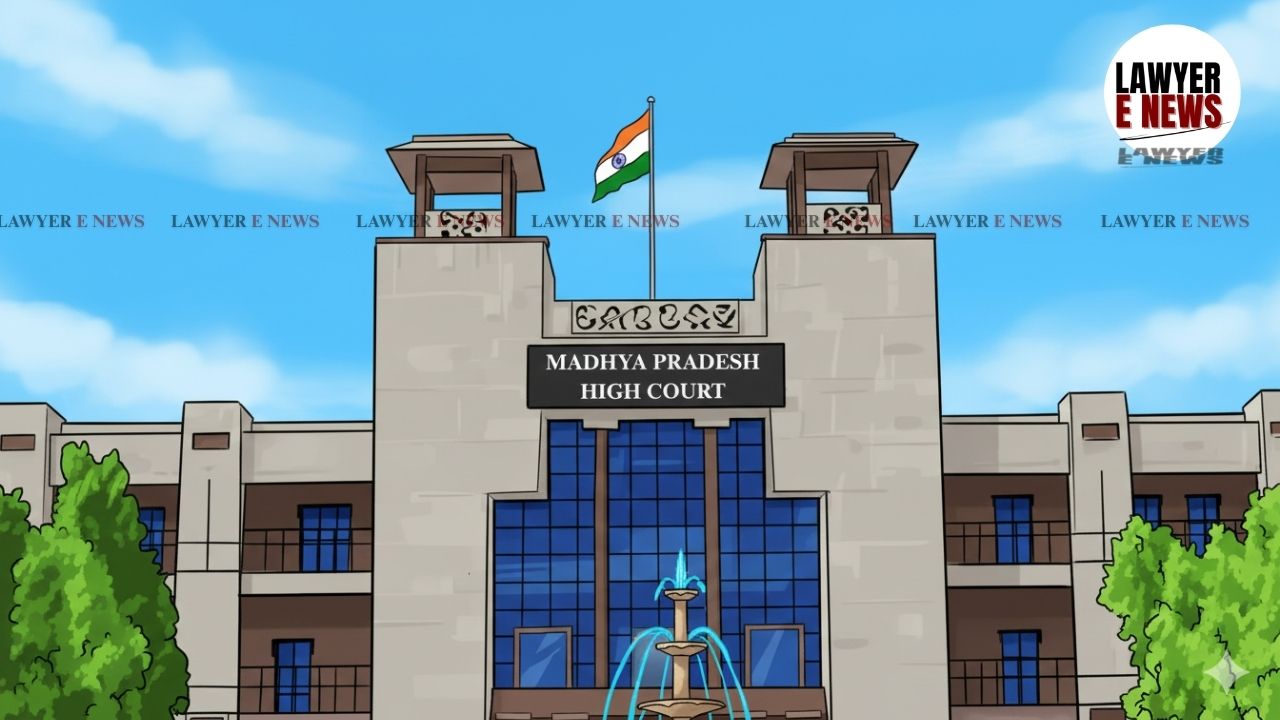
“The words ‘Not Negotiable’ merely limit transferability, not the drawer’s criminal liability under Section 138”, In a significant pronouncement clarifying the legal effect of a "Not Negotiable" endorsement on cheques, the Madhya Pradesh High Court held that such an inscription does not exclude the operation of Section 138 of the Negotiable Instruments Act, 1881, and does not absolve the drawer of liability for dishonour of cheque issued towards discharge of debt.
Justice Himanshu Joshi dismissed MCRC which sought to quash proceedings initiated against him under Sections 138/142 of the NI Act, claiming the cheque bore the words “Not Negotiable” and was hence invalid for criminal action under the Act.
“The endorsement ‘Not Negotiable’ does not render the cheque non-existent or invalid. It merely restricts the transferee from acquiring a better title than that of the transferor, as contemplated under Section 130 of the N.I. Act,” the Court clarified, rejecting the petitioner’s arguments.
“Drawer’s Obligation to Honour Cheque Remains Unaffected by Restrictive Endorsement”
Endorsement Affects Title, Not Liability: Court Cites Precedents and Statutory Provisions
The Court meticulously interpreted Sections 6 and 130 of the Negotiable Instruments Act, which respectively define a cheque and regulate the effect of transfer of negotiable instruments. Justice Joshi observed:
“The expression ‘cheque’ as defined under Section 6 of the N.I. Act does not exclude instruments marked as ‘Not Negotiable’. Such endorsement does not extinguish the drawer’s liability arising from the issuance of the cheque.”
The petitioner had relied on the 1952 Allahabad High Court judgment in Durga Shah Mohal Lal Bankers v. Governor General in Council, AIR 1952 All 590, to support his claim. However, the Court rejected this reading of the case, holding that:
“The judgment rather supports the settled legal position that a cheque remains a negotiable instrument unless its negotiability is expressly destroyed by law. Even then, such endorsement does not affect the drawer’s liability under Section 138.”
The Court also cited the English decisions of Carlon v. Ireland (1856) and Smith v. The Union Bank of London (1875), which similarly held that while a cheque’s transferability might be restricted, its negotiable nature and legal obligations are not extinguished.
No Quashing at Preliminary Stage When Trial Required to Test Debt and Dishonour
“Whether cheque was issued towards legally enforceable debt is a matter of trial, not a question for pre-trial quashing under Section 482 CrPC”
Rejecting the petitioner’s prayer to invoke the High Court’s inherent powers under Section 482 CrPC, the Court held:
“The trial Court has rightly observed that the question as to whether the cheque was issued towards a legally enforceable debt and whether the statutory requirements under Section 138 are satisfied are matters of evidence and cannot be decided at an interlocutory stage.”
The petitioner had sought to quash the proceedings by challenging concurrent orders of the Judicial Magistrate First Class, Rewa, dated 09.11.2022, and the Revisional Court (9th ASJ, Rewa) dated 21.03.2024, both of which dismissed his application to terminate the prosecution.
The High Court ruled that neither court committed any jurisdictional error or abuse of process warranting interference under Section 482 CrPC, reiterating:
“The inherent powers under Section 482 Cr.P.C. are to be exercised sparingly and only to prevent abuse of the process of law or to secure the ends of justice. In the present case, no such exceptional circumstance is made out.”
Cheque Issued for Loan of ₹5 Lakhs, Dishonoured Due to Insufficient Funds
According to the complaint filed before the trial court, the respondent Anil Kumar Gupta had extended a loan of ₹5,00,000 to the petitioner in December 2019 for personal needs. In repayment, the petitioner issued Cheque No. 023218 dated 31.05.2020 for ₹4,00,000 drawn on Bank of Maharashtra, Rewa Branch. The cheque was presented on 21.07.2020, but dishonoured on 23.07.2020 with the endorsement “Funds Insufficient”.
A statutory demand notice dated 04.08.2020 was duly served and received by the petitioner on 06.09.2020, but payment was not made within the statutory time, leading to initiation of complaint under Section 138.
The petitioner argued that the cheque had been marked “Not Negotiable”, and hence criminal liability did not arise under the NI Act. He also contended that the trial and revisional courts failed to appreciate this legal bar.
The High Court, however, concluded that these were matters of trial, and the petitioner had failed to establish any legal bar justifying interference at the pre-trial stage.
Court Denounces Misuse of Judicial Process to Delay Trial
“This petition is nothing but a thinly veiled attempt to protract proceedings,” says Respondent’s Counsel
Counsel for the respondent submitted that the entire plea was frivolous and calculated to delay the course of justice, arguing that the marking of “Not Negotiable” had no relevance to the core issue of dishonour of cheque for a legally enforceable debt.
The High Court appeared to concur with this sentiment, refusing to allow the inherent jurisdiction of the Court to be used for speculative defences lacking legal merit.
Petition Dismissed – Trial to Proceed on Merits
Reiterating the limited scope of Section 482 CrPC, the Court dismissed the petition, holding that:
“The present petition being devoid of merits is hereby dismissed.”
The decision affirms the binding legal principle that a drawer cannot escape liability under Section 138 of the NI Act merely by inscribing restrictive words on the cheque. Unless the basic ingredients of the offence are missing—which is not the case here—such defences must be raised and proved during trial, not used to stall the proceedings at the threshold.
Date of Decision: 08 January 2026