-
by sayum
25 August 2026 6:19 AM







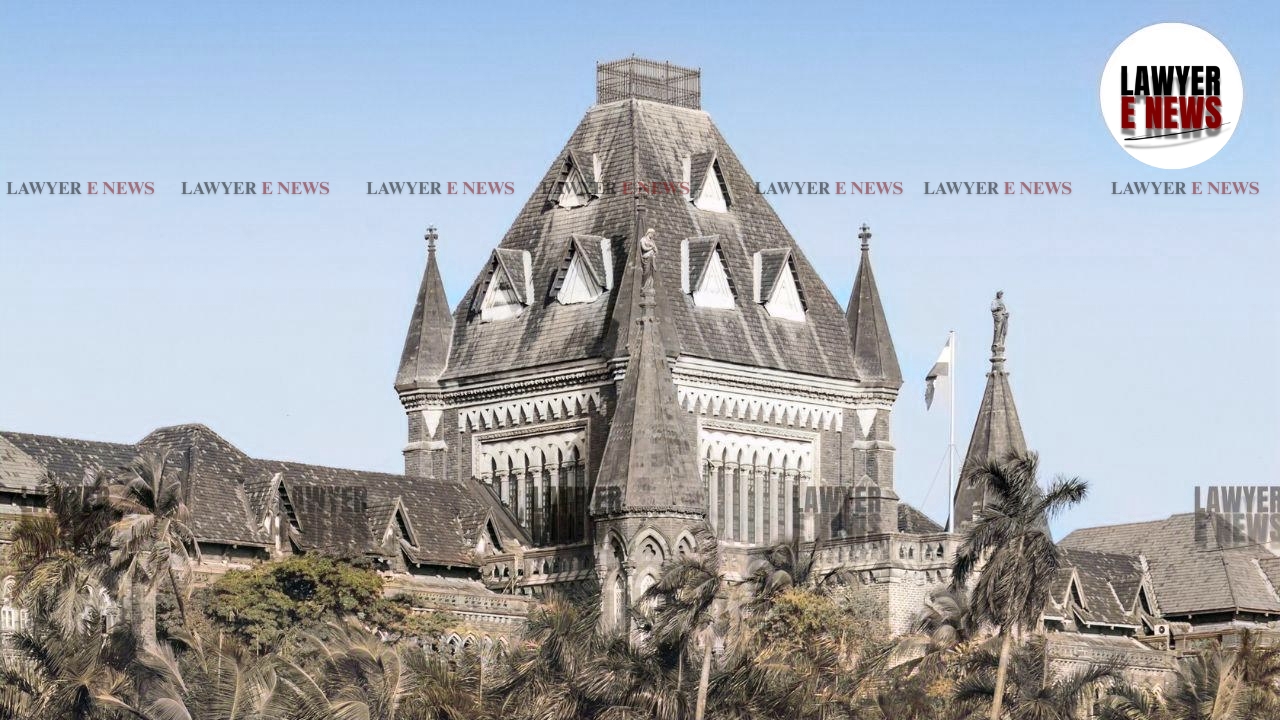
"Requirement to prove a Will must not be conflated with right to seek administration of estate – these are distinct remedies governed by distinct jurisdictions", In a significant ruling Bombay High Court (Justice R.I. Chagla) clarified the scope of civil court jurisdiction in matters relating to estate administration, particularly where probate proceedings concerning a Will are pending. The Court, in Chetan Dalal v. Bharat Kantilal Dalal & Ors (Notice of Motion No. 954 of 2019 in Suit No. 807 of 2018), rejected an application under Order VII Rule 11 of the CPC, which sought dismissal of a suit for administration of estate on the ground that it was barred due to the pendency of probate proceedings. The Court upheld the maintainability of such a suit and drew a clear distinction between testamentary jurisdiction and civil jurisdiction.
The primary legal issue was whether a Plaintiff, who has propounded a Will and filed for probate as an Executor, could simultaneously maintain a civil suit for administration of the deceased’s estate. The Court answered in the affirmative, ruling that the pendency of probate proceedings does not preclude the Plaintiff from seeking administration and protection of the estate in a civil court.
“Civil Court Is Not Usurping Probate Jurisdiction By Entertaining Administration Suit”: Court Dismisses Objection Under Order VII Rule 11
“Plaintiff’s claim for administration is not barred by law merely because he has also sought probate. Administration and proof of Will are separate domains.”
Rejecting the arguments advanced by the Applicant (Defendant No. 5), who had sought rejection of the plaint under Order VII Rule 11(d) CPC for being barred by law, the Court held that there is no bar in law against filing a suit for administration of estate merely because probate proceedings are pending.
Justice Chagla observed:
“The Defendants have conflated the requirement to prove a Will with the separate remedy of administering the Estate of the deceased. The Plaintiff does not dispute the Probate Court’s exclusive jurisdiction to adjudicate the genuineness of the Will. Section 269(2) of the Indian Succession Act excludes the use of a Probate Court’s inherent civil powers but does not bar independent civil remedies for issues concerning administration and protection.” [Para 59]
The Court heavily relied on earlier precedents including Ramchandra Ganpatrao Hande and Rupali Mehta v. Tina Mehta, which support the proposition that civil courts have jurisdiction over administration of estates, even where testamentary proceedings are pending.
Referring to the role of an Executor under Section 211 of the Indian Succession Act, the Court further held:
“The Executor is not required to wait for the grant of probate but can ipso facto, being the legal representative, prosecute the lis in view of the devolution of interest under Order XXII Rule 10 of the CPC...” [Para 63]
The Plaintiff, Bharat Kantilal Dalal, filed a suit seeking administration of the estate of his deceased father Girdharlal Nathubhai Dalal, based on a Will dated 24 September 1994, where he claimed to be the Executor. In the alternative, he sought administration of the estate on intestacy, in the event the Will was found to be invalid.
The Applicant/Defendant No. 5, Chetan Dalal, propounded a later Will dated 21 May 2012 with accompanying codicils and filed for probate in the Testamentary Court (Petition No. 812 of 2017). He sought rejection of the suit under Order VII Rule 11(d) CPC, arguing that a civil suit cannot lie until probate is granted. It was also argued that the Plaintiff, having propounded a Will and assumed the role of Executor, could not simultaneously seek administration on intestacy, alleging the pleadings were mutually contradictory and destructive.
Is the suit barred by law due to pendency of probate proceedings?
The Court ruled this issue squarely in favour of the Plaintiff. It held that filing for probate does not bar civil remedies:
“A Suit for administration of Estate would be maintainable irrespective of whether the Plaintiff has filed Probate Proceedings... A Suit for administration of Estate of the deceased is filed under the CPC whereas the sole question that is decided by the Testamentary Court is the validity of a Will.” [Para 60]
Referring to Section 213 of the Indian Succession Act, the Court clarified that while probate is required to establish a right under a Will, it is not a condition precedent for the institution of a suit for administration, so long as probate is obtained before the decree.
The Court also clarified the limited scope of probate jurisdiction:
“The Testamentary Court does not decide about the property of the deceased and how the same has to be distributed... The appointment of an administrator is entirely within the Civil Court’s domain.” [Para 62, 64]
Can alternative and inconsistent reliefs (i.e., Will and intestacy) be sought in the same suit?
Rejecting the objection that the Plaintiff’s alternate prayer on intestacy was inherently self-destructive, the Court relied on settled precedent to hold that alternative pleas are permissible where the factual foundation is consistent.
“There is no inconsistency in facts as there is no dispute that there are two Wills... The alternative prayer would arise when the Probate Court arrives at a finding that both Wills are not genuine.” [Para 65]
The Court referred to Sarva Shramik Sangh and Praful Manohar Rele to affirm that inconsistent pleas may be taken in the alternative, particularly when legal eventualities are different but based on the same factual foundation.
Can the plaint be partially rejected under Order VII Rule 11?
The Court categorically held that Order VII Rule 11 does not permit partial rejection of a plaint. The Applicant had sought to reject only specific prayers (a) to (c). However, the Court reaffirmed the principle that the plaint must be read as a whole, and if any part of it discloses a cause of action, it cannot be rejected.
“The averments in the Plaint as a whole have to be seen... This has been laid down by the Supreme Court in Indian Evangelical Lutheran Church Trust Association and Madhav Prasad Aggarwal.” [Para 70]
Concurrent Proceedings and Final Relief
The Court acknowledged the possibility of concurrent proceedings between the civil and testamentary courts, while emphasizing that no final decree can be passed in the administration suit until the validity of the Will is determined.
“The captioned Suit as well as the proceedings filed in the Testamentary Court would be required to go on concurrently... but the final decree in the present Suit would have to await the outcome of the Testamentary proceedings.” [Para 77]
The Bombay High Court, by rejecting the application for rejection of plaint under Order VII Rule 11 CPC, has reaffirmed a vital legal principle: The civil court retains jurisdiction to oversee administration of estates even in the face of pending probate proceedings. The judgment draws a crucial line between probate jurisdiction (which adjudicates the genuineness of a Will) and civil jurisdiction (which addresses protection and administration of the estate).
It also reiterates that alternative and even inconsistent legal pleas are not barred, provided they arise from a common factual matrix and operate on separate legal eventualities.
The Applicant was granted a four-week stay on the order, allowing time to consider appeal.
Date of Decision: 08 January 2026