-
by sayum
22 August 2026 6:35 AM







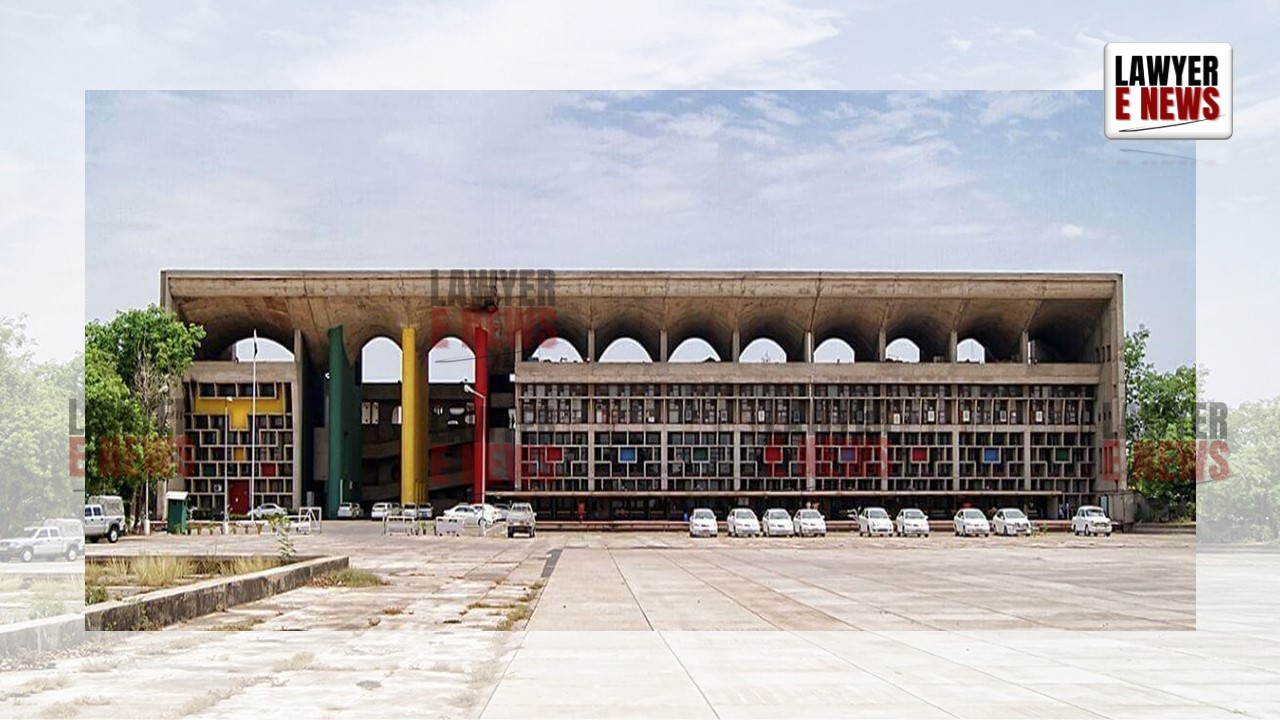
“Keeping in view the divergent stands taken by the plaintiff-appellants, it cannot be held that the plaintiff-appellants were ever ready and willing to perform their part of the contract.” - In a latest judgement, the High Court of Punjab and Haryana clarifying the strict standards of "readiness and willingness" under the Specific Relief Act, has held that a plaintiff cannot succeed in a suit for specific performance if they take shifting and contradictory stands regarding the identity and status of the suit land. Justice Alka Sarin dismissed the Regular Second Appeal (RSA), affirming that a party who initially cancels an agreement alleging land acquisition, and subsequently claims the land is unidentifiable, fails to demonstrate the necessary equitable conduct required for specific performance.
“The plaintiff-appellants seem to have taken different stands at different times... Such contradictory stands negate the plea of readiness and willingness.”—High Court affirms strict adherence to Section 16(c) of the Specific Relief Act
At the heart of the dispute in this case was an agreement to sell dated January 5, 2015, executed between the appellants (plaintiffs) and the respondent (defendant) regarding a plot measuring 196 sq. yards in Village Saundhpur, Panipat. The total consideration was fixed at ₹9,50,000/-, with ₹2,00,000/- paid as earnest money. The target date for the execution of the sale deed was set for June 15, 2015.
The dispute arose when the plaintiffs alleged that a demarcation conducted on May 21, 2015, revealed that approximately 60 sq. yards of the agreed land belonged to the Canal Department as acquired land. Consequently, the plaintiffs issued a legal notice on May 25, 2015, cancelling the agreement and demanding double the earnest money. However, the plaintiffs later shifted their stance, claiming they were present at the Sub-Registrar’s office on the target date with the balance consideration, and subsequently filed a suit for possession by way of specific performance.
The Trial Court dismissed the suit on August 2, 2019, and the First Appellate Court upheld this dismissal on May 2, 2023. The plaintiffs then approached the High Court via a Regular Second Appeal.
On Divergent Stands and Readiness:
The Court categorically held that the conduct of the plaintiffs was fatal to their claim. Justice Sarin observed that the plaintiffs oscillated between three distinct positions:
1. Initially claiming the land was incomplete due to acquisition by the Canal Department.
2. Sending a legal notice cancelling the agreement entirely.
3. Subsequently arguing in Court that the plot was "not identifiable."
The Bench noted, "The plaintiff-appellants seem to have taken different stands at different times... Keeping in view the divergent stands taken by the plaintiff-appellants, it cannot be held that the plaintiff-appellants were ever ready and willing to perform their part of the contract."
The Court placed significant reliance on the testimony of the official witness, Rajesh Khurana (Kanoongo), who appeared as PW5. Contrary to the plaintiffs' claims of acquisition, the Kanoongo stated that the demarcation was conducted and the land was complete on the spot. Furthermore, the defendant successfully proved his presence at the Sub-Registrar’s office with the necessary title documents, a fact admitted by the plaintiff-appellant in cross-examination.
The High Court reiterated the limited scope of interference under Section 100 of the Code of Civil Procedure (CPC). Since both the Trial Court and the First Appellate Court had returned concurrent findings of fact regarding the lack of readiness and willingness, and in the absence of any "substantial question of law," the High Court declined to interfere.
Date of Decision: 27/11/2025