-
by sayum
25 August 2026 12:32 PM







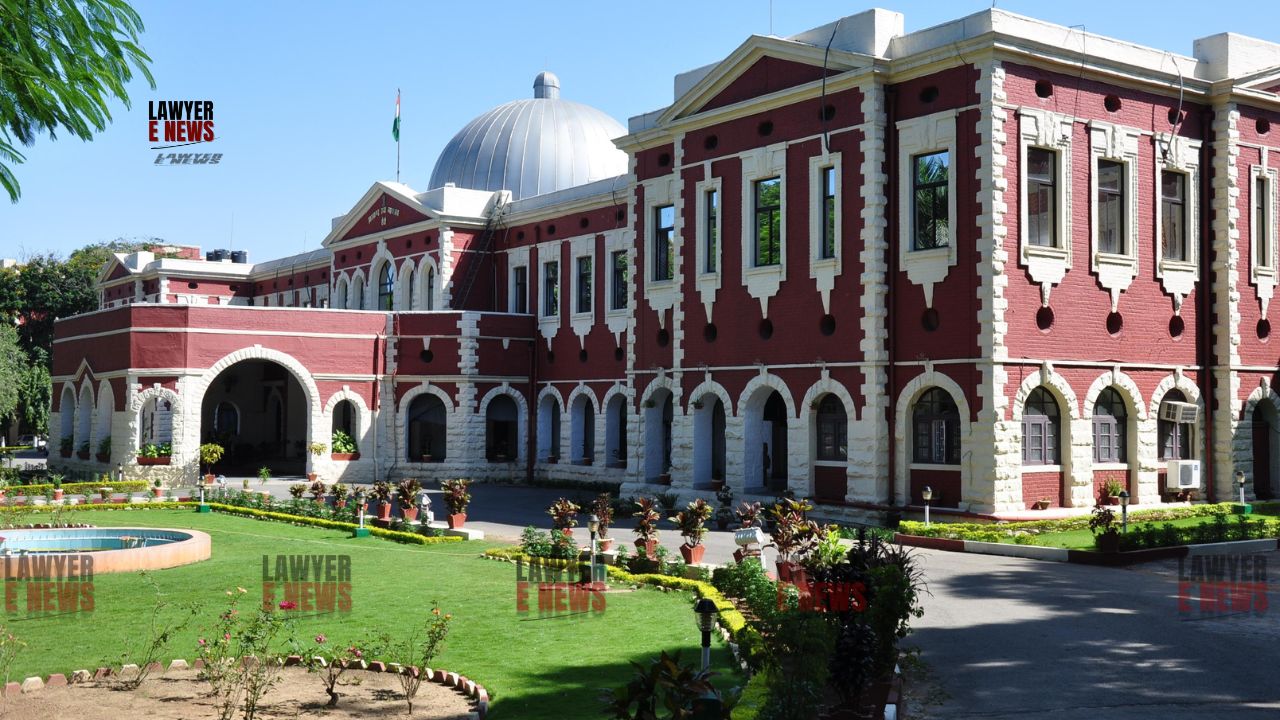
High Court Directs Reconsideration of Termination of Temporary Employee in Light of Service History .The High Court of Jharkhand, Ranchi, has ruled on a writ petition filed by Jitendra Mallah, challenging his termination from the post of Mali in the Civil Court, Dumka. The judgment, delivered by Hon’ble Dr. Justice S.N. Pathak, upholds the legality of conditional appointments while directing reconsideration of the petitioner’s case, taking into account his service history.
In 2005, Jitendra Mallah was appointed as a temporary Mali (gardener) in the Civil Court, Dumka, after the dismissal of Shyam Besra, who was convicted of murder. Mallah’s appointment letter stated that his position was conditional upon the final decision in Besra’s appeal. After five years of service, Mallah was terminated in 2010 following Besra’s acquittal and reinstatement. Mallah challenged the termination, citing violations of the Jharkhand Service Code and principles of natural justice.
The court evaluated the conditional nature of Mallah’s appointment under Sections 16 and 29 of the Indian Contract Act. Mallah contended that the condition created undue influence and uncertainty. However, the court found the condition valid, noting, “Conditional appointments are valid when clearly communicated and accepted.”
Mallah argued that his termination violated Rule 67, which mandates a one-year waiting period before filling a permanently vacated post substantively. The court clarified that this rule did not apply, as Mallah’s appointment was temporary and explicitly conditional on Besra’s appeal outcome.
The court emphasized procedural fairness, noting that Mallah was not given an opportunity to be heard before his termination, depriving him of his livelihood. “While the termination was not illegal, there was a need to consider the petitioner’s five years of service and the procedural fairness involved,” the court observed.
Acknowledging Mallah’s five years of service, the court directed him to file a fresh representation to the District & Sessions Judge, Dumka, for reconsideration. The respondent was ordered to consider Mallah’s service history sympathetically and decide on his reappointment or compensation within twelve weeks. If the decision was adverse, a reasoned order was to be communicated to Mallah.
Justice S.N. Pathak remarked, “The condition in the appointment letter, though imposing an uncertain tenure, was clearly communicated and accepted by the petitioner, thereby making the appointment legally valid under the specific circumstances.”
The High Court of Jharkhand’s ruling highlights the legal framework governing conditional appointments and emphasizes the need for procedural fairness in employment matters. The decision to direct a reconsideration of Mallah’s case balances legal principles with humane considerations, setting a precedent for handling similar cases in the future.
Date of Decision: 16th May 2024
Jitendra Mallah v. Registrar General, Jharkhand High Court, Ranchi & District & Sessions Judge, Dumka