-
by sayum
25 August 2026 4:32 AM







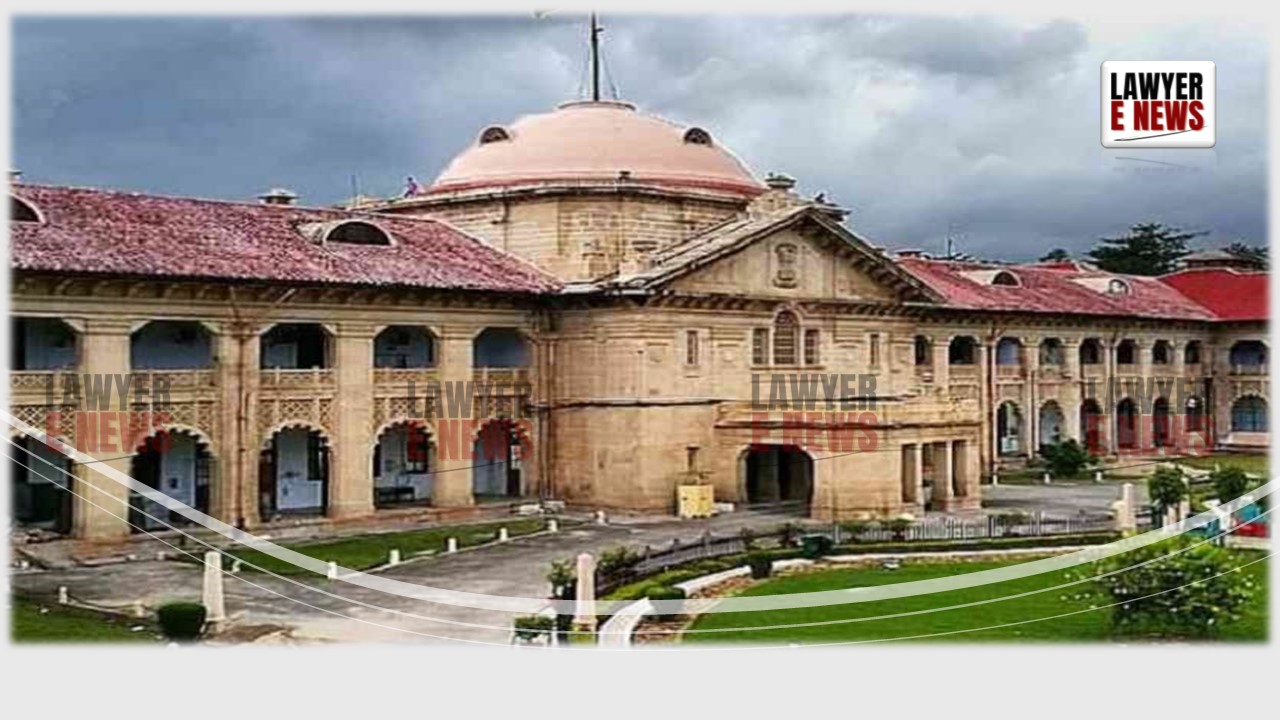
“Sessions Judge erred by conducting a mini-trial at discharge stage — At this juncture, the court must only assess grave suspicion, not certainty of guilt,” In a strongly worded judgment delivered Allahabad High Court slammed a Sessions Judge’s decision to discharge six accused from prosecution under Section 307 IPC, observing that “the trial court ventured into weighing evidence as if it were delivering a verdict, not framing charges.” Justice Abdul Shahid allowed the criminal revision filed by Padmakar Upadhyay, holding that the material on record established more than sufficient grounds for trial under attempt to murder provisions.
“The victims were chased in the dead of night, forced to seek refuge inside a police station, yet the accused—led by a convicted murderer with 21 criminal cases—entered the station and launched a brutal assault. Such audacity, such criminal conduct, and still no prima facie case for attempt to murder? The discharge order cannot stand,” observed the Court.
“The intention to kill was manifest — the accused fired upon the complainant, then beat him and his brothers inside the police station with lathis”
The genesis of the case lay in a horrifying chain of events that took place on the night of January 19, 2024, when the complainant Padmakar Upadhyay and his brothers were allegedly attacked by Subedar Singh and five others. According to the FIR, as the victims returned from a hospital visit, the accused pursued them in three vehicles, resorted to firing upon them, and finally entered the Khutahan Police Station where they had sought shelter, only to assault them further.
“The police themselves witnessed the incident,” the Court noted, citing the statement of Constable Sonu Yadav, who corroborated the complainant’s version that the accused entered the station with intent to kill. “The Sessions Judge erred in ignoring the evidence of state witnesses and the radiological report confirming fractures,” said Justice Shahid.
The medical evidence was unambiguous. Dr. Arvind Kumar Pandey, the Radiologist, confirmed that Padmakar Upadhyay had suffered a fractured left forearm and a broken finger. “A fracture is classified as grievous hurt under Section 320 IPC. When such injuries are inflicted by a group chasing victims into a police station and exhorting to kill them, it clearly crosses the threshold for Section 307,” held the Court.
“A man already convicted of murder, with 21 criminal cases, enters a police station and assaults with fatal intent – yet trial court ignores intent and gravity?”
The High Court did not miss the alarming background of Subedar Singh, the prime accused. "He is a convicted murderer serving a life sentence. He had earlier been convicted under Sections 302/149 and 120B IPC. When such a person leads an armed group to assault victims inside a police station, the question of intent is not speculative—it is evident," said the Court.
Rejecting the defence argument that the injuries were not sufficient in the ordinary course of nature to cause death, Justice Shahid clarified the settled legal position: “At the stage of framing of charge, the court must only assess if the materials disclose grave suspicion. The Sessions Judge has no business evaluating the likelihood of conviction at this stage.”
“The discharge order is an example of improper judicial scrutiny — evidence was sifted and weighed as if it were a full-fledged trial”
The Court drew extensively from Supreme Court jurisprudence to underscore the error committed by the lower court. Citing Tarun Jit Tejpal v. State of Goa, Prafulla Kumar Samal, and Sheoraj Singh Ahlawat, the Court reiterated: “The discharge stage is not for deciding innocence or guilt, nor to judge the sufficiency of evidence for conviction. If materials disclose grave suspicion, the trial must proceed.”
In Tarun Tejpal, the Supreme Court had held that: “There cannot be a roving enquiry at the stage of framing of charge. All that the court must assess is whether, if accepted as true, the materials on record establish a prima facie case.”
Justice Shahid found that “the Sessions Judge not only ignored the express legal standard but also overlooked compelling facts—prompt FIR, corroborated medical and police evidence, the criminal history of the accused, and the sheer audacity of committing such an offence inside a police station.”
“The charge of attempt to murder must be reinstated — the trial must proceed on all sections, including 307 IPC”
Setting aside the discharge order dated April 11, 2025, passed by the Sessions Judge of Jaunpur, the High Court directed that Subedar Singh and the other accused stand trial under all relevant charges, including Section 307 IPC. The Court declared:
“All these considerations—prompt FIR, statements of injured witnesses and police personnel, confirmed grievous injuries, and the violent criminal background of the accused—clearly constitute sufficient material to frame charges under Section 307 IPC. The trial court failed to apply the correct legal test.”
The revision was accordingly allowed, restoring full charges and directing the matter to proceed to trial as per law.
Date of Decision: November 25, 2025