-
by sayum
26 August 2026 12:18 PM







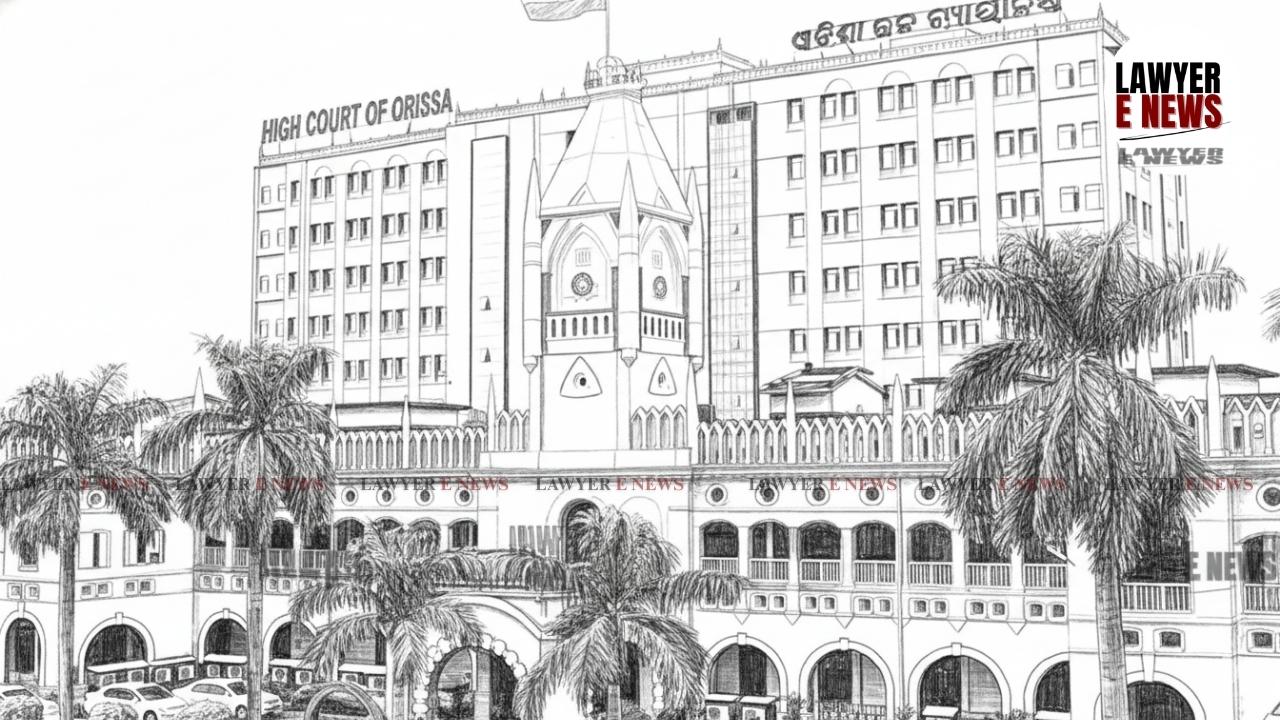
“When Property Stands In Name Of Female Hindu, She Becomes Full Owner By Operation Of Section 14” – Orissa High Court delivered a reportable judgment dismissing a Second Appeal under Section 100 of the Code of Civil Procedure, 1908, and affirming concurrent decrees directing eviction of a son and daughter-in-law from the self-acquired property of an aged mother.
Justice A.C. Behera held that when a property stands exclusively in the name of a female Hindu under a registered sale deed and corresponding R.O.R., she becomes its absolute owner by virtue of Section 14 of the Hindu Succession Act, 1956, and neither sons nor daughters-in-law can claim any joint family or “shared household” rights therein in absence of cogent proof. The Court further observed that a married son “has no legal right to live in that house” against the wishes of his parents when the property is self-acquired.
The Second Appeal was dismissed, and the decrees passed in C.S. No.20 of 2019 and R.F.A. No.16 of 2023 were confirmed.
Aged Mother Seeks Eviction Alleging Mental And Physical Torture
The plaintiff, Sukanti Samal, aged more than 75 years, had purchased the suit property through registered sale deed No.1191 dated 08.09.1989. The land and house constructed thereon were recorded exclusively in her name.
Her son (Defendant No.1) and daughter-in-law (Defendant No.2), after marriage, resided with her in the suit house. According to the plaint, they subjected her and her husband to mental and physical harassment, leading to village meetings in 2012 and subsequent attempts at reconciliation. The plaintiff alleged that despite assurances, the ill-treatment continued, ultimately compelling her and her husband to reside elsewhere.
When the plaintiff attempted to return to her house on 09.03.2019, she was allegedly abused and threatened. An FIR was lodged, but no effective action followed. She then instituted C.S. No.20 of 2019 seeking mandatory injunction for eviction of Defendant Nos.1 and 2 and permanent injunction restraining them from interfering with her possession.
The defendants resisted the suit, contending that the property was purchased out of joint family funds, that the plaintiff had no independent income, and that the house was a joint and undivided “shared household” under the Protection of Women from Domestic Violence Act, 2005.
Both the Trial Court and the First Appellate Court decreed the suit, holding the property to be self-acquired and directing eviction within one month, along with a permanent injunction.
Substantial Questions Of Law: Section 14, Joint Family Plea, And Shared Household
The Second Appeal was admitted on three substantial questions of law concerning the applicability of Section 14 of the Hindu Succession Act, the alleged joint family character of the property, and whether the daughter-in-law could claim a right of residence under Sections 12(2), 17, 19 and allied provisions of the Domestic Violence Act.
Justice Behera observed that the substantial questions were interlinked and addressed them together.
Section 14 HSA: Female Hindu Becomes Absolute Owner
The Court noted that it was undisputed that the suit property was purchased in the plaintiff’s name under a registered sale deed (Ext.2), and the R.O.R. entries also stood exclusively in her name.
Relying upon Gangamma v. G. Nagarathnamma and Marabasappa v. Ningappa, the Court reiterated:
“When the properties, which stands in the name of any female, she is the full owner thereof and on which, the claim of the joint family members out of joint family income cannot stand.”
Further, it held that when the property stands in the name of the mother-in-law, “mother-in-law becomes the full owner of the property by operation of Section 14 of the Hindu Succession Act, 1956.”
The plea that the property was purchased from joint family income was rejected for want of documentary evidence. The defendants had not produced any material to establish contribution or joint family nucleus. Mere assertion was held insufficient to dislodge a registered title deed and revenue entries.
Accepting the concurrent findings of both courts below, the High Court concluded that the suit property and the house were the exclusive properties of the plaintiff.
Shared Household Under D.V. Act: No Proprietary Right In Self-Acquired Property Of Mother-In-Law
The appellants invoked provisions of the Protection of Women from Domestic Violence Act, 2005 to contend that the house was a “shared household” entitling the daughter-in-law to residence.
The Court rejected this contention, holding that where the property exclusively belongs to the mother-in-law and is not joint family property, it cannot be treated as a shared household against her wishes.
Referring to a series of precedents including Sachin v. Jhabbu Lal, Suresh Sharma v. Dhanwanti Sharma, and Anil Kumar Tiwary v. State of Jharkhand, the Court reiterated that a son, whether married or unmarried, has no legal right to reside in the self-acquired property of his parents.
Quoting from the Delhi High Court in Sachin v. Jhabbu Lal, the Court noted:
“where, the house is the self-acquired house of the parents, then, son whether married or unmarried has no legal right to live in that house and he can live in that house only at the mercy of his parents up to the time the parents allow.”
The Court further observed that the provisions of the D.V. Act do not create proprietary rights in self-acquired property of a senior citizen, especially when the owner seeks eviction due to alleged harassment.
Senior Citizens’ Rights: Purposive Interpretation Of Beneficial Legislation
Justice Behera also relied upon decisions interpreting the Maintenance and Welfare of Parents and Senior Citizens Act, 2007, including the Supreme Court’s decision in Urmila Dixit v. Sunil Sharan Dixit, to emphasise that the statute is a beneficial legislation requiring purposive construction.
The Court highlighted that:
“The beneficial statutes must receive liberal construction inconsonance with the objects to be served by it… Court is bound to advance social justice.”
Given that the plaintiff was more than 75 years old and had alleged continuous physical and mental torture, the Court held that eviction of the son and daughter-in-law was justified to ensure her safety, dignity, and peaceful possession.
No Interference Under Section 100 CPC
Under Section 100 CPC, interference in Second Appeal is permissible only on substantial questions of law. The High Court found that the concurrent findings of fact regarding ownership and absence of joint family character were based on evidence and settled law.
The Court held that the decrees of mandatory injunction directing eviction within one month and permanent injunction restraining re-entry were neither perverse nor legally unsustainable.
“There is no merit in this 2nd appeal… The same must fail,” the Court concluded.
Orissa High Court reaffirmed the legal position that a son and daughter-in-law cannot claim residence rights in the self-acquired property of an aged mother against her wishes, and that Section 14 of the Hindu Succession Act confers absolute ownership upon a female Hindu in whose name property stands.
The judgment underscores the judiciary’s purposive approach in safeguarding senior citizens and preventing misuse of “shared household” claims to defeat the proprietary rights of aged parents.
Date of Decision: 19 February 2026