-
by sayum
26 August 2026 12:18 PM







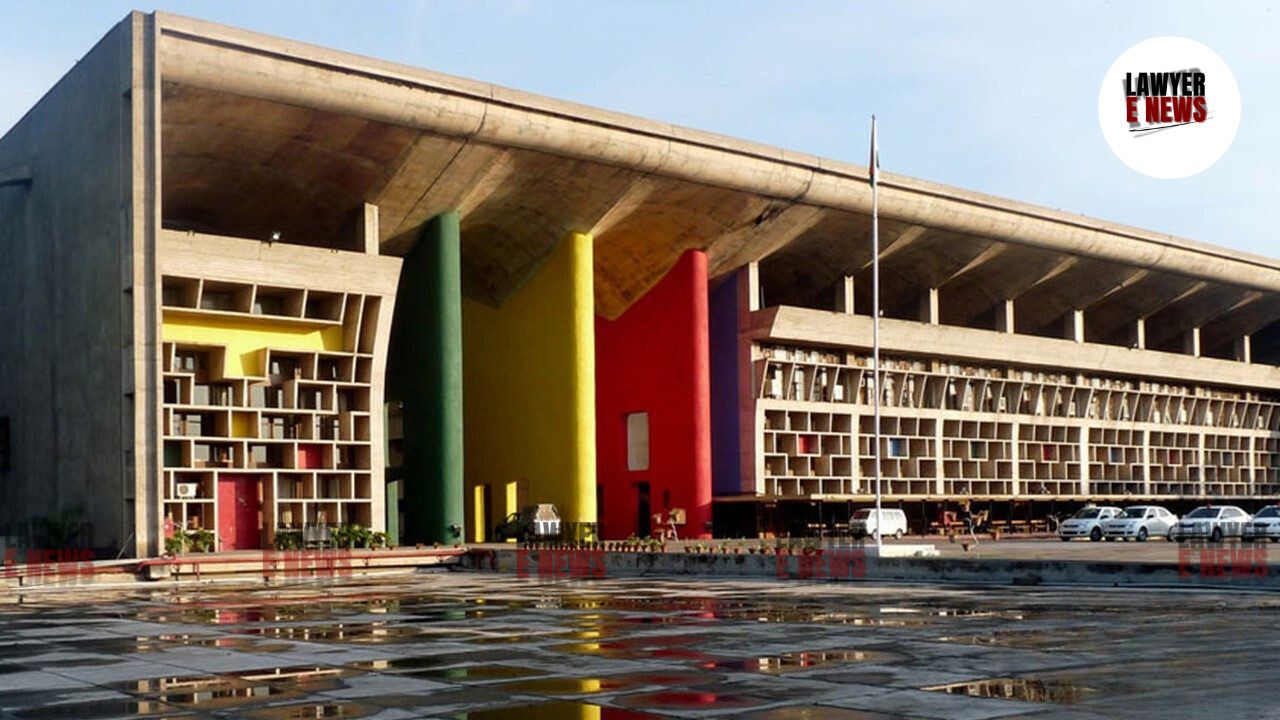
“Denying The Right To Pursue Education At Any Stage Of Life Would Be Violative Of Article 21”, Punjab and Haryana High Court delivered a reportable judgment holding that a government employee cannot be denied permission to pursue higher education through Distance Education Mode merely because he has not completed three years of service.
Justice Harpreet Singh Brar, exercising jurisdiction under Article 226 of the Constitution, set aside the rejection order dated 02.07.2024 and directed the State to grant permission to the petitioner to enroll in Bachelor of Arts through Distance Education Mode. The Court emphatically observed that the “right to education is a fundamental right traceable to Article 21” and that it cannot be curtailed without statutory backing.
“Three Years’ Service” Condition Applied To Distance Mode
The petitioner, appointed as a Veterinary Livestock Development Assistant on 09.02.2024, sought permission to enhance his educational qualification by enrolling in a B.A. course through Distance Education Mode. He expressly undertook that he would not avail any study leave and that his official duties would not suffer.
Despite this, his request was rejected on 02.07.2024 on the ground that he had not completed three years of regular service and was still on probation.
Before the High Court, the State justified the rejection by contending that the petitioner had joined only in February 2024 and was not eligible under Government policy.
However, the Court examined the Government of Haryana Instructions dated 09.11.2022 and found a clear distinction between regular mode and distance mode studies.
The instructions provided that where study leave is not required and higher studies are pursued through “online/private/correspondence/distance mode/evening classes,” permission may be granted subject only to the condition that official work does not suffer. The requirement of three years’ service applied only where the employee sought to pursue studies in regular mode requiring physical attendance.
Justice Brar categorically held that the ground of three years’ service “is not applicable to the petitioner,” since he intended to pursue his studies purely through Distance Education Mode.
“Clarification Cannot Override Policy”
The rejection order was based on clarificatory instructions dated 28.08.2023 issued by a Superintendent in the Finance Department. The Court found that these clarifications were contrary to the executive instructions issued earlier by the competent authority.
Holding that a clarification cannot override or dilute a substantive policy decision, the Court observed that rejection of the petitioner’s application on the basis of such clarification “holds no value in the eyes of law.”
Right To Education Flows From Article 21
The judgment went beyond mere interpretation of service rules and located the issue within the constitutional framework of fundamental rights.
Relying upon Miss Mohini Jain v. State of Karnataka, the Court reiterated that:
“The right to education flows directly from right to life. The right to life under Article 21 and the dignity of an individual cannot be assured unless it is accompanied by the right to education.”
The Court also referred to Avinash Mehrotra v. Union of India, wherein the Supreme Court recognized that the “right to education attaches to the individual as an inalienable human right.”
Justice Brar observed that denying an individual the opportunity to pursue an educational qualification at any stage of life, when he is willing and able to do so without affecting official duties, would amount to infringement of his fundamental right.
“The right to education has been vested with the gravity of being an inalienable human right… these rights are inherent, permanent, and essential to human dignity from birth throughout one's entire existence.”
“A Better-Educated Workforce Serves Public Interest”
The Court emphasized that encouraging educational advancement among government employees is not merely a private benefit but a public good.
“Enhancing the educational qualification of an employee must be encouraged, because a better-educated workforce directly serves the public interest by enhancing the competency of the employee.”
Referring to Dr. Balram Singh and Others v. Union of India (2024), the Court reiterated that the expression “socialist” in the Preamble signifies the State’s commitment to function as a welfare State. Supporting the professional growth of its employees, therefore, is not just a moral obligation but a constitutional duty of a model employer.
Allowing the writ petition, the High Court set aside the impugned order dated 02.07.2024 and directed the respondents to grant permission to the petitioner to enroll in Bachelor of Arts through Distance Education Mode.
The Court clarified that the petitioner shall not avail any study leave and must maintain the requisite standard of work. He may avail leave only during the examination period.
The judgment is a clear affirmation that administrative authorities cannot impose additional conditions not contemplated under policy, especially when such conditions impede a fundamental right. By harmonizing service regulations with constitutional guarantees, the Court sent a strong message that the right to education is neither age-bound nor probation-bound.
“Denying the right to pursue any educational qualification… would be violative of the Fundamental Right to Education,” the Court held, reinforcing that in a welfare State, growth and learning must be facilitated, not frustrated.
Date of Decision: 09 February 2026