-
by sayum
26 August 2026 10:38 AM







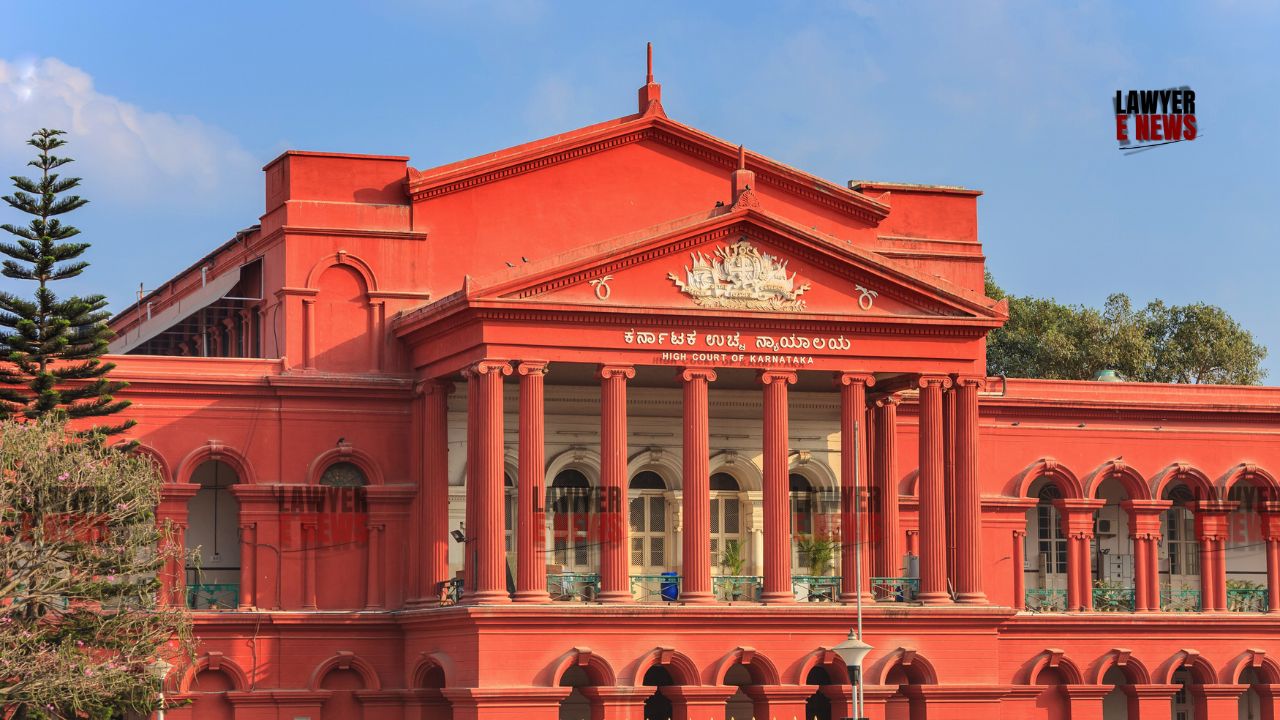
“Delay in Issuance of Form-H Not Attributable to Petitioners – They Cannot Be Deprived of In-Service Reservation Benefits”, In a significant ruling reinforcing the rights of in-service government doctors, the Karnataka High Court held that administrative delay in issuance of the mandatory Form-H certificate cannot deprive eligible candidates of reservation benefits in PG-NEET counselling.
Division Bench comprising Justice Jayant Banerji and Justice T.M. Nadaf directed that the petitioners be treated as in-service candidates and granted first preference in the Mop-up round of counselling along with similarly situated candidates.
The Court exercised its jurisdiction under Articles 226 and 227 of the Constitution and extended parity with an earlier order of a co-ordinate Bench, thereby safeguarding the reservation framework under Articles 15(4) and 16(4).
In-Service GDMOs Denied OBC Benefit Due to Non-Issuance of Form-H
The petitioners, both General Duty Medical Officers appointed in June 2021 and having completed their mandatory three years of service by May 2024, applied for PG-NEET 2025 under the in-service quota.
A Government Circular dated 08.05.2025 directed Tahsildars to issue caste confirmation certificates in Form-H to in-service candidates belonging to Backward Classes (2-A, 2-B, 3-A, 3-B), clarifying that the creamy layer principle would not apply in such cases. However, the petitioners were not issued Form-H within time. In fact, the Tahsildar initially declined issuance, compelling them to approach the Court.
Because their PG-NEET scorecards reflected “General” category and they had scored below the general cut-off percentile, their applications were not forwarded for the first two rounds of in-service counselling. Subsequently, the Medical Counselling Committee reduced the qualifying percentile to 40 (cut-off score 235), rendering them eligible.
Meanwhile, out of 441 in-service PG seats, only 71 were filled in the first round. The remaining 371 seats were decategorised and merged with the general pool in the second round.
The petitioners contended that had Form-H been timely issued, they would have participated in the first round and availed OBC reservation benefits. They sought first preference in the Mop-up round, especially in respect of certain decategorised seats.
Administrative Lapse, Decategorisation, and Parity with Earlier Order
The central legal questions before the Court were:
“Whether in-service candidates can be denied reservation benefits due to delay in issuance of Form-H by authorities?”
“Whether, after decategorisation of in-service seats, such candidates must compete in the general pool despite being otherwise eligible?”
“Whether similarly situated candidates are entitled to parity with an earlier unchallenged order of a co-ordinate Bench?”
The State conceded that the delay in issuance of Form-H was not attributable to the petitioners and that their applications had since been forwarded for Mop-up participation. However, it argued that they could not be granted exclusive first preference and must compete based on inter se merit.
The Karnataka Examination Authority (KEA) contended that once seats were decategorised, reservation for in-service candidates could not be revived.
Reservation Must Be Meaningful, Not Illusory
The Bench made a crucial observation that goes to the heart of affirmative action jurisprudence:
“What is important to note is that the petitioners are eligible candidates who stand deprived of the benefit of Form-H due to the delay in its issuance by the Tahsildar, which delay is not attributable to the petitioners.”
The Court further observed:
“Where reservation of seats is provided for in-service candidates, by the State Government, it must be implemented.”
While acknowledging that the decategorisation process was not challenged as illegal, the Court emphasised that the petitioners were being unfairly relegated to compete in the common pool because of administrative inaction.
Parity with Co-ordinate Bench – First Preference Extended
A decisive factor was the earlier order dated 12.01.2026 passed by the Dharwad Bench in W.P. No. 110014/2025. In that case, an in-service candidate was permitted to participate in the Mop-up round as an in-service candidate and was granted first preference along with similarly situated candidates.
The present Bench noted that no challenge to that order had been brought to its notice.
Accordingly, the Court directed:
“Both the petitioners herein shall also be treated as in-service Candidates and will be offered first preference in the order of merit along with the petitioner of Writ Petition No.11014/2025, to choose from the available regular PG seats and seats for DNB Courses which are offered only to Health and Family Welfare in-service Candidates.”
After such allotment, the remaining seats would be offered to other candidates in the Mop-up round.
Timelines Fixed – Counselling Process to Conclude by 18 March 2026
Recognising the urgency of medical admissions, the Court directed:
“Mop-up round be held anytime before 05.03.2026 and stray vacancy round be held anytime before 12.03.2026. Further, the entire process be concluded on or before 18.03.2026.”
The KEA was permitted to coordinate with the Medical Counselling Committee (MCC) for necessary portal access.
Strengthening In-Service Reservation and Administrative Accountability
The judgment reinforces three critical principles:
“Administrative delay cannot defeat substantive reservation rights.”
“Decategorisation of seats cannot operate to the prejudice of candidates who were kept out due to State inaction.”
“Parity must be maintained when similarly situated candidates are granted relief by a co-ordinate Bench.”
By ensuring first preference in the Mop-up round, the Karnataka High Court has restored meaningful access to in-service reservation benefits and underscored that procedural lapses by authorities cannot erode constitutional guarantees under Articles 15(4) and 16(4).
Date of Decision: 25 February 2026