-
by sayum
26 August 2026 12:18 PM







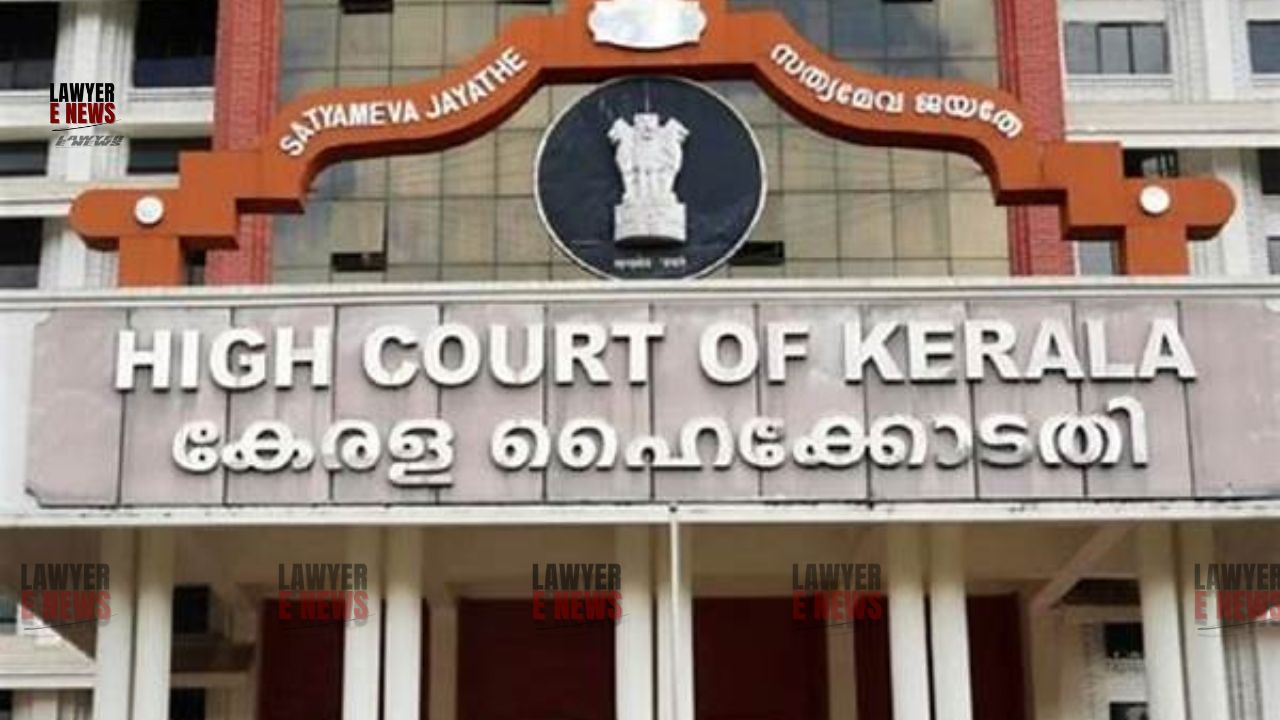
“To Return A Complaint Solely For Want Of A Postal Address Is To Subordinate Substantive Justice To Procedural Rigidity”, In a path-breaking judgment dated 19.02.2026, the Kerala High Court held that a Magistrate cannot return a private complaint merely because the postal address of the accused has not been furnished.
Justice C.S. Dias declared that the Bharatiya Nagarik Suraksha Sanhita, 2023 (BNSS) does not mandate furnishing of a postal address as a jurisdictional precondition for entertaining a complaint. In an era of rampant cyber offences committed through pseudonymous social media identities, insisting on a physical address at the threshold would “deny access to justice” and leave victims remediless.
The Court set aside the Magistrate’s order returning the complaint and directed that process be issued to the accused through disclosed electronic communication.
Background: Complaint Of Online Defamation Returned For Want Of Address
The petitioner, Joint Secretary of a non-governmental organisation, filed a private complaint before the Judicial First-Class Magistrate–II, Thrissur, alleging that the 3rd respondent had committed offences under the Bharatiya Nyaya Sanhita, 2023 (BNS) and Section 66 of the Information Technology Act, 2000 by posting defamatory and malicious content against him on social media platforms and disseminating defamatory WhatsApp messages.
Despite issuance of legal notices through WhatsApp, Facebook and Instagram, the accused allegedly continued the defamatory conduct.
However, the Magistrate returned the complaint solely on the ground that the postal address of the accused was not furnished.
Aggrieved, the petitioner approached the High Court invoking its inherent jurisdiction under Section 528 BNSS.
“Complaint May Be Against Known Or Unknown Person”
The Court began its analysis with Section 2(1)(h) of the BNSS, which defines “complaint” as any allegation made to a Magistrate that “some person, whether known or unknown, has committed an offence.”
Justice Dias observed that if the statute expressly recognises complaints against unknown persons, then furnishing of a postal address cannot be elevated into a jurisdictional prerequisite.
“If the accused is an unknown person, then there is no question of furnishing his postal address,” the Court reasoned.
Neither the definition of “complaint” nor “offence” under BNSS or BNS mandates that the accused’s identity or address must be established at the threshold stage.
BNSS Recognises Electronic Service Of Process
The Court referred to Sections 63 and 64 of the BNSS, which permit issuance and service of summons in electronic form bearing digital signature or image of court seal.
The statutory architecture, the Court held, “acknowledges digital communication as a legitimate mode of judicial procedure,” and furnishing the postal address is not a condition precedent for presentation or acceptance of a complaint.
Cognizance Under BNSS: A Transformative Shift
The Court also examined Section 223 BNSS, which introduces a procedural shift by requiring opportunity of hearing to the accused before taking cognizance.
Referring to Suby Antony v. Susha, the Court observed that the Magistrate must first examine the complainant and witnesses on oath and thereafter, if proceeding to take cognizance, afford opportunity to the accused.
However, this procedural safeguard does not imply that a complaint cannot be received in the absence of a postal address. The Magistrate has statutory powers under Section 225 BNSS to postpone issue of process and order inquiry or investigation to ascertain identity.
Practical difficulty in execution, the Court clarified, cannot justify rejection at the filing stage.
Intermediaries: Not Beyond Judicial Reach
A substantial portion of the judgment is devoted to the statutory obligations of intermediaries under the Information Technology Act and the 2021 Rules.
Justice Dias noted that Sections 67C, 69, 69A and 69B of the IT Act impose duties on intermediaries to preserve and retain subscriber information and traffic data. The Intermediary Guidelines, 2021 mandate preservation of records for at least 180 days and longer upon lawful orders.
The Court acknowledged potential structural limits in compelling disclosure in certain categories of offences. However, it held that courts are not powerless.
Under Section 94 BNSS, courts can direct production of documents, and non-compliance attracts punishment under Section 210 BNS.
“The court is not entirely helpless in such circumstances,” the judgment firmly stated.
Cyber Offences And Anonymous Identities
In one of the most forceful passages, the Court addressed the realities of cyberspace:
“In offences involving cyberspace, the offenders often operate through fake or anonymous digital identities. Hence, the complainant may possess only electronic identifiers, and the accused's postal address is often unascertainable without technical intervention.”
Insisting on a postal address at the threshold would “deny access to justice, render victims remediless, encourage deliberate anonymity and frustrate criminal law enforcement.”
The Court reminded that “processual rules are the handmaid of justice,” and procedural formalism cannot override substantive justice in a technologically evolving society.
Kerala Electronic Processes Rules, 2025
The Court also relied upon the Kerala Electronic Processes (Issuance, Service and Execution) Rules, 2025, which enable service through disclosed electronic communication addresses and empower courts to direct police assistance when necessary.
The absence of specific provisions in the Criminal Rules of Practice regarding electronic summons, the Court held, cannot justify returning a complaint.
Final Directions And Institutional Reflection
Allowing the Criminal Miscellaneous Case, the Court set aside the Magistrate’s order dated 14.08.2025 and directed the Magistrate to accept the complaint on file and issue process to the accused through disclosed electronic communication.
In the event of non-response, further steps were directed to be taken in accordance with BNSS and applicable Rules.
Recognising the systemic implications, the Court directed the Registrar (District Judiciary) to place the matter before the competent authority to examine whether suitable amendments to the Criminal Rules of Practice are warranted to address cyber offence complaints.
The ruling marks a significant evolution in procedural criminal law, aligning the justice system with digital realities. By holding that the absence of a postal address cannot defeat a private complaint in cyber cases, the Kerala High Court has reinforced access to justice and ensured that anonymity in cyberspace does not become immunity from law.
Date of Decision: 19.02.2026