-
by sayum
26 August 2026 10:38 AM







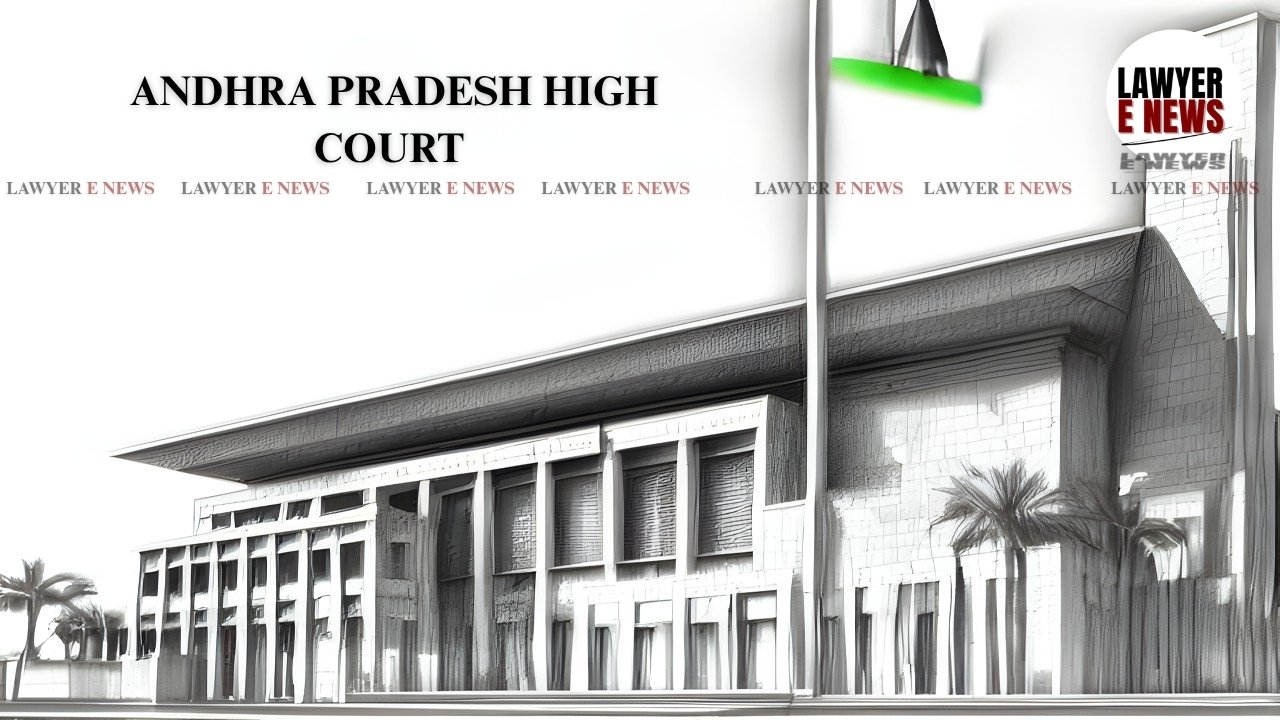
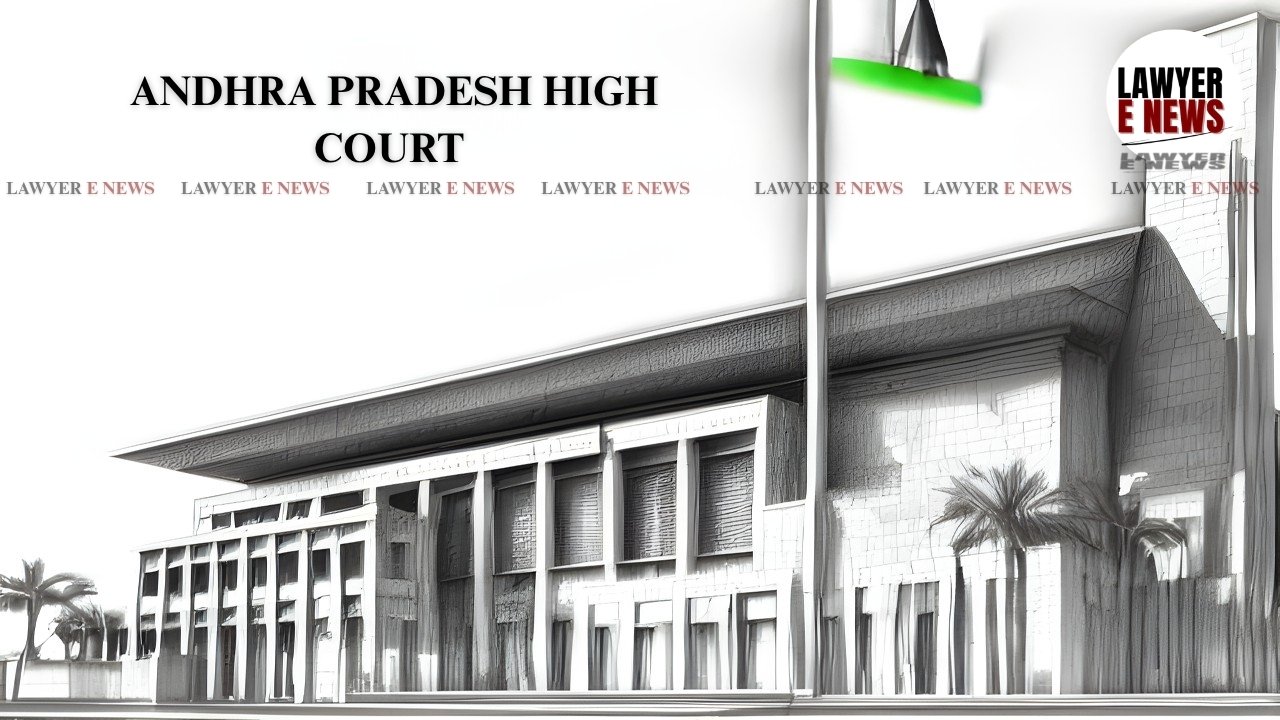
“There is no prohibition in an advocate filing an affidavit… on any question in relation to which he is in a position to depose”, In a reportable judgment Andhra Pradesh High Court authoritatively held that an advocate holding a valid vakalatnama is legally competent to file an affidavit in support of a restoration petition and delay condonation application, provided the facts are within his knowledge.
Justice Venkateswarlu Nimmagadda set aside the orders of the lower appellate Court which had dismissed the applications solely on the ground that the affidavit was sworn by the counsel and not by the party. The High Court restored the appeal and directed its disposal on merits, emphasizing that procedural objections cannot override substantive justice.
Appeal Dismissed For Non-Appearance, Restoration Rejected On Technical Ground
The petitioner, Rajana Anthonamma, was the plaintiff in a suit for permanent injunction in O.S. No.1006 of 2012. The suit was dismissed on 03.01.2017. Aggrieved, she preferred A.S. No.35 of 2017 before the lower appellate Court.
On 15.06.2017, when the appeal was called, neither the plaintiff nor her counsel appeared. The appeal was consequently dismissed for non-prosecution.
The plaintiff thereafter filed an application under Order IX Rule 9 CPC to set aside the dismissal and restore the appeal. Since there was a delay of 90 days, a petition under Section 5 of the Limitation Act read with Section 151 CPC was also filed seeking condonation of delay. Both applications were supported by an affidavit sworn by the advocate on record, who explained the circumstances leading to non-appearance.
However, the lower appellate Court dismissed both applications on 02.04.2019, holding that the advocate could not file a sworn affidavit on behalf of the party and that no reasons were shown as to why the party herself had not filed the affidavit.
“Strange Reasoning And Difficult To Appreciate”: High Court On Lower Court’s View
The High Court framed the core issue as whether an advocate on record can be permitted to file affidavit and verification on behalf of his client while holding a valid vakalatnama.
Referring to T. Krishnaswamy vs. Maniyamma, the Court extracted the significant observation:
“It is a strange reasoning and difficult to appreciate… Order III, Rule 1 of CPC contemplates that any appearance, application or act… may be made or done by the party in person, or by his recognized agent or by a pleader appearing, applying or acting… on his behalf. Thus, there is no prohibition in an advocate filing an affidavit… on any question in relation to which he is in a position to depose.”
The Court observed that Order III Rule 1 CPC expressly authorizes a pleader to make applications and perform acts on behalf of the party unless expressly barred by law. There is no absolute prohibition preventing an advocate from filing an affidavit, especially where he has personal knowledge of the relevant facts.
Advocate As Witness: “He Takes The Risk Of Exposing Himself To Cross-Examination”
Relying on the Madras High Court decision in R.M. Bedi vs. Vijayeswari Textiles Ltd., the Court noted the legal position that when a counsel files an affidavit, he assumes the role of a witness. The judgment quoted:
“If a counsel files an affidavit, he takes the risk of exposing himself as a witness to the case… The legal practitioners are certainly the agents of the parties in a case and for the fault of the agents, the clients should not suffer.”
The Andhra Pradesh High Court endorsed this reasoning, clarifying that while an advocate who swears an affidavit may be subjected to cross-examination if required, that possibility does not render the affidavit invalid or non-maintainable.
The Court further referred to the Kerala High Court’s ruling in Balakrishnan vs. Geetha N.G., which held that by virtue of a vakalatnama, counsel has implied authority to present and sign a petition under Order IX Rule 9 CPC on behalf of the party.
Liberal Approach In Condonation Of Delay: Party Should Not Suffer For Counsel’s Default
On the issue of delay condonation, the High Court emphasized that dismissal had occurred due to non-appearance of both the plaintiff and her counsel. Since the advocate had personal knowledge regarding the reasons for absence, he was a competent person to depose in support of the restoration application.
The Court held that dismissing the delay petition solely on the ground that the affidavit was filed by the advocate was erroneous and contrary to settled legal principles. A litigant should not be made to suffer irreparable prejudice due to the fault or lapse of the counsel engaged.
Orders Set Aside, Appeal Directed To Be Heard On Merits
Holding that the lower appellate Court failed to properly appreciate the settled legal position, Justice Nimmagadda set aside the orders dated 02.04.2019 in I.A. Nos.736 and 737 of 2017 in A.S. No.35 of 2017.
The Court directed restoration of the appeal and ordered the lower appellate Court to dispose of the same on merits at the earliest. The petitioner undertook to cooperate and avoid unnecessary adjournments unless justified by reasonable cause.
The judgment reaffirms the scope of an advocate’s authority under Order III Rule 1 CPC and clarifies that there is no blanket bar against an advocate filing an affidavit on behalf of a client in restoration and delay condonation proceedings. Courts, the High Court underscored, must avoid hyper-technical objections that obstruct adjudication on merits.
By restoring the appeal, the Andhra Pradesh High Court has reinforced the principle that procedural law is a handmaid of justice and not its mistress.
Date of Decision: 24.02.2026