-
by sayum
19 August 2026 1:58 PM







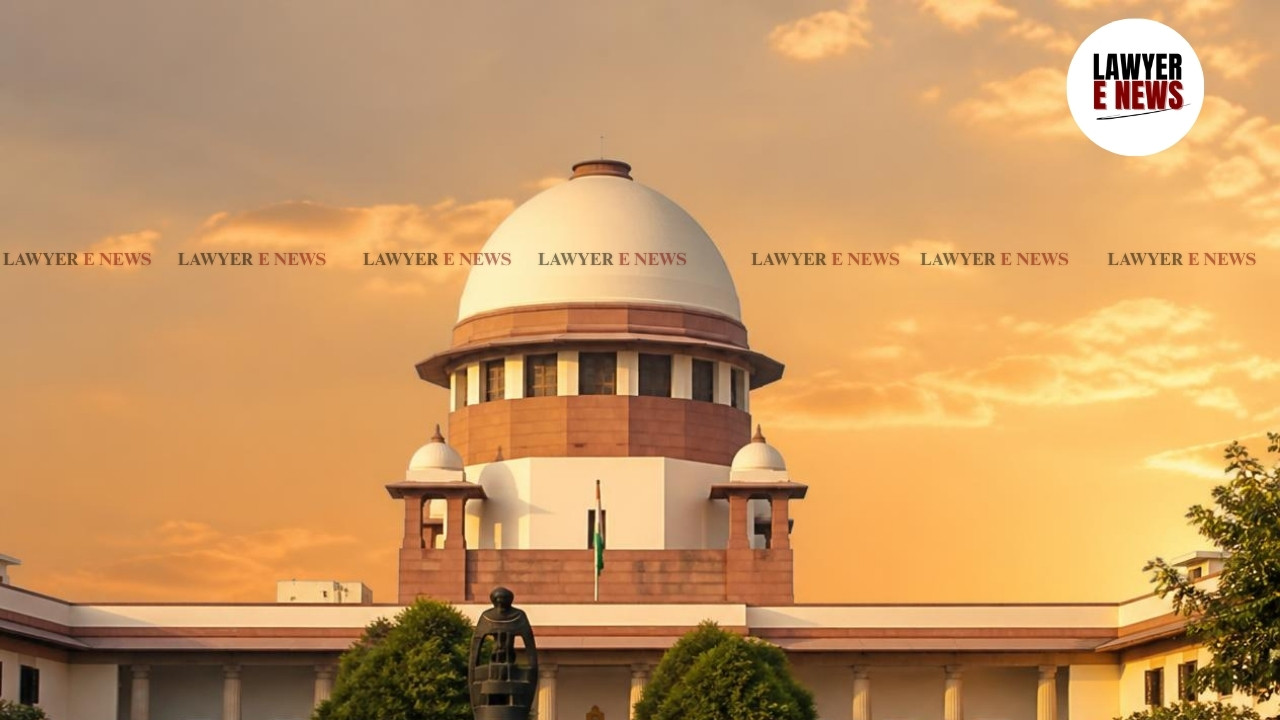
“A Decision Based On Such Non-Existent And Fake Alleged Judgments… Would Be A Misconduct And Legal Consequence Shall Follow”, In a rare and institutionally significant order, the Supreme Court of India took serious cognizance of a Trial Court relying upon purported Supreme Court judgments which were alleged to be Artificial Intelligence-generated, non-existent, and fake.
A Bench comprising Justice Pamidighantam Sri Narasimha and Justice Alok Aradhe declared in unequivocal terms that a judicial decision founded on non-existent or synthetic judgments is not a mere adjudicatory error but “would be a misconduct and legal consequence shall follow.” The Court has issued notice to the Attorney General, the Solicitor General and the Bar Council of India, and appointed Senior Advocate Mr. Shyam Divan as Amicus Curiae to assist in examining the larger institutional ramifications.
Injunction Suit, Commissioner’s Report And “Non-Existent” Citations
The petitioners, defendants in a civil suit for injunction, had objected to the report of an Advocate Commissioner appointed to note the physical features of the suit property. The Trial Court dismissed their objections by order dated 19.08.2025.
In doing so, the Trial Court relied upon four purported Supreme Court decisions: Subramani v. M. Natarajan (2013) 14 SCC 95; Chidambaram Pillai v. SAL Ramasamy (1071) 2 SCC 68; Lakshmi Devi v. K. Prabha (2006) 5 SCC 551; and Gajanan v. Ramdas (2015) 6 SCC 223.
The petitioners contended before the High Court that these judgments were non-existent and fake. The High Court, while noting that the citations appeared to be Artificial Intelligence-generated and recording a word of caution, nonetheless proceeded to decide the civil revision petition on merits and affirmed the Trial Court’s order.
Aggrieved, the petitioners approached the Supreme Court under Article 136 of the Constitution.
“Not Because Of The Merits, But The Process Of Adjudication”
The Supreme Court’s order opens with a telling observation:
“This case assumes considerable institutional concern, not because of the decision that was taken on the merits of the case, but about the process of adjudication and determination.”
The Court thereby shifted focus from the correctness of the outcome to the integrity of the adjudicatory process itself — a distinction of profound constitutional importance.
Interim Protection: Trial Court Restrained
Issuing notice returnable on 10.03.2026, the Court directed that pending disposal of the Special Leave Petition, “the Trial Court shall not proceed on the basis of the Advocate Commissioner’s Report.”
This interim restraint ensures that the proceedings below are not carried forward on a foundation tainted by questionable judicial reasoning.
“Integrity Of Adjudicatory Process” And Judicial Accountability
In perhaps the most striking part of the order, the Bench recorded:
“We take cognizance of the Trial Court deploying AI generated non-existing, fake or synthetic alleged judgments and seek to examine its consequences and accountability as it has a direct bearing on integrity of adjudicatory process.”
The Court then issued a categorical declaration:
“At the outset, we must declare that a decision based on such non-existent and fake alleged judgments is not an error in the decision making. It would be a misconduct and legal consequence shall follow.”
By drawing a sharp line between “error” and “misconduct,” the Court signalled that reliance on fabricated or synthetic case law strikes at the heart of judicial discipline and may attract consequences beyond mere appellate correction.
Notice To Attorney General, Solicitor General And Bar Council Of India
Recognising the systemic dimensions of the issue, the Court issued notice to the learned Attorney General, the learned Solicitor General, and the Bar Council of India.
This move indicates that the Court intends to examine not only the individual case but also the broader institutional safeguards necessary to prevent infiltration of AI-generated hallucinations into judicial orders, and to determine accountability frameworks within both the Bench and the Bar.
Appointment Of Amicus Curiae
The Court appointed Mr. Shyam Divan, Senior Advocate, to assist the Court and granted him liberty to nominate an Advocate-on-Record for assistance.
The appointment of an amicus in a matter at the notice stage underscores the seriousness with which the Court views the issue.
The order marks one of the clearest judicial acknowledgments in India of the risks posed by unverified AI-generated legal content. While courts have previously cautioned against careless reliance on digital tools, this order elevates the issue to one of institutional integrity and possible misconduct.
By framing the matter as one concerning “integrity of adjudicatory process,” the Supreme Court has opened the door to evolving standards of verification, accountability, and possibly regulatory or disciplinary measures in relation to the use of AI in legal practice and judicial decision-making.
The final contours of the Court’s directions remain to be seen, but the message is unmistakable: fabricated jurisprudence, whether generated by humans or machines, has no place in judicial reasoning.
Date of Decision: 27.02.2026