-
by sayum
26 August 2026 10:38 AM







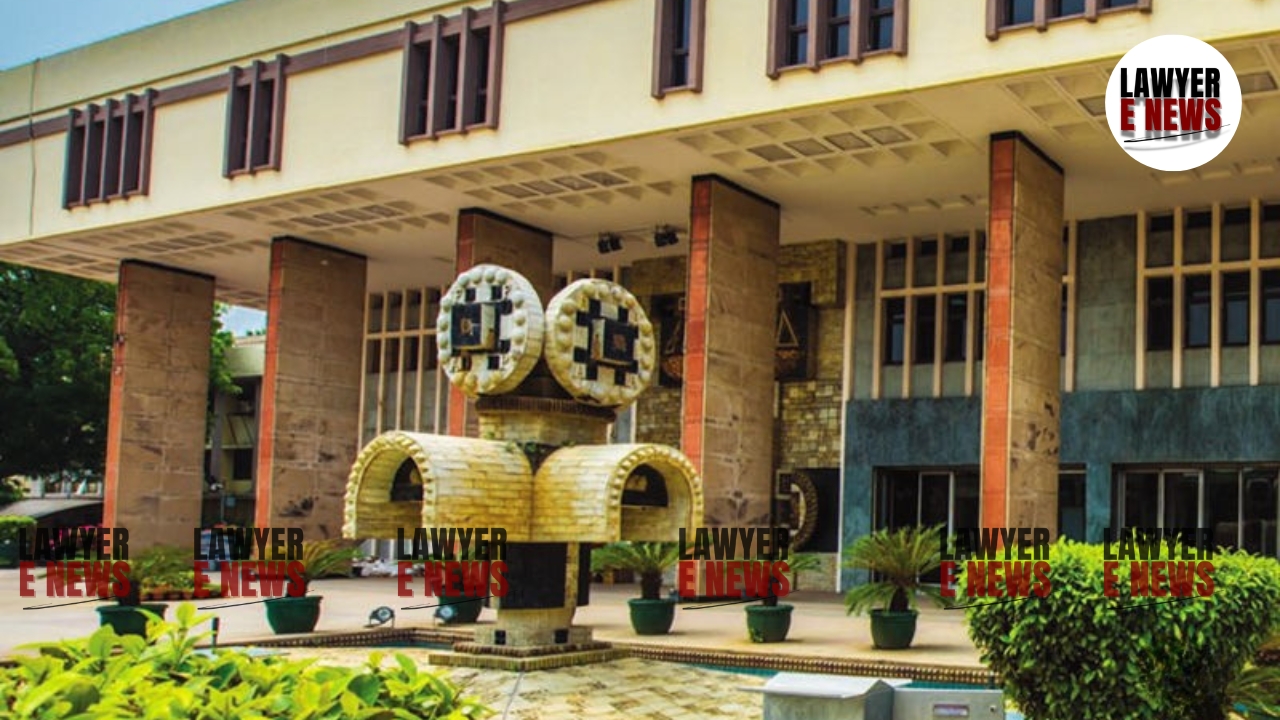
“Once enquiry is held fair, interference is permissible only if findings are perverse or based on no evidence”, In a significant judgment reinforcing the limits of judicial and quasi-judicial interference in disciplinary matters, the Delhi High Court set aside a Labour Court Award which had reinstated a terminated driver despite upholding the fairness of the domestic inquiry.
Justice Shail Jain held that once a Labour Court records a categorical finding that the domestic enquiry was fair and in compliance with principles of natural justice, it cannot reappreciate the evidence as if sitting in appeal. Interference is permissible only where findings are perverse, based on no evidence, or such that no reasonable person could have arrived at them. The termination order dated 01.08.1988 was restored, though wages paid under Section 17B of the Industrial Disputes Act were protected from recovery.
Termination After Vehicle Allegedly Misused
The respondent workman, Shri Ram Ratan, was engaged as a driver with MTNL since 28.09.1982. On 09.01.1988, he was assigned a vehicle which, according to the management, was taken out of Kidwai Bhawan premises and not parked back the same day. It was further alleged that on 10.01.1988, the vehicle was seen at Kosikalan on Delhi–Mathura Road by a senior vigilance officer.
A show cause notice was issued. The workman replied that the vehicle had been taken out under oral directions for repairs, returned and parked the same day, and that 10.01.1988 was his weekly off.
A domestic enquiry was conducted. The Inquiry Officer, after examining witnesses and records including gate registers and vehicle movement details, held the charges proved. The workman’s services were terminated on 01.08.1988. His departmental appeal failed.
Upon reference under the Industrial Disputes Act, the Labour Court held that the domestic enquiry was fair and that “principles of natural justice have been followed.” However, it proceeded to set aside the termination on the ground that the findings were not based on “reliable evidence,” and ordered reinstatement with continuity of service but without back wages, noting that the workman had been gainfully employed.
MTNL challenged the Award under Article 226.
“Judicial Review Is Not An Appeal”: High Court On Scope Of Section 11A
The High Court noted that the Labour Court had clearly held that the enquiry was fair, the workman had participated, cross-examined witnesses and led defence evidence. That finding had attained finality.
Despite this, the Labour Court reanalysed the evidentiary material and faulted the Inquiry Officer for allegedly relying on assumptions and not properly considering certain witnesses. The High Court found this approach legally untenable.
Relying on B.C. Chaturvedi v. Union of India, the Court reiterated:
“Judicial review is not an appeal from a decision but a review of the manner in which the decision is made… The Court/Tribunal in its power of judicial review does not act as appellate authority to reappreciate the evidence and to arrive at its own independent findings on the evidence.”
The Court emphasized that strict rules of the Evidence Act do not apply to domestic enquiries and that misconduct can be established on the principle of preponderance of probabilities.
Quoting Standard Chartered Bank v. R.C. Srivastava, the Court observed:
“The Tribunal has converted itself into a court of appeal… unless it is per se unsustainable or perverse, ordinarily is not to be interfered by the Tribunal, more so when the domestic enquiry has been held to be fair and proper.”
Meaning Of Perversity: “At Best, A Different View Of The Same Evidence”
Justice Shail Jain examined whether the findings of the Inquiry Officer could be termed perverse. The Court clarified that a finding is perverse only when it is based on no evidence, when relevant material is ignored, or when the conclusion is such that no reasonable person could have reached it.
In the present case, the Inquiry Officer had relied upon gate register entries, vehicle movement details and the explanation furnished by the workman. The High Court observed that the workman did not specifically deny the management’s assertion that the vehicle was seen at Kosikalan; rather, he relied on the plea that it was his weekly off.
The Court held that the Labour Court merely took “a different appreciation of the same evidence,” which does not satisfy the threshold of perversity.
Non-Examination Of Vigilance Officer Not Fatal
One of the workman’s key arguments was that Shri A.K. Trikha, who allegedly saw the vehicle at Kosikalan, was not examined in the enquiry, thereby denying an opportunity of cross-examination.
The High Court rejected this contention, noting that the workman had the opportunity to summon him as a defence witness but failed to do so. Non-examination of a particular witness does not ipso facto vitiate the enquiry, especially when the overall procedure was fair and the workman did not fundamentally dispute the factual basis of the allegation.
Article 226: Supervisory, Not Appellate Jurisdiction
On the scope of interference under Article 226, the Court relied upon Union of India v. P. Gunasekaran, where the Supreme Court delineated the boundaries of judicial review and cautioned that High Courts shall not reappreciate evidence or examine adequacy or reliability of evidence.
Applying these principles, the Court held that the Labour Court had committed a jurisdictional error by reappreciating evidence without recording any finding of perversity or absence of evidence. The Award thus suffered from “patent illegality” warranting interference.
Termination Restored, Section 17B Wages Protected
Consequently, the Award dated 26.09.2005 was set aside and the termination order dated 01.08.1988 was restored.
However, the Court clarified that wages paid to the workman under Section 17B of the Industrial Disputes Act during pendency of the writ petition, pursuant to interim orders, shall not be recoverable.
The ruling is a clear reaffirmation that Section 11A does not convert the Labour Court into an appellate forum once a domestic enquiry is held fair. Reappreciation of evidence, absent perversity or absence of material, amounts to jurisdictional overreach. By restoring the termination, the Delhi High Court has reinforced the principle that judicial review ensures fairness of process, not substitution of conclusions.
Date of Decision: 25.02.2026