-
by sayum
03 October 2026 9:56 AM







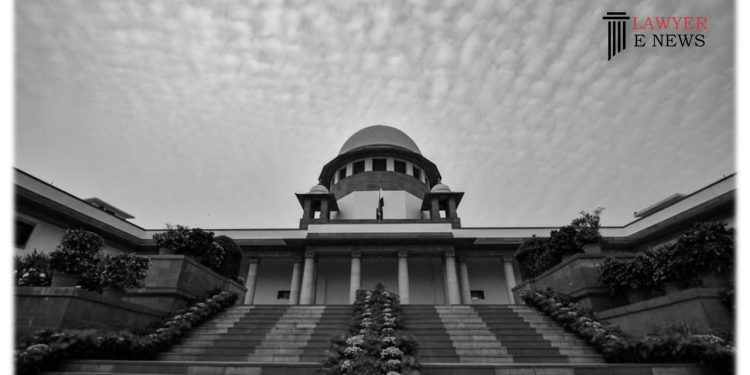
Supreme Court in a recent judgement (Rajendra Kumar Shrivas Vs. State of Madhya Pradesh and Others D.D. 13th March 2023) directed the High Court of Madhya Pradesh to act as per the directions issued by the Supreme Court in the case of All India Judges’ Association, specifically directions contained in paragraphs 8 and 9 of the said decision. The High Court is directed to ensure that 10% seats are filled up by limited departmental competitive examination from 1.1.2011 onwards and any breach of the 10% quota in subsequent recruitments shall be adjusted in future recruitments.
The original writ petitioners filed a petition before the High Court of Madhya Pradesh seeking various reliefs, including quashing the appointments made under limited competitive examination since 2007 that exceeded the 10% quota fixed by the Supreme Court. Despite directions from the Supreme Court to amend the rules and reserve 10% seats for limited departmental competitive examination, the High Court of Madhya Pradesh had exceeded the quota. The High Court dismissed the writ petition, stating that the petitioners were not entitled to seek a writ of quo warranto. The first petitioner has appealed against this decision. The Supreme Court has considered the matter on its merits instead of remanding it to the High Court.
The Supreme Court observed that in a previous case, All India Judges' Association, it had directed that there should be 25% direct recruitment from the Bar, 65% regular promotion of Civil Judge (Senior Division), and 10% limited departmental competitive examination. The Court also directed that if candidates are not available for the 10% seats or cannot qualify, then the vacant posts should be filled by regular promotion in accordance with the Service Rules. The Court further directed that all High Courts should amend their existing Service Rules positively by 1.1.2011, and if not suitably amended, the order would prevail, and further recruitment from 1.1.2011 would be continued accordingly. Therefore, any appointment beyond the 10% seats filled up by limited departmental competitive examination would be considered an excess in the quota.
Supreme Court noted that there were 740 sanctioned posts in 2017, which means that 74 seats were to be filled up by limited departmental competitive examination. However, 78 posts were filled up by limited departmental examination, and later 5 more posts were filled up out of the 11 advertised. This means that the posts were filled up by limited departmental competitive examination beyond the 10% seats quota for limited departmental competitive examination. The Supreme Court directed the High Court to undertake the exercise from 1.1.2011, adjusting the posts and adjusting any appointments made beyond the 10% seats quota in a particular recruitment in future recruitment.
Supreme Court held that in regard to the challenge to appointments made in excess of the quota under limited departmental competitive examination since 2007 and the appointments made in the year 2017/2018, no relief can be granted to the original writ petitioners in absence of those selected/appointed candidates.
The High Court's counsel strongly opposed the locus of the original writ petitioners, but the matter was considered on merits in light of the decision of the Supreme Court in the case of All India Judges’ Association.
Supreme Court directed the High Court of Madhya Pradesh to act as per the directions issued by the Supreme Court in the case of All India Judges’ Association, specifically directions contained in paragraphs 8 and 9 of the said decision. The High Court is directed to ensure that 10% seats are filled up by limited departmental competitive examination from 1.1.2011 onwards and any breach of the 10% quota in subsequent recruitments shall be adjusted in future recruitments.
Rajendra Kumar Shrivas Vs. State of Madhya Pradesh and Others