-
by sayum
28 July 2026 10:19 AM







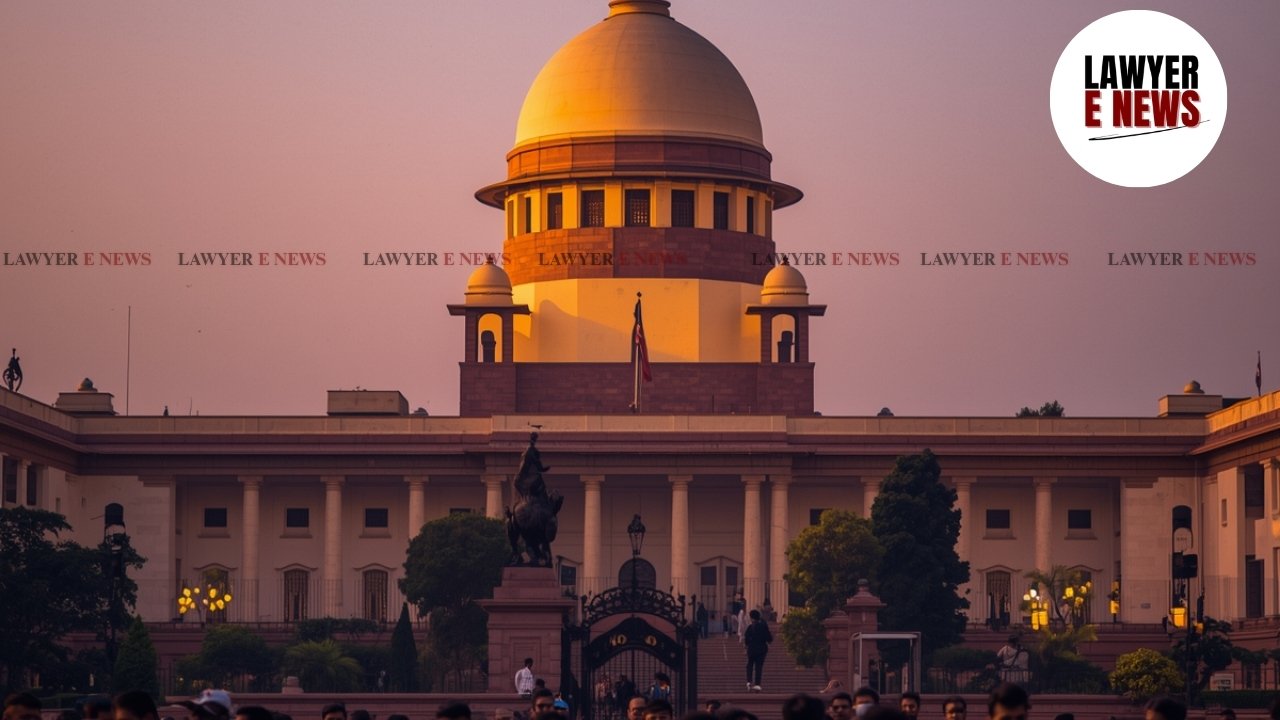
"A suitor having himself chosen the forum convenient to the respondents, application of the doctrine of forum non conveniens could be self-defeating and likely to deny access to justice rather than advancing it," Supreme Court, in a significant ruling, held that a High Court cannot refuse to entertain a writ petition on the ground of forum non conveniens if it possesses jurisdiction under Article 226(1) of the Constitution of India by virtue of the respondent's office being located within its territorial limits.
A bench of Justice Dipankar Datta and Justice Satish Chandra Sharma observed that the doctrine of "inconvenient forum" has limited application in writ proceedings, especially when the petitioner approaches a court where the records of the case are invariably available.
The appellant, Baksish Ahmad, an enrolled member of the Border Security Force (BSF), was dismissed from service in 2022 following a Court of Inquiry which found he had contracted a second marriage during the subsistence of his first marriage without permission. Though the dismissal order was issued in West Bengal and his statutory petition was rejected in Jammu & Kashmir, the appellant challenged these orders before the Delhi High Court as the BSF Headquarters and the Ministry of Home Affairs are situated in Delhi. The Delhi High Court dismissed the writ petition, invoking the doctrine of forum non conveniens, stating that no part of the cause of action arose in Delhi.
The primary question before the court was whether the Delhi High Court was justified in refusing to adjudicate the writ petition on the ground of forum non conveniens despite having jurisdiction under Article 226(1). The court was also called upon to determine the applicability of this doctrine in cases involving Central Armed Police Forces (CAPF) personnel where the headquarters of the authorities are located in the national capital.
Article 226(1) Confers Jurisdiction Based On Situs Of Respondent's Office
The Supreme Court emphasized that Article 226 of the Constitution provides two distinct bases for a High Court to exercise jurisdiction. While clause (2) focuses on where the cause of action arises, clause (1) enables a High Court to issue writs to any person or authority situated within its territorial limits. The bench noted that since the Director General of the BSF and the Union of India have their offices in Delhi, the Delhi High Court clearly possessed the competence to entertain the matter under Article 226(1).
Distinction Between Competence To Entertain And Discretionary Refusal
The Court observed that the Delhi High Court Division Bench was conscious of its competence but chose to apply the discretionary doctrine of forum non conveniens. However, the Supreme Court clarified that this discretion must be exercised legally and properly. The bench noted that the Union of India and the Director General are necessary parties to such service disputes, and their presence in Delhi makes the court a valid forum for the litigation.
"The Union of India and the Director General, BSF having their offices in New Delhi were necessary parties to the appellant’s writ petition and, thus, had been duly impleaded as the respondents before the Delhi High Court."
Reconciling Conflicts In Judicial Precedents Regarding CAPF Personnel
The judgment addressed a perceived conflict between earlier decisions in Abrar Ali v. CISF and Eastern Coalfields Ltd. v. Kalyan Banerjee. To reconcile these, the Court held that for members of the CAPF, including the BSF, the Delhi High Court would have territorial jurisdiction regardless of where the cause of action arose, simply due to the situs of the office of the Union of India and the Director General under Article 226(1).
Forum Non Conveniens Rarely Applies To Writs Of Certiorari
The Court highlighted a practical aspect of writ jurisdiction, specifically regarding writs of Certiorari. It noted that such writs require the records of the case to be placed before the Court for examination. Since the records of disciplinary proceedings are required to be reported to the Director General, they would invariably be available at the headquarters in Delhi. Therefore, the court at the situs of the headquarters cannot be considered "inconvenient" for the respondents.
"When a writ of or in the nature of Certiorari is prayed... such records would invariably be available in the offices of the respondents; if not, it can readily be called for from the custodian thereof."
Application Of Doctrine In Writ Jurisdiction Is Fact-Specific
Referring to the 3-judge bench decision in Kusum Ingots & Alloys Ltd. v. Union of India, the Court noted that while forum non conveniens can be invoked when cause of action arises across multiple jurisdictions, it should not be used to negate the jurisdiction established by the situs of the respondent's office. The bench remarked that when a suitor chooses a forum that is actually convenient for the respondent (where their HQ is located), the respondent cannot easily claim it is an inconvenient forum.
The Supreme Court concluded that the doctrine of forum non conveniens was misapplied by the Delhi High Court. It set aside the impugned orders and revived the appellant's writ petition on the file of the Delhi High Court for a decision on its merits. The court granted the respondents two months to file their counter-affidavit, ensuring that the matter proceeds towards an early disposal.
Date of Decision: June 09, 2026