-
by sayum
28 July 2026 10:19 AM







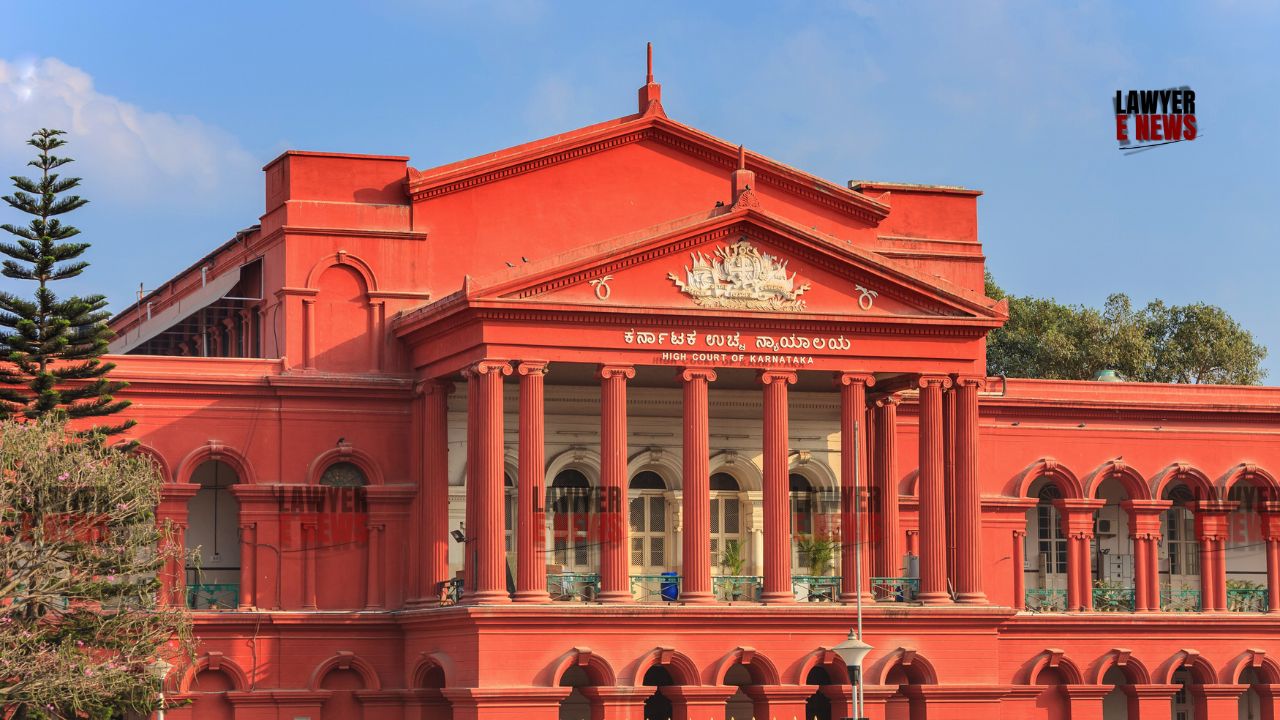
"To unilaterally reverse such a decision, without following due process, amounts to an abuse of power." Karnataka High Court, in a significant ruling, held that a statutory planning authority cannot unilaterally rescind a resolution passed to comply with judicial directives, especially without assigning cogent reasons or hearing the affected parties.
A division bench comprising Justice D.K. Singh and Justice T.M. Nadaf quashed an order of the Bangalore Development Authority (BDA) Commissioner, observing that the sudden turnaround by the authority to favour a private developer was "an exercise in mala fide, arbitrary, illegal and for considerations other than legal."
The appellants are owners of a landlocked property in Jakkur Plantation Village, which is surrounded by a larger tract of land being developed by a private builder, Respondent No.3. Following a prolonged legal battle over access rights, the Karnataka Lokayukta directed the BDA to ensure an 18-metre access road to the appellants' property. This directive was subsequently affirmed by a division bench of the High Court and the Supreme Court of India.
In compliance with these judicial mandates, the BDA passed Resolution No. 133/2019, explicitly cancelling a previous legally infirm resolution and mandating an 18-metre wide road network. However, on March 5, 2024, a newly appointed BDA Commissioner abruptly withdrew this resolution and reinstated the older, cancelled plan, effectively reducing the access road width to 9.5 metres. The appellants challenged this move, but a single judge dismissed their writ petition, prompting the present appeal before the division bench.
The primary question before the court was whether the BDA's order rescinding Resolution No. 133/2019 and reviving a previously cancelled resolution was in accordance with the law. The court was also called upon to determine whether this administrative reversal violated the principles of natural justice and legitimate expectation. A corollary issue was whether the appellants had an enforceable right to the 18-metre access road as originally envisaged by the Lokayukta report.
Judicial Affirmation Must Be Honoured
The bench heavily criticised the BDA for ignoring the finality of earlier judicial pronouncements. The Court noted that the fulcrum of the dispute lay in the Lokayukta Report of 2011, which was confirmed by the High Court and later upheld when the Supreme Court dismissed the special leave petition in 2016. The bench observed that while Lokayukta directions are not strictly a decree, previous courts had already mandated that they must be implemented in their true spirit.
Arbitrary Reversal Amounts To Abuse Of Power
The Court found the BDA Commissioner's decision to withdraw Resolution No. 133/2019 and revive the illegal Resolution No. 70/2018 to be fraught with arbitrariness and mala fides. The bench emphasised that the 2019 resolution was a corrective measure taken to align the authority's actions with judicial directions. Reversing it unilaterally constituted a blatant abuse of power and an arbitrary concession to the private respondent.
Master Plan Withdrawal Is No Excuse
Addressing the BDA's defence that the 2019 resolution was based on the subsequently withdrawn Revised Master Plan (RMP-2031), the Court rejected this justification entirely. The bench highlighted that the BDA ought to have incorporated the 18-metre road into the applicable RMP-2015. The withdrawal of a master plan, the court noted, does not automatically grant the BDA the authority to revert to a resolution that was explicitly cancelled for being contrary to judicial pronouncements.
"Public authorities are bound to act fairly, reasonably, and in a non-arbitrary manner."
Violation Of Legitimate Expectation
The division bench pointed out that the appellants possessed a legitimate expectation that the BDA would adhere to a resolution born out of a lengthy legal battle. The Court noted that the BDA had previously even directed the private developer to submit revised plans reflecting the 18-metre road. The abrupt reversal, passed entirely behind the backs of the appellants without notice or a hearing, was termed a clear violation of the principles of natural justice.
Right To Access Is Essential
The Court ruled that the right to reasonable access to one's land is an essential incident of property rights. Reducing the road width to 9.5 metres severely prejudiced the appellants and compromised comprehensive development and public interest in the locality. The bench reminded the BDA that as a planning authority, it is statutorily enjoined under Section 32 of the BDA Act to act in the larger public interest, not to dole out arbitrary concessions.
The division bench set aside the single judge's order and quashed the BDA Commissioner's directive dated March 5, 2024. The Court directed the BDA and the Town Planning Member to strictly implement Resolution No. 133/2019, restoring the appellants' right to the 18-metre access road in compliance with the earlier judicial mandates.
Date of Decision: 27 July 2026