-
by sayum
28 July 2026 10:19 AM







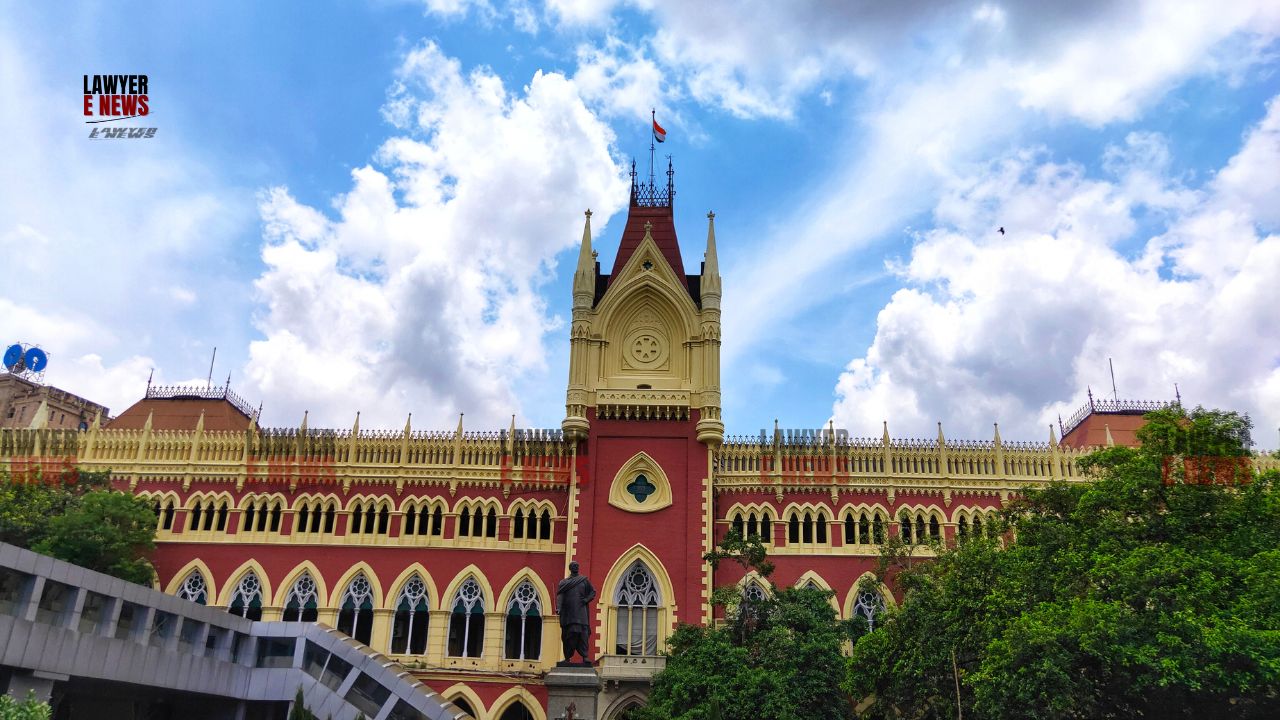
"In this case, even if all arguments made by the parties, as regards the merits of the case are ignored, the order would still fail to stand judicial scrutiny. It would be evident from the order itself that the learned Trial Court has proceeded to pass the said order without affording any opportunity to the petitioner to use any affidavit/written objection..." Calcutta High Court, in a significant ruling dated July 27, 2026, held that a trial court cannot direct the production of documents under Order 11 Rule 14 of the Civil Procedure Code without first satisfying itself that the documents are actually in the possession or power of the directed party.
A single-judge bench of Justice Om Narayan Rai observed that such satisfaction must be derived from the party's admission, affidavit, or other material on record. The court strictly deprecated the practice of allowing such applications without granting the opposing party an opportunity to file a written objection.
The underlying dispute stems from Title Suit No. 607 of 2026, instituted by the plaintiff praying for decrees of declaration and injunction. While the petitioner filed an application to vacate an ex-parte ad-interim injunction, the plaintiff simultaneously moved an application under Order 11 Rule 14 of the CPC for the production of certain documents. On June 1, 2026, the Civil Judge (Senior Division) 1st Court, Alipore, allowed the plaintiff's application on the very same day it was taken up, directing the petitioner to produce the documents without affording them any opportunity to respond.
The primary question before the court was whether a trial court can order the production of documents under Order 11 Rule 14 of the CPC without first allowing the opposing party to file a written objection. The court was also called upon to determine the mandatory threshold conditions that a civil court must satisfy before exercising its discretion to compel the production of documents.
Mandatory Conditions For Directing Document Production
The court thoroughly examined the statutory mandate under Order 11 Rule 14 of the Code of Civil Procedure. It clarified that a trial court cannot mechanically direct the production of documents merely upon an application by a party. The bench emphasised that before passing such a directive, the court must be definitively satisfied that two essential conditions are met. First, the documents must be in the possession or power of the party against whom the order is made, and second, the documents must relate to the matter in question in the suit.
Satisfaction Must Stem From Evidentiary Material
Relying on the coordinate bench decision in India Foils Ltd. vs. The 5th Industrial Tribunal, West Bengal, the court explained how a trial judge must arrive at this requisite satisfaction. The bench noted that such satisfaction must be derived either from an explicit admission by the party against whom the order is made, or from an affidavit filed on their behalf. In the absence of an affidavit, the court may rely on other materials on record, such as preceding correspondence between the parties, that unequivocally establishes possession.
Trial Court Order Failed To Stand Judicial Scrutiny
Turning to the impugned order, the High Court expressed strong disapproval of the trial court's procedural haste. The bench observed that the trial judge disposed of the application on the exact same day it was taken up, completely shutting out the petitioner's right to respond. The court remarked that even if the merits of the arguments were ignored, the trial court's order would still fail to stand judicial scrutiny because of this glaring violation of the principles of natural justice.
Absence Of Recorded Satisfaction By The Lower Court
The High Court further noted a fatal flaw in the lower court's reasoning, pointing out that the impugned order lacked any judicial finding regarding the petitioner's control over the documents. Justice Rai explicitly observed that the order impugned did not record any satisfaction that the documents were in the possession and power of the petitioner who had been directed to produce them. The court found that since no opportunity to file an affidavit was granted, there was absolutely no material to conclude any admission of possession.
Guidelines On Exercising Judicial Discretion
The bench also placed reliance on the Supreme Court judgments in Basanagouda vs. Dr. S. B. Amarkhed and Padam Sen vs. State of Uttar Pradesh, alongside the High Court's ruling in Amulyadhan Hait vs. Dinesh Hait. The court highlighted that these precedents clearly instruct how the discretion under Order 11 Rule 14 of the Code is to be exercised and provide the serious consequences of defying such commands. The bench reasoned that because the consequences of non-compliance are severe, the procedural prerequisites for issuing the order must be strictly followed.
The High Court set aside the June 1, 2026 order of the Civil Judge to the extent it allowed the plaintiff’s application and directed the production of documents. To cure the procedural defect, the court granted the petitioner two weeks to file an affidavit-in-opposition and directed the trial court to fix a fresh date for hearing the application according to its convenience.
Date of Decision: 27 July 2026