-
by sayum
28 July 2026 9:28 AM







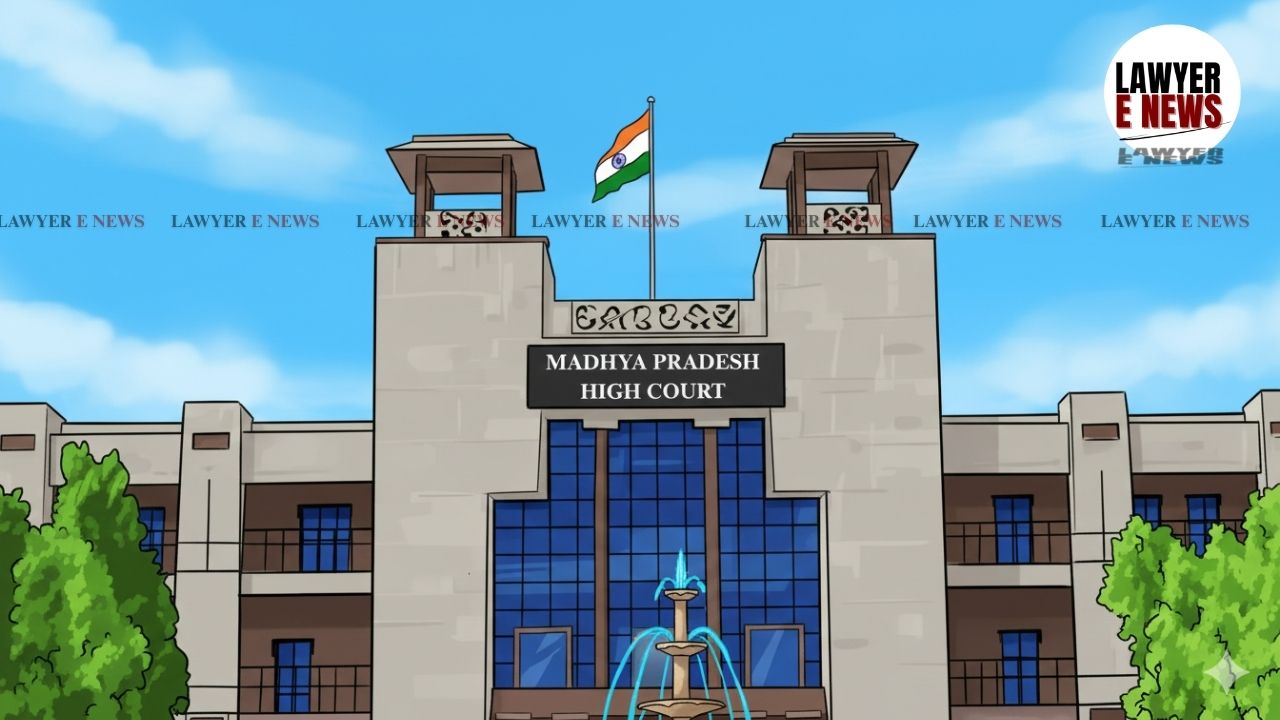
"The failure to ascertain the status of the WhatsApp or email service strikes at the root of the principles of natural justice." Madhya Pradesh High Court, in a significant ruling dated July 16, 2026, held that a family court cannot proceed ex-parte against a party based merely on the issuance of notice via WhatsApp or email without a conclusive report confirming successful service.
A single-judge bench of Justice Jai Kumar Pillai observed that passing a final ex-parte maintenance order without first ensuring that the notice was actually delivered constitutes a grave material irregularity.
The dispute arose after the respondent-wife filed an application under Section 125 of the Code of Criminal Procedure (CrPC) in November 2021 seeking a monthly maintenance of Rs. 2,00,000. While the family court issued notices to the petitioner-husband through various modes including electronic means, it eventually closed his right of defence and passed an ex-parte order on December 7, 2023, awarding Rs. 10,000 per month as maintenance. The husband subsequently challenged this order through a criminal revision plea under Section 19(4) of the Family Courts Act, 1984, arguing he was never properly served.
The primary question before the High Court was whether the Family Court properly ensured the service of notice upon the husband before proceeding ex-parte and passing the final maintenance order.
Scope Of Revisional Jurisdiction Is Strictly Supervisory
The court first outlined the boundaries of its revisional powers while adjudicating the challenge. Justice Pillai clarified that the revisional court does not function as a regular court of appeal and is strictly supervisory in nature. The bench firmly noted that the court's interference is limited to correcting jurisdictional errors or patent illegalities, and a routine re-appreciation of evidence is impermissible under the law.
No Conclusive Proof Of Service Through Electronic Modes
Delving into the procedural history, the High Court perused the trial court records and noted that after physical notices were returned unserved in December 2021, the family court permitted service through WhatsApp, email, and registered post (RAD) mode. However, the bench expressed grave concern over the complete absence of any subsequent service report regarding these electronic modes on the trial court's record.
Ex-Parte Order Without Confirmed Service A Grave Irregularity
The High Court strongly criticized the family court's hasty approach in concluding the maintenance proceedings. The court observed that there was no verification on record confirming whether the process fee for RAD was actually paid or if any acknowledgement receipt was ever generated. Justice Pillai emphasized that courts must ascertain the actual delivery status of electronic notices before stripping a party of their fundamental right to a defense.
"It is apparent from the record that the learned Family Court acted in a hurry to conclude the proceedings. Proceeding to pass a final ex-parte order on 07/12/2023 without first ensuring that the notice was duly served upon the petitioner constitutes a grave material irregularity."
Failure To Ascertain Notice Status Violates Natural Justice
Underscoring the importance of a fair and adequate hearing, the court held that failing to verify the delivery of WhatsApp and email notices strikes directly at the root of the principles of natural justice. Because of this glaring procedural lapse, the High Court concluded that the impugned ex-parte maintenance order suffered from patent illegality, warranting direct interference to prevent a miscarriage of justice.
In view of the patent illegality, the High Court allowed the criminal revision and set aside the ex-parte maintenance order dated December 7, 2023. The matter was remanded back to the Family Court for fresh consideration on merits, with strict directions to afford a proper and adequate opportunity of hearing to both parties.
Date of Decision: 16 July 2026