-
by sayum
28 July 2026 9:28 AM







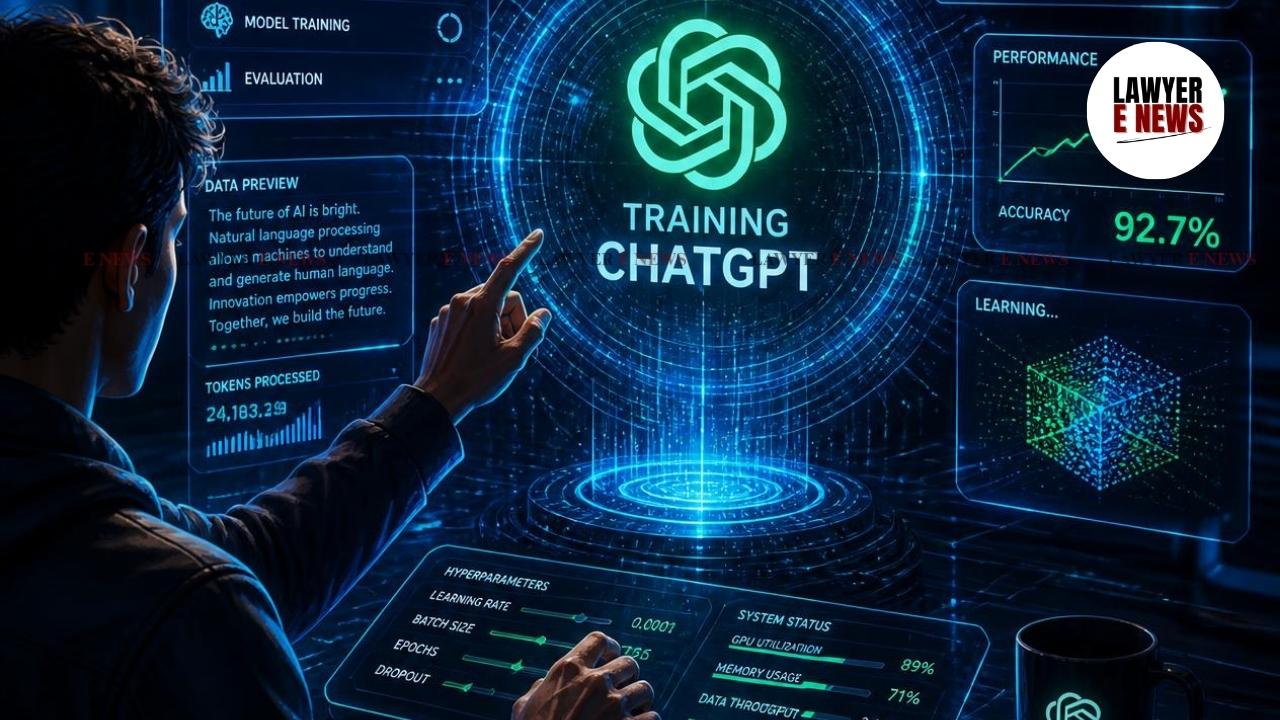
"If tomorrow a human teacher is replaced by an AI bot or Robot to say that the said exception could only be used by a human would be a regressive view. Such an approach would limit societal progress. Therefore, the acts of further research cannot be confined to acts of human being alone and the same would extend to machine learning as well." Delhi High Court, in a landmark ruling dated July 24, 2026, held that the use of copyrighted news content by Artificial Intelligence platforms like OpenAI to train their Large Language Models (LLMs) falls within the 'fair dealing' exception under the Copyright Act and does not amount to infringement.
A single-judge bench of Justice Amit Bansal observed that the process of training LLMs using stored literary works qualifies as "private or personal use, including research," emphasizing that copyright law must receive an updating construction to accommodate modern technological advancements.
The suit was instituted by news agency ANI Media Pvt. Ltd. against OpenAI OPCO LLC, the creator of ChatGPT, alleging the unauthorized use of its copyrighted original literary works. ANI claimed that OpenAI unlawfully copied and stored its data to train its LLMs, and that ChatGPT's output substantially reproduced ANI's news articles. OpenAI, supported by several tech startups and think tanks, countered that its use of publicly available data was transformative, non-expressive, and fully protected under the fair dealing provisions of the Indian Copyright Act.
The primary question before the court was whether the storage and use of copyrighted data to train AI models like ChatGPT constitutes copyright infringement under Section 14 and 51 of the Copyright Act. The court was also called upon to determine whether such use qualifies as 'fair dealing' for private use or research under Section 52(1)(a), and whether Indian courts possess the territorial jurisdiction to entertain the suit given that OpenAI's servers are located in the United States.
Territorial Boundaries Diminished In Cloud Computing Era
Addressing the preliminary objection regarding territorial jurisdiction, the court firmly rejected OpenAI's contention that the Indian Copyright Act would not apply since its servers and training data are located in the United States. The court observed that the storing of ANI’s works on US servers was merely a terminal step in a chain of events that began with accessing copyrighted works from India. The bench held that the act of scraping copyrighted material cannot be entirely divorced from the output claim, which occurs within the jurisdiction of the Indian courts.
"On a prima facie view, Open AI’s argument is untenable as it would lead to evasion of Indian copyright law by infringers who shift the terminal link to servers abroad."
No Copyright Over Underlying Facts In News
Turning to the issue of whether ChatGPT's responses infringed ANI's copyright, the court reiterated the well-established legal principle that there can be no copyright in facts, themes, or historical events. The bench noted that in the context of news reporting, copyright subsists only in the form and manner of the expression of the news, not the underlying factual matrix. Evaluating the specific prompts and responses relied upon by the plaintiff, the court found no substantial similarity or verbatim reproduction of the copyrighted expression.
ChatGPT Output Is Not Substantial Reproduction
The court closely examined the instances where ANI alleged that ChatGPT reproduced its news articles. The judge noted that the outputs were generated in response to adversarial prompts deliberately designed to extract specific quotes from the model. Even then, the court found that ChatGPT added its own context and commentary, acting more like an AI-enabled search engine utilizing the Retrieval-Augmented Generation (RAG) technique rather than regurgitating the exact expression of ANI's articles. The bench concluded that the responses produced by ChatGPT did not amount to market substitution.
'Fair Dealing' Exception Is An Integral User Right
Delving into the intersection of AI training and copyright law, the court analysed Section 52(1)(a) of the Copyright Act, which exempts fair dealing with any work for the purposes of private or personal use, including research. The court rejected the plaintiff's argument that the fair dealing exception must be interpreted restrictively. Aligning with international jurisprudence from the Canadian Supreme Court, the bench observed that Section 52 balances the exclusive rights of the copyright owner with the competing public interest of encouraging creativity and disseminating knowledge.
"Section 52 independently defines the rights/privileges of a user in respect of copyrighted works and must not be interpreted in a restrictive manner. It is an integral part of the Copyright Act and therefore, it has to be given broad and liberal interpretation."
"The copies used to train specific LLMs did not and will not displace demand for copies of Authors’ works, or not in the way that counts under the Copyright Act... The Act seeks to advance original works of authorship, not to protect authors against competition."
Commercial Use Does Not Defeat 'Private Use' Or 'Research'
The court dismissed the contention that OpenAI's commercial nature disqualified it from the fair dealing defence. The bench highlighted that the legislature intentionally omitted the "non-commercial" restriction in Section 52(1)(a)(i), unlike other sub-clauses where such limitations are explicitly stated. The court observed that the term "private" is not confined to individuals but extends to private corporate entities. Furthermore, the data obtained by the LLMs for training is stored in a closed space inaccessible to the general public, thereby qualifying as private use.
Machine Learning Qualifies As Valid Research
Applying the doctrine of updating construction, the court held that the term "research" must be interpreted in light of modern technological advancements. The judge noted that the process of training LLMs involves screening, organising, and extracting machine-readable inputs to generate new knowledge and advance artificial intelligence systems. The court ruled that research is no longer confined to human beings and extends to machine learning, which ultimately operates at the behest of and for the benefit of humanity.
AI Training Is A Transformative Purpose Serving Public Interest
Applying the fairness test, the court held that OpenAI's use of copyrighted works is quintessentially transformative. The bench observed that LLMs do not serve as a substitute for news articles but perform multifarious, distinct functions such as content creation, language translation, and education. Recognizing the transformational change brought about by generative AI, the court underscored that the development of LLMs depends on the availability of voluminous data, and compelling developers to obtain licenses from multiple sources would be economically unviable and detrimental to public interest.
Concluding that the training of AI models serves a broader public interest in scientific research, technological innovation, and knowledge dissemination, the court held that the balance of convenience favoured OpenAI. Finding no prima facie case of copyright infringement and noting that an injunction would be highly detrimental to the growth of AI in India, the Delhi High Court dismissed ANI's application for an interim injunction.
Date of Decision: 24 July 2026