-
by sayum
25 August 2026 12:32 PM







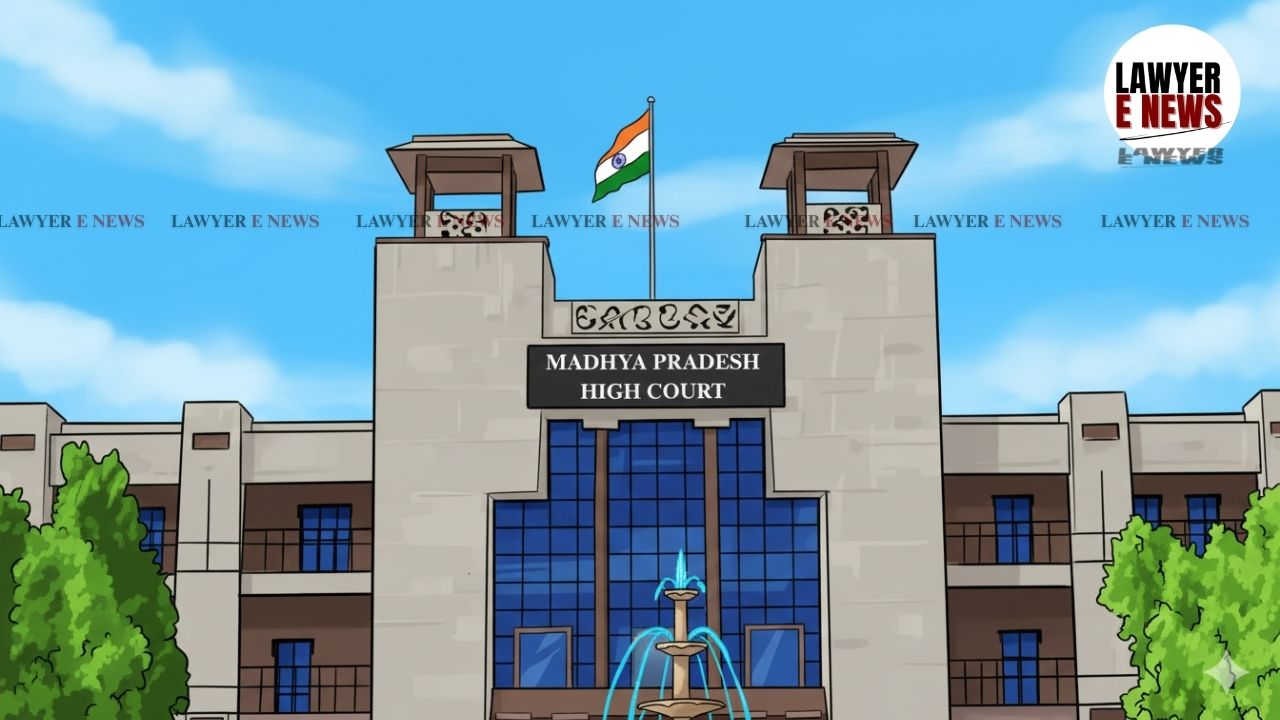
“Departmental Enquiry Cannot Be Treated as a Casual Exercise – Principles of Natural Justice Given Complete Go-By”, In a significant ruling Madhya Pradesh High Court (Gwalior Bench) struck down an entire departmental enquiry conducted against a Superintendent of Gajara Raje Medical College, Gwalior, holding that the proceedings were vitiated by bias, procedural irregularity, and breach of natural justice.
While upholding the competence of the Dean to initiate disciplinary action, Hon’ble Shri Justice Ashish Shroti quashed the enquiry proceedings and the enquiry report dated 31.12.2025, observing that the manner in which the Enquiry Officer and Presenting Officer acted jointly “gives an impression of bias” and renders the proceedings unsustainable in law.
Allegation of Appointment on False Documents
The petitioner, Dr. Girja Shankar Gupta, was appointed as Superintendent on 06.08.2019 in the Pay Band of 15600–39100 + 5400 GP. A complaint was received alleging that he had secured his appointment on the basis of false documents. A show-cause notice was issued on 31.07.2025, followed by initiation of disciplinary proceedings.
An unusual turn of events followed. Initially, a charge-sheet dated 21.11.2025 was issued jointly by the Enquiry Officer and the Presenting Officer. Later, this charge-sheet was withdrawn on 16.12.2025 on the ground that the Dean had already issued a charge-sheet on 30.10.2025. Eventually, an ex parte enquiry report dated 31.12.2025 was submitted — again bearing joint signatures of both the Enquiry Officer and the Presenting Officer.
This sequence formed the core of the challenge before the Court.
“CEO/Dean Is Competent Authority Under Autonomous College Rules, 2018”
The petitioner had argued that under the Madhya Pradesh Super Specialty Hospital Chikitsa Shikshak Seva Niyam, 2018, the Commissioner, Medical Education, was the competent authority to issue a charge-sheet and therefore the Dean lacked jurisdiction.
Rejecting this contention, the Court undertook a detailed comparative analysis of the two sets of Rules of 2018 — the Super Specialty Hospital Rules and the Autonomous College Rules.
The Court noted that the petitioner was appointed in the Pay Band of 15600–39100 + 5400 GP, which corresponded to the post of Superintendent under the Autonomous College Rules of 2018. Under Rule 13.4 of those Rules, the CEO/Dean is the competent authority to initiate disciplinary proceedings.
The Court held that:
“The CEO/Dean of the College was thus competent to take disciplinary action and issue charge sheet against the petitioner.”
The objection regarding lack of competence was accordingly rejected.
Service of Charge-Sheet: Irregularity Noted
The Court also observed that although a charge-sheet dated 30.10.2025 was claimed to have been issued by the Dean, no material was produced to establish that it had been served on the petitioner prior to 16.12.2025.
The charge-sheet appeared to have been supplied for the first time by the Enquiry Officer on 16.12.2025. This irregularity was noted by the Court, though it was not the sole basis of quashing the proceedings.
“Enquiry Officer Is in the Position of a Judge – Presenting Officer Is the Prosecutor”
The heart of the judgment lies in its emphatic reiteration of the distinct and inviolable roles of the Enquiry Officer and Presenting Officer.
Relying upon State of U.P. v. Saroj Kumar Sinha and Union of India v. Naseem Siddiqui, the Court observed:
“An inquiry officer acting in a quasi-judicial authority is in the position of an independent adjudicator. He is not supposed to be a representative of the department.”
Further, the Division Bench principles quoted in Naseem Siddiqui were reaffirmed:
“The adjudicator shall not be the prosecutor.”
The Court explained that in a departmental enquiry, the Enquiry Officer functions like a judge, whereas the Presenting Officer acts as a prosecutor. If the Enquiry Officer acts like a prosecutor, or if the Presenting Officer participates in adjudication, the enquiry stands vitiated.
Joint Signing of Charge-Sheet and Enquiry Report – “Unusual and Impermissible”
The Court found it highly irregular that the charge-sheet dated 21.11.2025 was jointly signed by the Enquiry Officer and Presenting Officer. It held:
“Unless the Enquiry Officer himself is the disciplinary authority, charge sheet cannot be issued by Enquiry Officer and further it can never be issued with the signature of Presenting Officer.”
More glaring was the fact that the final enquiry report dated 31.12.2025 was also signed jointly by both.
The Court categorically held:
“Signing of report by the Presenting Officer would only mean that he is instrumental in recording of findings against the petitioner.”
This, according to the Court, created at least an “impression of bias,” which is sufficient to vitiate the enquiry.
No Evidence Led – Findings Recorded Without Proof
On examining the original enquiry record, the Court found that although proceedings were recorded on multiple dates, no evidence was led by the Presenting Officer to establish the charges. The Enquiry Officer referred to documents and recorded findings without formal proof.
“The charges have been held proved against the petitioner, but without there being any evidence led by Presenting Officer.”
The Court observed that the principles of natural justice had been “given complete go-by.”
Ignorance of Procedure No Defence
The respondents attempted to justify the irregularities by submitting that both the Enquiry Officer and Presenting Officer were doctors and not well-versed with disciplinary procedures.
The Court firmly rejected this explanation:
“Conducting enquiry by a person who is not versed with the procedure, is again a serious lapse in the enquiry.”
The Court emphasized that by virtue of Article 311(2) of the Constitution, a departmental enquiry must conform to the principles of natural justice and cannot be treated as a casual exercise.
Judicial Review at Charge-Sheet Stage – Exception Applied
Though courts ordinarily refrain from interfering at the stage of charge-sheet or ongoing disciplinary proceedings, the High Court held that where the enquiry ex facie violates natural justice and demonstrates bias, intervention is warranted.
The Court concluded:
“Even though Dean of the College is competent to take disciplinary action against the petitioner, however, the action taken by him right from the stage of service of charge sheet is vitiated.”
The Court partly allowed the writ petition and issued the following directions:
The charge-sheet dated 30.10.2025 was upheld as having been issued by a competent authority.
However, the entire enquiry conducted by the Enquiry Officer and Presenting Officer and the enquiry report dated 31.12.2025 were quashed.
The Dean was directed to proceed afresh from the stage of service of the charge-sheet and, if required, appoint an Enquiry Officer well-versed in disciplinary procedure.
The petitioner was held entitled to copies of relied-upon documents and other relevant records.
This judgment reinforces the foundational principle that in disciplinary proceedings, “justice must not only be done but must manifestly be seen to be done.” The High Court’s intervention serves as a stern reminder that even in cases involving serious allegations, procedural fairness and institutional impartiality cannot be sacrificed.
The ruling stands as a cautionary precedent — when the roles of judge and prosecutor blur, the entire enquiry collapses.
Date of Decision: 17.02.2026