-
by sayum
25 August 2026 11:12 PM







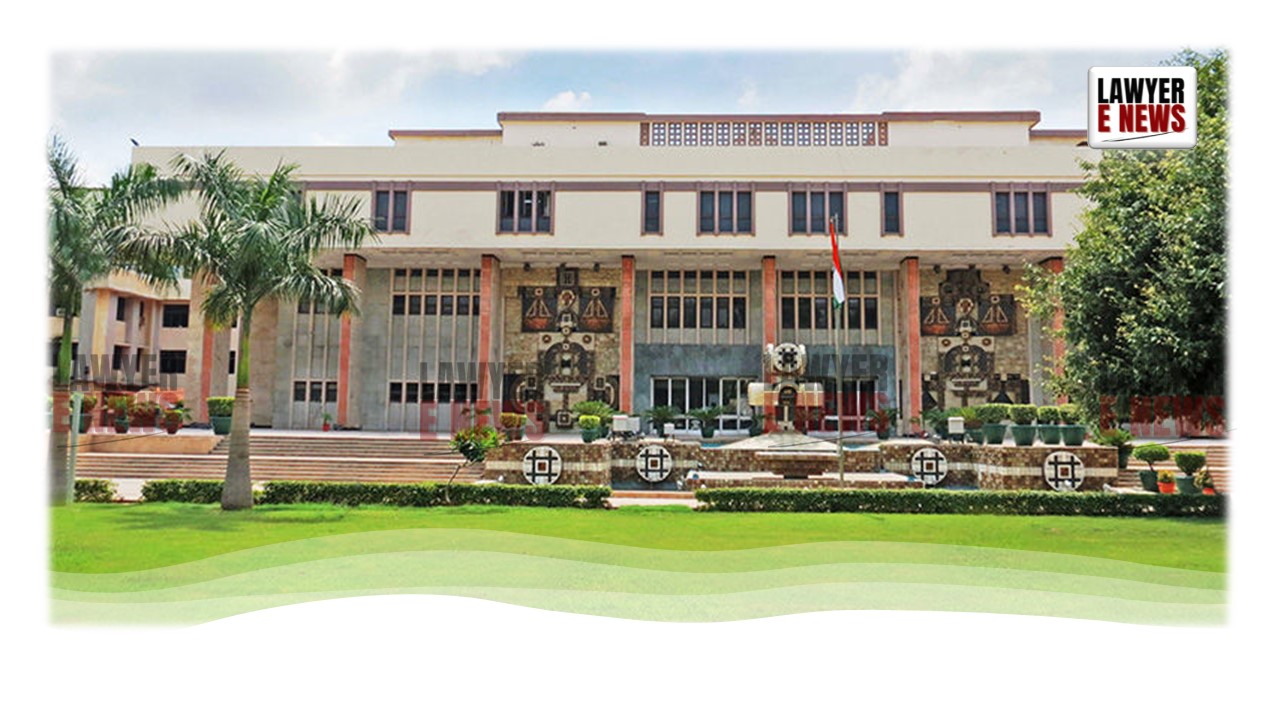
“Minimum Threshold Marks… Shall Be Decided by the Competent Authority” – Delhi High Court upheld the decision of the Central Administrative Tribunal dismissing challenges to the prescription of minimum qualifying marks in Paper-III (Stage-II) of the Combined Administrative Services Examination-2023 (CASE-2023).
A Division Bench comprising Justice Anil Khetarpal and Justice Amit Mahajan held that the power to prescribe threshold marks was expressly reserved in the Recruitment Advertisement itself and that the benchmark was notified before the conduct of Stage-II. The Court ruled that such action did not amount to “changing the rules of the game mid-way.”
The writ petitions were dismissed, and the Tribunal’s order dated 08.09.2025 was affirmed.
Benchmark Introduced Before Stage-II, Candidates Failed to Qualify
CSIR issued Advertisement No. E-1/RC/2023/1 on 08.12.2023 inviting applications for 444 posts, including 76 Section Officers and 368 Assistant Section Officers.
Under Clause 5-A titled “Scheme of Examination”, the advertisement categorically provided:
“Minimum threshold marks, wherever prescribed/required, shall be decided by the Competent Authority.”
It further clarified that “The above process is suggestive only.”
Stage-I examinations were conducted in February 2024, and results were declared on 03.06.2024. Candidates shortlisted for Stage-II (Paper-III) were to appear on 07.07.2024. Prior to that, on 28.06.2024, CSIR issued a notice prescribing minimum qualifying marks for Paper-III.
The petitioners participated in Stage-II but failed to secure the prescribed threshold and were consequently not shortlisted for interview. After final results were declared on 02.01.2025, they approached the Tribunal and subsequently the High Court alleging that CSIR altered the criteria mid-process.
“Recruitment Advertisement Is the Charter” – Discretion Was Built Into the Framework
The High Court began by reaffirming a settled principle:
“A recruitment advertisement constitutes the charter governing the selection process.”
Examining Clause 5-A, the Court observed that the discretion to prescribe minimum threshold marks was “unmistakably” reserved in favour of CSIR. The Bench held that once candidates entered the selection process with notice of such a clause, they could not later claim surprise or arbitrariness.
The Court found that the prescription of qualifying marks was traceable to an express enabling provision in the advertisement itself and therefore could not be termed an ex post facto introduction of a new criterion.
“What Is Impermissible Is a Post-Evaluation Change – Not a Pre-Stage Prescription”
Addressing the argument that the “rules of the game” were changed mid-way, the Court relied on the Constitution Bench decision in Tej Prakash Pathak v. Rajasthan High Court.
The Bench clarified that the prohibition applies to changes made after evaluation or after conclusion of the relevant stage. It held:
“The minimum qualifying marks for Paper-III were notified on 28.06.2024, whereas Stage-II (Paper-III) was conducted on 07.07.2024.”
Thus, the benchmark preceded the relevant stage and did not influence evaluation or results. The Court concluded that the action fell “squarely within the permissible domain” recognised by the Supreme Court.
The reliance on Salam Samarjeet Singh was found misplaced, as that case involved alteration of criteria after the written examination and on the eve of viva voce, which was not the situation here.
“Courts Would Be Slow to Interfere” – Expert Administrative Decision Upheld
CSIR justified the prescription of minimum qualifying marks based on the functional requirements of the Section Officer post.
The Court noted that no material was placed before it to demonstrate that the benchmark was “manifestly arbitrary, irrational, or wholly disproportionate.” In matters involving academic or recruitment standards set by expert bodies, judicial review remains limited unless constitutional or statutory violations are shown.
The Bench declined to substitute its views for that of the recruiting authority in the absence of demonstrable arbitrariness.
“Candidates Who Take a Chance Cannot Challenge After Failing”
An additional factor weighed against the petitioners. They had appeared in Stage-II after the notice dated 28.06.2024 prescribing minimum marks and raised no protest before participating.
The Court held in clear terms:
“Once participated in the examination without raising any objection and taken their chance, the Petitioners cannot be allowed to challenge the examination after not qualifying.”
The principle of acquiescence and estoppel applied squarely.
Tribunal’s Order Affirmed, Writ Petitions Dismissed
The High Court concluded that the Central Administrative Tribunal had correctly appreciated both the Recruitment Advertisement and the law laid down by the Supreme Court. The Impugned Order was found free from illegality, arbitrariness, or perversity warranting interference under Articles 226 and 227.
The batch of writ petitions was accordingly dismissed, and the prescription of minimum qualifying marks in Paper-III of CASE-2023 was sustained.
The judgment reinforces a critical principle in public employment: where discretion to prescribe benchmarks is expressly reserved and exercised before the relevant stage, courts will not invalidate the process merely because candidates fail to qualify.
Date of Decision: 16/02/2026