-
by sayum
25 August 2026 11:12 PM







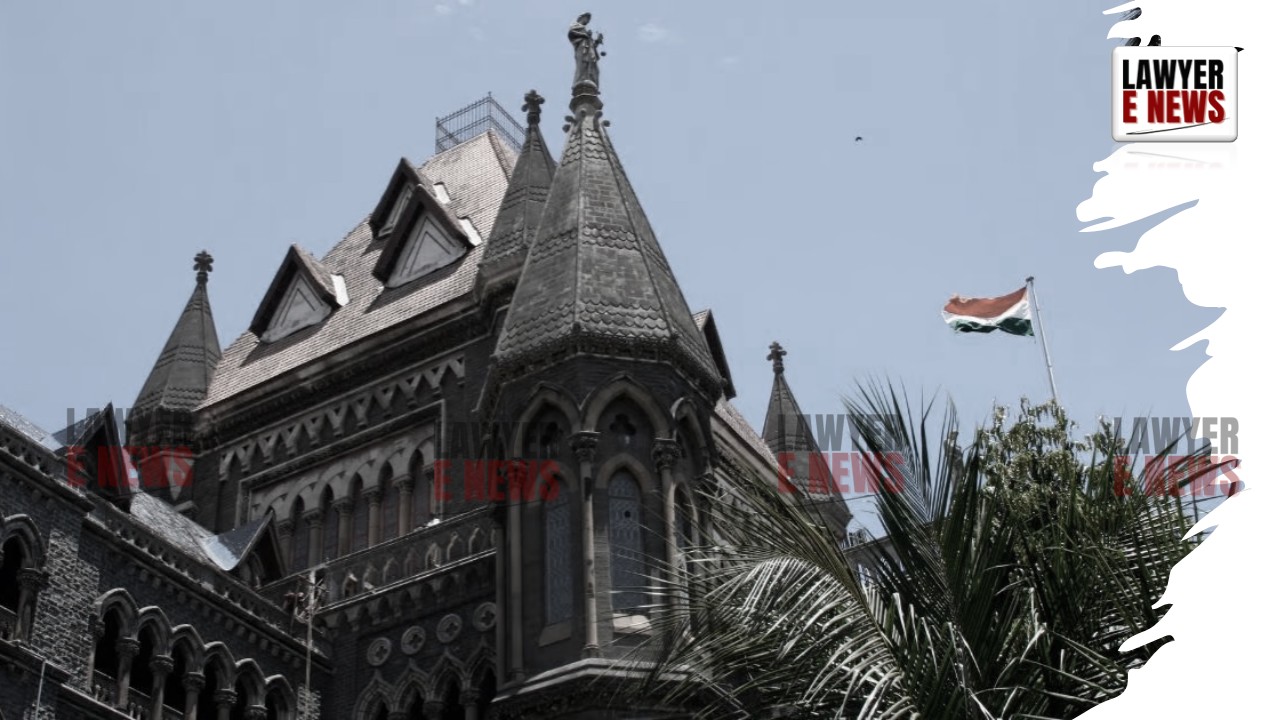
“Rule 3-A Bars Parties to Compromise—Not an Aggrieved Stranger Alleging Fraud”, In a significant ruling on the scope of Order XXIII Rule 3-A of the Code of Civil Procedure, the Bombay High Court has held that there is “no absolute prohibition” against a stranger filing an independent suit to challenge a compromise decree on grounds of fraud and collusion. The Court clarified that the statutory bar applies primarily to parties to the compromise or those claiming through them.
Justice Shailesh P. Brahme dismissed a revision application challenging the refusal to reject a plaint under Order VII Rule 11 CPC. The High Court upheld the Trial Court’s order declining to summarily reject a suit filed to declare a 1975 compromise decree as void ab initio on grounds of fraud, suppression, and collusion.
The Court ruled that questions of fraud, inheritance rights, and limitation involve mixed questions of fact and law, requiring full-fledged trial and not summary adjudication at the threshold stage.
1975 Compromise Decree Challenged After Alleged Discovery in 2022
The dispute arose from Special Civil Suit No. 152 of 2024 filed by the plaintiffs seeking a declaration that a compromise decree dated 11 August 1975 in Special Civil Suit No. 32 of 1975 was obtained by fraud and collusion and was therefore void ab initio. They also sought partition, possession, and injunction.
The plaintiffs contended that neither they nor their mother Shobha (nor their aunt Rekha) were parties to the 1975 suit. They claimed inheritance rights and alleged that the earlier decree was passed by suppressing material facts and excluding rightful heirs. They further contended that they came to know of the decree only after a paper publication dated 17 December 2022 and subsequent development agreement executed in 2023.
Defendant No. 8 (the applicant before the High Court), who had entered into a development agreement dated 26 April 2023 in respect of one of the properties, sought rejection of the plaint under Order VII Rule 11 CPC on grounds of limitation, lack of right to sue, bar under Order XXIII Rule 3-A, and Section 6 of the Hindu Succession Act.
The Trial Court rejected the applications (Exhibits 24 and 65), leading to the present revision.
Legal Issue: Is a Separate Suit by a Stranger Barred by Order XXIII Rule 3-A?
The applicant heavily relied on Triloki Nath Singh v. Anirudh Singh (2020) 6 SCC 629 and Pushpa Devi Bhagat v. Rajinder Singh (2006) 5 SCC 566, contending that no independent suit lies to set aside a compromise decree and the only remedy is to approach the same court which recorded the compromise.
Justice Brahme carefully distinguished those authorities.
The Court observed that in Triloki Nath Singh, the appellant was claiming through a party to the earlier compromise decree and was a transferee pendente lite. Therefore, the Supreme Court’s observations were contextual and could not be read as laying down a universal bar against suits by strangers.
The High Court held: “In none of the authorities referred above, it is laid down that a stranger who is challenging the compromise decree on the ground of suppression, collusion or fraud is prohibited from filing independent suit.”
The Court emphasized that the consistent thread in Supreme Court decisions barring independent suits under Rule 3-A is that the plaintiff was either a party to the compromise or claiming through one.
Stranger’s Right to Independent Suit Recognized
The Court noted that in the present case: “In the present case plaintiffs were not party to Spl. C. S. No. 32 of 1975. Their mother Shoba and aunt Rekha were also not party. They are claiming share and interest by inheritance.”
Unlike a transferee pendente lite, the plaintiffs were not claiming through any party bound by the compromise decree. Their right, if any, arose by inheritance and was not subjected to the outcome of the earlier litigation.
Justice Brahme further observed that several High Court decisions—including those of Bombay, Calcutta, and Jammu & Kashmir—have consistently permitted independent suits by strangers challenging compromise decrees on grounds of fraud.
The Court held that: “The remedy to file separate suit by the aggrieved stranger who was not party to earlier litigation or compromise decree is the most appropriate remedy.”
Importantly, the Court reasoned that neither an appeal under Section 96(1) CPC (with leave) nor a review under Section 114 read with Order XLVII CPC would allow full-fledged evidentiary scrutiny of disputed facts concerning fraud and collusion.
“Fraud Vitiates Everything”—Mixed Questions Cannot Be Decided Under Order VII Rule 11
The plaintiffs had pleaded that the decree was obtained by fraud, collusion, and suppression of material facts. Justice Brahme reiterated the settled principle:
“It is trite law that fraud vitiates everything and decree obtained by fraud is nonest.”
The Court held that such allegations necessarily involve inquiry into disputed questions of fact and law. Summary rejection under Order VII Rule 11 CPC is impermissible where adjudication requires evidence.
On limitation, the Court noted that the plaintiffs specifically pleaded lack of knowledge until 17 December 2022. Therefore: “The limitation becomes mixed question of facts and law, which can be answered after full fledged trial.”
Thus, limitation could not be decided at the threshold stage.
Partial Rejection of Plaint Impermissible
The suit involved two properties, whereas the 1975 compromise related to only one property. Defendant No. 8’s interest was confined to the property covered by a development agreement.
Relying on Central Bank of India v. Prabha Jain (2025) 4 SCC 38, the Court held that partial rejection of plaint cannot be countenanced.
Even if the defendant’s objections applied to only one property, the plaint could not be rejected in part.
Section 6 of Hindu Succession Act and Right to Sue: Matters for Trial
The applicant argued that under the law prevailing in 1975, the plaintiffs’ mother had no coparcenary rights and thus the plaintiffs had no right to sue.
The Court refused to examine these intricate issues at the Order VII Rule 11 stage, observing:
“These are the intricate issues, which require deeper examination after full fledged trial.”
Thus, the alleged absence of a right to sue could not be conclusively determined without evidence.
Successive Applications and Absence of Specific Pleading Under Rule 3-A
The Court noted that neither Exhibit 24 nor Exhibit 65 specifically incorporated the ground of statutory bar under Rule 3-A of Order XXIII CPC, though arguments were later advanced on that line.
Justice Brahme remarked: “It is not understood as to why successive applications are required to be filed for rejection of the plaint.”
Finding no perversity or patent illegality in the Trial Court’s order, the High Court refused revisional interference.
The Civil Revision Application was dismissed. The order refusing rejection of the plaint was upheld. The Court clarified that all observations were prima facie in nature and the suit would proceed to trial.
The ruling is significant for drawing a clear doctrinal line: while Rule 3-A creates a strict bar against parties to a compromise decree challenging it by independent suit, it does not extinguish the substantive right of a stranger alleging fraud to seek declaration through a properly instituted civil suit.
Date of Decision: 11/02/2026