
-
by sayum
25 August 2026 12:32 PM







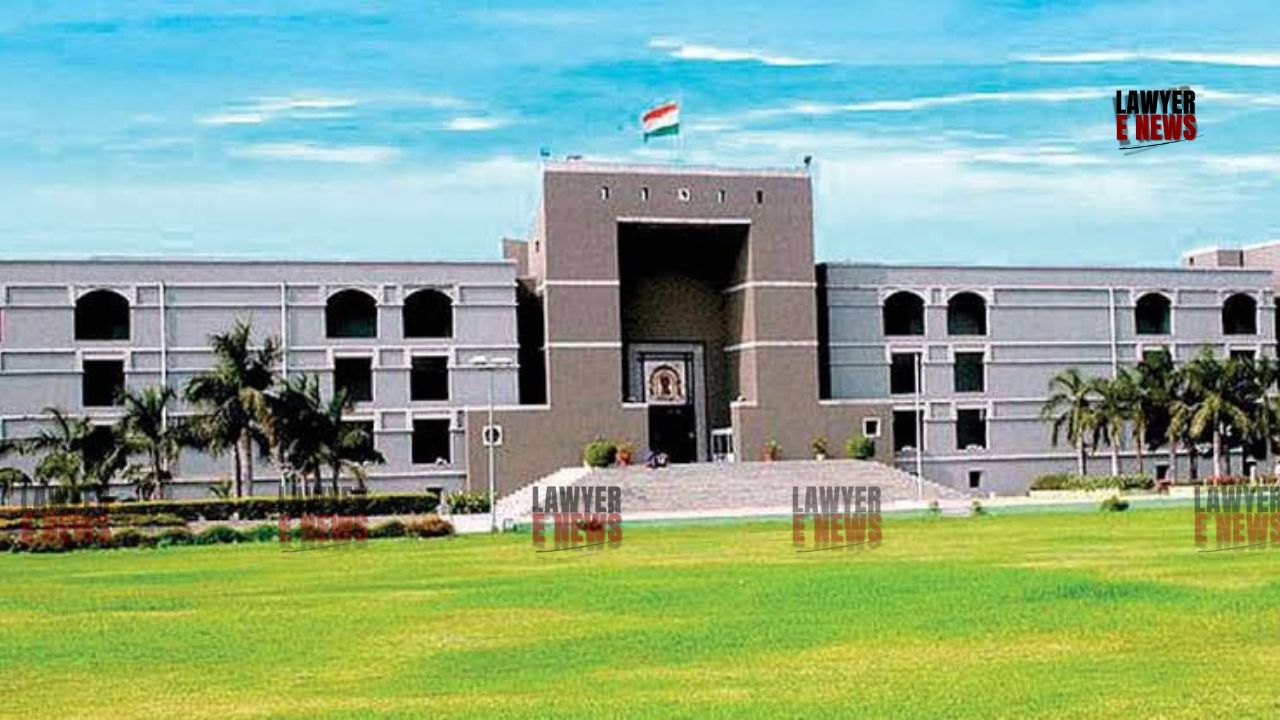
“In Absence of Master-Servant Relationship, Claim for Permanency Must Fail” – Gujarat High Court delivered a reportable judgment refusing to declare commission-based physically challenged workers as Government servants.
Justice Maulik J. Shelat held that the petitioners, who were engaged through the Blind People’s Association to issue and maintain case papers at Civil Hospital, Ahmedabad, were not in a master-servant relationship with the State. Consequently, they were not entitled to regularization, permanency, regular pay scale or benefits under Government Resolutions.
The Court emphatically reiterated that “sympathy and sentiment cannot override the constitutional scheme governing public employment under Articles 14 and 16.”
Commission of Rs.1 Per Case Paper, Claim for Government Status
The petitioners, fourteen physically challenged persons, had been working since 2003 at different case-paper windows of Civil Hospital, Ahmedabad. They were deputed pursuant to an agreement between the State Government and the Blind People’s Association (India), Ahmedabad.
Under the arrangement, the Association undertook printing of case paper booklets and deputed handicapped persons to issue and maintain case papers. The remuneration structure was clear: the workers would receive “Rs.1/- per case paper as commission.” No fixed salary, daily wage or consolidated pay was paid by the State.
In 2018, when the State decided to outsource the work through agencies, the petitioners approached the High Court seeking declaration as civil servants, regularization under Government Resolutions dated 17.10.1988 and 18.01.2017, regular pay scale of window clerk and consequential benefits.
“No Master-Servant Relationship Created” – Core Finding of the Court
The foundation of the judgment rests on the absence of employer-employee relationship.
The Court observed:
“The petitioners are neither engaged as daily wagers nor as full/part-timers by the respondents. Their initial appointment… was pursuant to the agreement entered between the respondent and the Blind People’s Association.”
It was undisputed that the petitioners were appointed by the Association and not by the State. They were paid commission, not wages. Their selection was not through recruitment rules nor against sanctioned posts.
Justice Shelat concluded:
“That being the position, no master-servant relationship has been created between the petitioners and the respondent.”
On this ground alone, the prayer for declaration as Civil Servants/Government Servants was held to be untenable.
“Functional Supervision Does Not Create Employment” – Control Argument Rejected
The petitioners argued that they were under the control of the Medical Superintendent and hence should be treated as employees.
The Court rejected this contention, clarifying:
“Such instructions are required to be followed… considering the nature of the work of the petitioners… they cannot be allowed to act in their own way… This would not mean that they are discharging the work like regular employees.”
The Court distinguished between administrative supervision necessary for hospital discipline and legal control indicative of employment. Mere compliance with hospital instructions did not establish a master-servant relationship.
“Equal Pay for Equal Work Cannot Be Invoked Beyond Contractual Terms”
The petitioners sought minimum of regular pay scale of window clerk and allowances.
The Court held that such a claim would be:
“beyond the terms of the contract, whereby, the petitioners have been deputed to discharge the said work…”
They were commission agents, not wage earners working against sanctioned posts. Therefore, parity with regular government employees was impermissible.
“High Court Cannot Direct Regularization Contrary to Constitutional Scheme”
Placing reliance on State of Karnataka v. Umadevi (3), State of Rajasthan v. Daya Lal, and Union of India v. Ilmo Devi, the Court reiterated settled principles governing regularization.
Quoting from Ilmo Devi, the Court emphasized:
“The High Courts, in exercising power under Article 226… will not issue directions for regularisation, absorption or permanent continuance, unless the employees claiming regularisation had been appointed in pursuance of a regular recruitment… against sanctioned vacant posts.”
The Court underscored that:
“Sympathy and sentiment cannot be grounds for passing any order of regularisation in the absence of a legal right.”
Since the petitioners were not appointed through due process, nor working against sanctioned posts, no direction for regularization could be issued.
Distinguishing Supreme Court Precedents
The petitioners relied on Kanak Chandra Dutta, Chennai Port Trust and Dharam Singh.
The Court carefully distinguished these authorities. In Kanak Chandra Dutta, the person held statutory powers as Revenue Officer. In Chennai Port Trust, ultimate administrative control vested in the Port Trust. In Dharam Singh, daily wagers were directly engaged by the State.
Justice Shelat observed that none of these features existed in the present case, where the petitioners were commission workers deputed through a third-party Association.
“Status Remains That of Commission Agents” – Final Word
In a candid observation, the Court acknowledged the vulnerability of the petitioners but clarified that constitutional discipline in public employment cannot be diluted.
“Since, none of the petitioners were directly appointed by the respondent through due process… and are receiving their remuneration in the form of commission, their status remains that of ‘commission agents’ rather than employees in any form.”
The Court added that if exploitation was alleged, remedies lay against the Association or outsourcing agency in accordance with law.
Dismissing the writ petition, the Gujarat High Court refused to declare the petitioners as Government servants or to grant regularization, permanency or regular pay scale. The Rule was discharged without costs.
The judgment reinforces the principle that public employment must strictly adhere to Articles 14 and 16, and that contractual or commission-based arrangements through third parties do not create service rights against the State.
Date of Decision: 28/01/2026





