-
by sayum
25 August 2026 11:12 PM







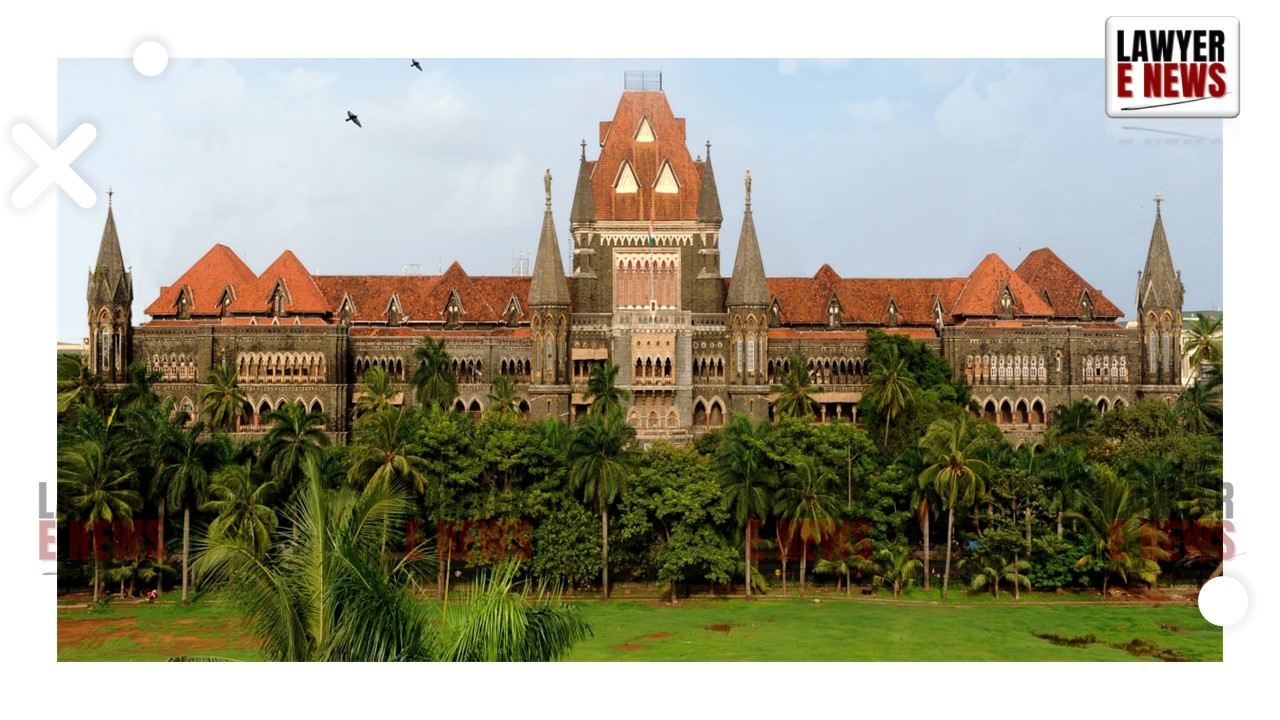
“Recovery Certificates Can’t Be Issued Mechanically………When There’s Allegation of Fraud, Registrar Cannot Be a Rubber Stamp” — In a significant ruling reinforcing the principles of natural justice in cooperative recovery proceedings, the Bombay High Court set aside a recovery certificate issued under Section 101 of the Maharashtra Co-operative Societies Act, 1960, and ordered a de novo inquiry.
Justice S.G. Chapalgaonkar held that the Deputy Registrar's mechanical issuance of the recovery certificate without addressing serious allegations of fraud, forged loan documents, and non-disbursement of loan, amounted to a clear violation of Rule 86-F of the 1961 Rules and natural justice principles.
The petitioners had approached the Court alleging that the loan in question had never been disbursed and that documents were fabricated by bank officials, particularly implicating a bank employee involved in alleged unauthorised money lending activities. Despite such serious allegations and the petitioners’ appearance and detailed defence before the Registrar, the order issuing the recovery certificate was bereft of any reasoned analysis.
“Registrar Is Not a Mere Certifying Authority — He Must Apply Mind to the Defence and Deliver a Reasoned Judgment”: High Court
The Court noted that while proceedings under Section 101 are summary in nature, they still require a reasoned adjudication if the borrower appears and disputes the claim. The Registrar, under Rules 86-A to 86-F, is expected to verify whether the amounts claimed as arrears are actually due, and whether any genuine or substantial dispute requires adjudication under Section 91 of the Act.
Justice Chapalgaonkar observed: “It is not expected that the Registrar would issue a certificate ignoring the right of the opponent to dispute the facts for its determination and fasten liability upon a person having bonafide and valid defence.”
The Court relied on earlier binding precedents including Top Ten v. State of Maharashtra, and Kranti Associates Pvt. Ltd. v. Masood Ahmed Khan, where the Supreme Court emphasized that reasoned orders are the backbone of fair decision-making.
Quoting from Kranti Associates, the Court reminded: “Recording of reasons is meant to serve the wider principle of justice that justice must not only be done but must also appear to be done... Rubber-stamp reasons cannot be equated with a valid decision-making process.”
Alternate Remedy No Bar Where Basic Procedure Is Violated — High Court Affirms Maintainability of Writ
The Respondent Bank objected to the writ petitions citing availability of alternative remedy under Section 154(2)(A) of the Maharashtra Co-operative Societies Act. However, the Court clarified that the presence of an alternate remedy does not act as an absolute bar where the impugned order is passed in breach of statutory rules and fair hearing procedures.
Justice Chapalgaonkar stated:
“When the order is passed in defiance of the mandatory procedure under Rules 86-A to 86-F, especially when a quasi-judicial authority fails to address the defence and gives no reasons, a writ petition is certainly maintainable.”
“Registrar Must Refuse Recovery Certificate Where Disputed Facts Exist”: Court Reiterates Limited Jurisdiction Under Section 101
Citing the judgment in Top Ten v. State of Maharashtra, the Court reiterated that the Registrar’s jurisdiction under Section 101 is limited to verifying arrears and not to adjudicate complex factual disputes. Where allegations like fraud, misrepresentation, or forged documents are raised, the Registrar must deny the certificate and direct the parties to file a proper dispute under Section 91.
The Court held:
“If a genuine and disputed question of facts is found arising by the Registrar, he cannot proceed to resolve that question… He has to deny the recovery certificate by passing appropriate judgment under Rule 86-F.”
“Absence of Reasoning Vitiates Recovery Order”: Matter Remanded for Fresh Hearing
Finding that the impugned order merely recorded the petitioners’ defence in brief and proceeded to accept the bank’s application without addressing any of the specific allegations, the Court held:
“It is not discernible that the Registrar has applied his mind to defences of the petitioners. The order depicts absolute non-application of mind. Such an order cannot be given status of a judgment as contemplated under Section 101 read with Rule 86-F.”
Consequently, the Court set aside the impugned order dated 24.09.2024 and directed the Deputy Registrar, Co-operative Societies, Solapur to conduct a de novo inquiry and render a reasoned decision strictly in accordance with Rules 86-A to 86-F, within four weeks of the parties’ appearance, which was scheduled for 17.11.2025.
This judgment is a strong reminder that even summary procedures under cooperative legislation must uphold fairness, reasoned decision-making, and statutory due process. The Bombay High Court has clarified that the Registrar under Section 101 is not a mere collector of dues, but a quasi-judicial authority obliged to apply mind, assess defences, and speak through a reasoned judgment.
The ruling further affirms that when statutory obligations are ignored, constitutional courts will not shy away from exercising writ jurisdiction, despite the availability of alternative remedies.
“A recovery certificate that lacks reasoning is no certificate at all,” the judgment emphatically demonstrates.
Date of Decision: November 4, 2025