-
by sayum
28 August 2026 8:44 AM







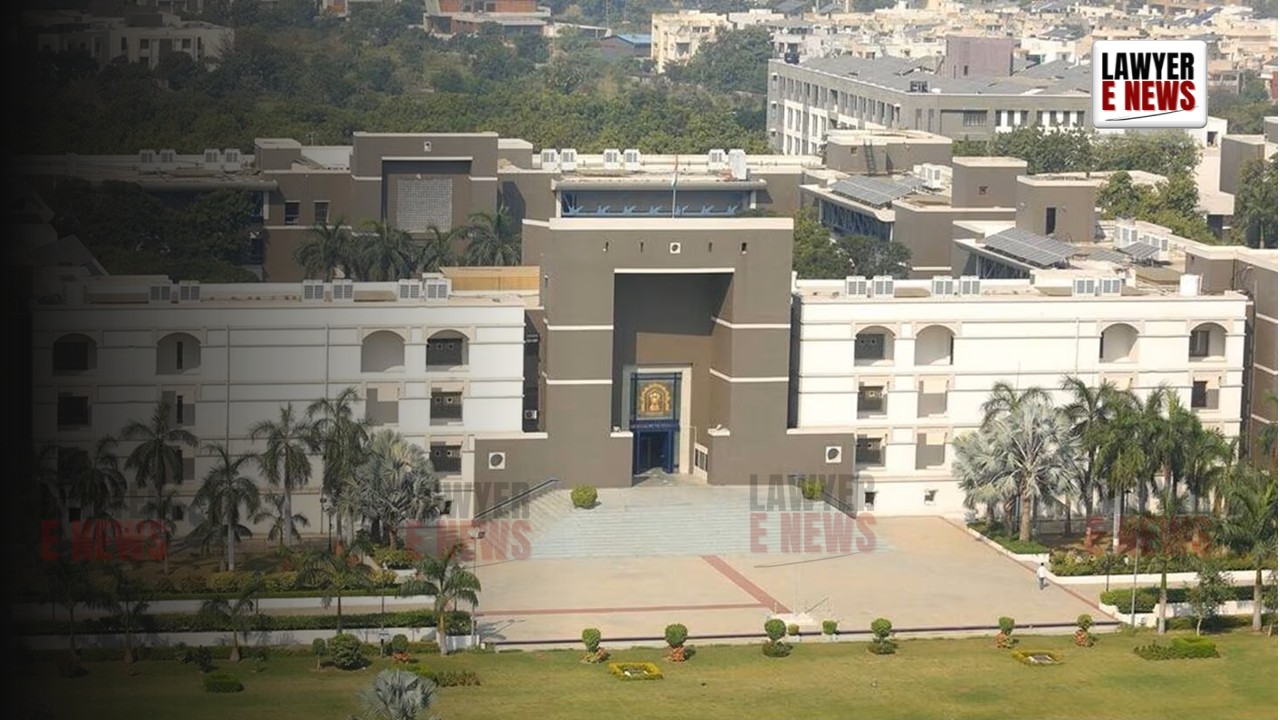
“He Was Neither Director Nor Signatory — Then Why Prosecution?” - In a judgment reinforcing strict legal safeguards against vicarious liability in cheque bounce cases, the Gujarat High Court quashed two criminal complaints filed under Section 138 of the Negotiable Instruments Act, holding that the accused Hari Aiyer had neither issued the dishonoured cheques nor was he a director or person in charge of the company’s affairs.
Justice J.C. Doshi, quashing the complaints and all proceedings in Criminal Case Nos. 53135 and 53136 of 2016, held: “From the record, it appears that the petitioner is not the signatory of the cheques issued… Neglect, if any, has been attributed to the Managing Director who is the signatory and arraigned as accused.”
“Section 141 Requires More Than a Name — It Demands Specific Allegation and Legal Role”
The complaints alleged that the company issued cheques which were dishonoured due to insufficient funds. The complainant sought to proceed against multiple individuals associated with the company, including the petitioner, under the doctrine of vicarious liability.
But the Court found that the petitioner was neither a signatory to the cheque, nor ever a director of the company. This finding was backed by certified extracts from the Ministry of Corporate Affairs. As a result, the High Court found no justification to prosecute him under Section 141 of the NI Act, which imposes vicarious liability on certain categories of persons connected with a company.
Citing the Supreme Court’s authoritative ruling in National Small Industries Corporation Ltd. v. Harmeet Singh Paintal (2010) 3 SCC 330, the Court emphasized:
“Only those persons who were in charge of and responsible for the conduct of the business of the company at the time of commission of the offence will be liable for criminal action.”
“Merely being connected to the company or named in a complaint is not enough. The complaint must spell out how and in what manner the accused was in charge of or responsible for the business.”
“Every Director Is Not Automatically Guilty — And A Non-Director Certainly Isn’t”
Justice Doshi reiterated that Section 141 is a penal provision and must be strictly construed: “The law is no more res integra… There must be specific averments showing how the person was responsible for conduct of the company’s business at the time of the offence.”
“Even a director cannot be fastened with liability without clear pleadings — let alone someone who wasn’t a director at all.”
The Court also referred to several binding precedents including SMS Pharmaceuticals Ltd. v. Neeta Bhalla, Sabitha Ramamurthy v. RBS Channabasavaradhya, and K.K. Ahuja v. V.K. Vora, reiterating the settled legal position that mechanical reproduction of statutory language without factual foundation is insufficient to trigger criminal process.
“Summons Mean Criminal Coercion — You Can’t Weaponize Process Without Factual Basis”
The judgment echoed a strong note of caution about the misuse of criminal complaints under the NI Act to harass persons with no real connection to the alleged default.
“In a case where the court is required to issue summons, which would put the accused to some sort of harassment, the court should insist strict compliance with the statutory requirements.”
The Court thus quashed the proceedings under Section 482 CrPC, safeguarding the petitioner from further trial and consequences of a prosecution based on unsustainable accusations.
Final Words: “To Hold Someone Vicariously Liable, Law Demands Not Just Role — But Responsibility”
The Court summed up its reasoning by stating: “Vicarious liability on the part of a person must be pleaded and proved, not inferred.”
Date of Decision: 17 April 2025