-
by sayum
28 August 2026 10:07 AM







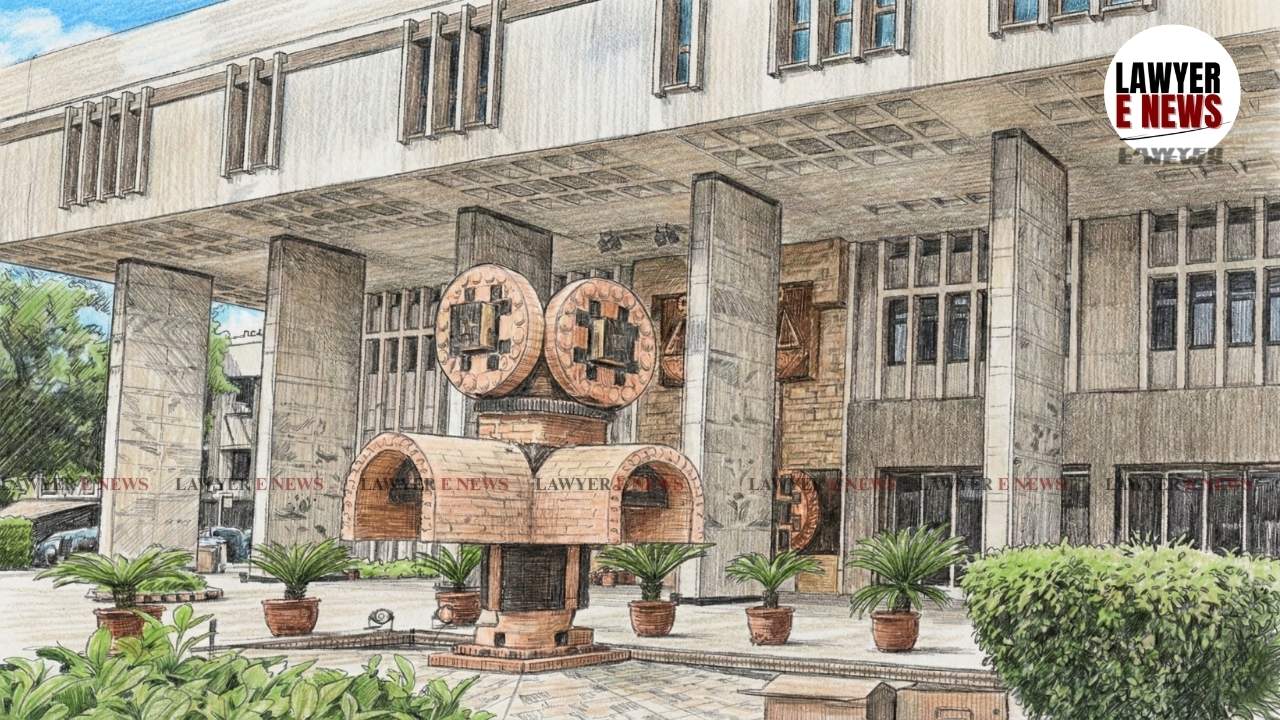
Delhi High Court, in a significant ruling, held that the government cannot levy 'Unearned Increase' (UEI) charges on the substitution of property names based on a genuine Will unless there is specific material to suggest the bequest was a sham transaction or a camouflage for an underhand sale.
A Division Bench comprising Chief Justice Devendra Kumar Upadhyaya and Justice Tushar Rao Gedela observed that a testamentary disposition is not a transfer inter vivos and does not automatically attract the restrictive covenants of a lease deed intended to curb commercial assignments.
The dispute arose from a perpetual lease executed in 1962 in favor of Raja Bahadur Sardar Singh of Khetri for a property at Sardar Patel Marg. The original lessee, who died without heirs, bequeathed the property to 'The Khetri Trust' via a Will dated 30.10.1985. After the Trust successfully obtained probate—a decision upheld by the Supreme Court—the Land and Development Office (L&DO) demanded Rs. 4.34 Crores as Unearned Increase as a condition for mutation. The Trust challenged this demand, which was quashed by a Single Judge, leading the Union of India to file the present intra-court appeal.
The primary question before the court was whether a testamentary bequest to a non-family entity constitutes a "transfer" or "assignment" under the lease deed, thereby attracting 50% Unearned Increase charges. The court was also called upon to determine if the grant of probate precludes the lessor from inquiring into the nature of the transaction to check if the Will was a camouflage for an illegal sale.
Testamentary Succession Is Not A Transfer Inter Vivos
The Court emphasized that the concept of "transfer" under Section 5 of the Transfer of Property Act (TPA) generally refers to a conveyance between living persons. The bench noted that a Will remains merely a wish of the testator that operates only upon death, and the title passes to the legatee by way of succession rather than a contractual assignment.
The bench observed that the lease deed dated 24.04.1962 did not contain any express prohibition against testamentary transfers. In the absence of such a prohibition, the deceased lessee was fully competent to execute a Will. The Court held that if testamentary transfers were restricted through a "sleight of interpretation," it would lead to "startling" legal consequences by altering the vested property rights of the lessee.
"Transition of rights in the subject property to the legatee on the basis of Will cannot be said to be transfer or assignment for which approval of the lessor is required."
Lessor’s Right To Inquire Into Sham Transactions
The Appellants relied heavily on the Supreme Court judgment in Delhi Development Authority v. Vijaya C. Gurshaney (2003) to argue that UEI is mandatory for bequests to non-family members. However, the High Court clarified that while the lessor has the right to inquire whether a Will is actually a sale in disguise, this right does not authorize a "blind application" of policy to every genuine bequest.
The Court noted that the rationale behind demanding Unearned Increase in cases of non-blood relations is to curb illegal underhand sales practiced in the garb of Wills or Powers of Attorney. The bench held that while the grant of probate establishes the genuineness of a Will, it does not prevent the L&DO from investigating the "true nature" of the transaction. However, such an inquiry must be based on actual evidence of a sham transaction.
Need For Material Evidence To Prove Camouflage
The Court found that in the present case, the L&DO failed to produce any material to suggest that the Will executed by the Raja of Khetri was a sham. The bench highlighted that the Trust was created specifically as per the wishes of the original lessee expressed in the Will itself. No evidence of monetary consideration or an "underhand sale" was presented by the government.
The bench remarked that the demand letter issued by the L&DO did not give any indication of an inquiry that concluded the transaction was illegal. It held that for demanding UEI under the Office Memorandum dated 20.10.2000, there must exist some material to show that the deceased lessee had entered into an illegal sale of rights in the property in favor of the legatee.
"In absence of any such material pointing out the Will being sham or a camouflage, it is difficult for us, at this juncture, to conclude and hold that the Will in fact was an underhand sale."
Constitutional Protection Under Article 300A
The Court reiterated the principle laid down in DDA v. Shanti Swaroop Goyal (2012), stating that property rights are indefeasible and vest as an incident of ownership. It held that refusing to recognize a legally proved Will and insisting on UEI without evidence of fraud would attract the "odium of violation of Article 300-A of the Constitution of India," which protects the right to property.
Concluding the matter, the Division Bench dismissed the appeal filed by the Union of India, affirming the Single Judge's order that quashed the demand for Rs. 4.34 Crores. However, the Court clarified that the L&DO remains free to conduct an inquiry in accordance with the law to ascertain if any transmission was a camouflage, provided such action is warranted by specific evidence.
Date of Decision: 02 June 2026