
-
by sayum
28 August 2026 8:01 AM







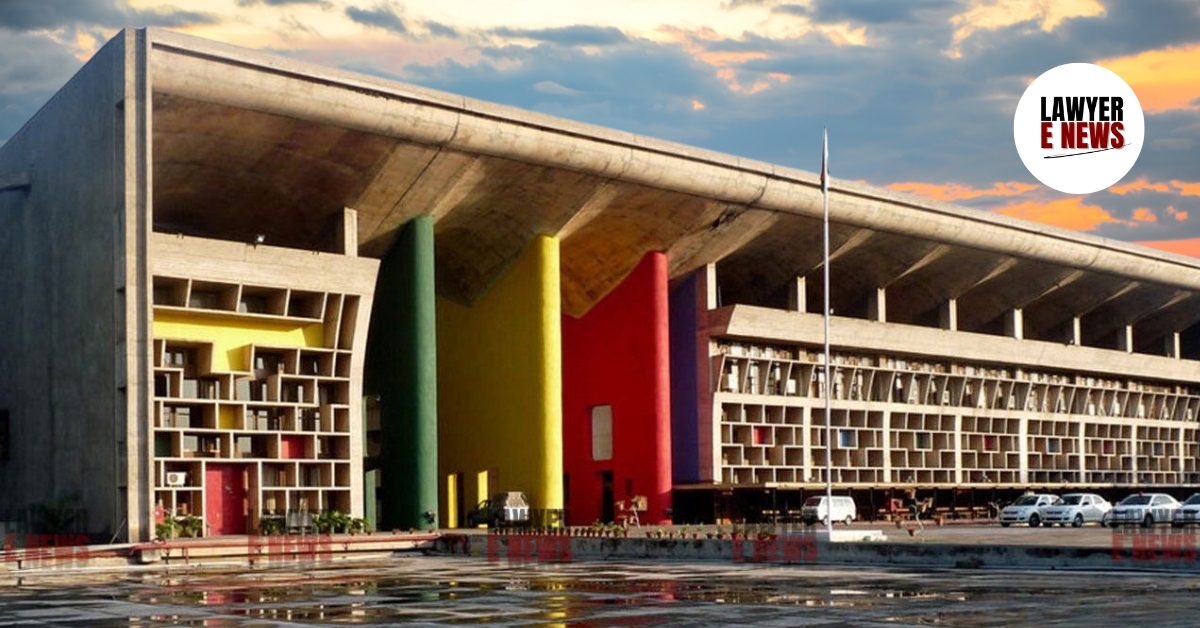
"A constitutional court cannot be restrained from granting bail to an accused on account of restrictive statutory provisions in a penal statute if it finds that the right of the accused undertrial under Article 21 of the Constitution of India has been infringed, " Punjab and Haryana High Court, in a significant ruling, held that restrictive provisions under the Unlawful Activities (Prevention) Act (UAPA) cannot override the fundamental right to liberty under Article 21 of the Constitution when the evidence against an accused is prima facie insufficient.
A bench of Justice Anoop Chitkara and Justice Sukhvinder Kaur observed that while allegations of involvement with banned organizations like Babbar Khalsa International (BKI) are serious, bail cannot be denied solely on the basis of a co-accused's interrogation without any corroborating physical recovery.
The court was hearing an appeal filed by Amarjeet Singh, alias Nikka, who was seeking regular bail after his application was dismissed by the Additional Sessions Judge, SAS Nagar. The appellant was implicated in an FIR involving charges under Sections 120B, 121, and 153 of the IPC, alongside various provisions of the Arms Act, the NDPS Act, and Sections 17, 18, 18-B, and 20 of the UAPA. The State alleged that the appellant was part of a criminal gang with links to Pakistan-based terrorists aiming to undermine the integrity of India.
Court Frames Legal Issues Regarding UAPA Bail Bar
The primary question before the court was whether the accusations against the appellant could be considered "prima facie true" under the rigorous standard set by Section 43D(5) of the UAPA. The court was also called upon to determine if the appellant’s extensive criminal history, involving eight other FIRs, should act as an absolute bar to bail despite the lack of direct evidence in the present case.
Evidence and the 'Prima Facie' Standard
Court Evaluates Quality Of Evidence Against Appellant
The bench noted that the appellant was nominated as an accused based solely on the interrogation of a co-accused, Sehajpreet Singh. The judges observed that no physical recovery of weapons, contraband, or incriminating material was attributed to the appellant in the current investigation.
"Undoubtedly, there are massive criminal antecedents of the applicant, but this Court has to analyze the evidence collected in the present case connecting him with the commission of the offense and the legal admissibility of such evidence," the court remarked while emphasizing the need for a fact-specific inquiry.
Interpreting Statutory Restrictions vs. Constitutional Liberty
Constitutional Courts To Prioritize Article 21 Over Statutory Bars
Relying on the Supreme Court's precedent in Sheikh Javed Iqbal v. State of U.P., the High Court emphasized that statutory restrictions in penal laws like the UAPA do not strip constitutional courts of their power to protect personal liberty. The bench noted that a court must lean in favor of constitutionalism and the rule of law.
The bench quoted the Apex Court stating, "Even in the case of interpretation of a penal statute, howsoever stringent it may be, a constitutional court has to lean in favour of constitutionalism and the rule of law of which liberty is an intrinsic part."
Balancing Terror Allegations With Lack Of Recovery
Absence Of Recovery Weakens Case For Continued Detention
The court examined the prosecution's narrative, which linked the accused to the Inter-Services Intelligence (ISI) and drone-based smuggling of foreign weapons. However, the bench found that without material evidence linking the appellant to these acts beyond a co-accused's statement, the threshold for denying bail was not met.
The court referred to the Yedala Subba Rao judgment, noting that if a court is unable to form an opinion that accusations are prima facie true, the embargo under Section 43D(5) of the UAPA will not apply. It found that further pre-trial incarceration in this specific context would cause grave injustice.
Addressing Extensive Criminal History Of The Accused
Criminal Antecedents Do Not Automatically Negate Right To Bail
The State had strongly opposed the bail plea by highlighting the appellant's involvement in eight other cases involving the NDPS Act, Arms Act, and the Jail Manual. The court, however, held that while antecedents are relevant to assess flight risk or propensity to repeat offenses, they cannot substitute for the lack of evidence in the current FIR.
"Restricting firearms would instill confidence in society; it would also restrain the accused from influencing the witnesses and repeating the offense," the court noted while opting for stringent conditions rather than continued incarceration.
Imposition Of Stringent Safeguards And Conditions
Court Imposes 'Gulfisha Fatima' Style Bail Conditions
To mitigate risks, the court imposed exhaustive conditions similar to those set by the Supreme Court in the Gulfisha Fatima case. These include restrictions on leaving the National Capital Territory (or specified regional limits), surrendering passports, and a total ban on making public statements or social media posts regarding the case.
"The conditions mentioned above imposed by this court are to endeavor to reform and ensure that the accused does not repeat the offense," the bench stated, referencing the Mohammed Zubair case to ensure that conditions remain proportional to the purpose of the trial.
The High Court concluded that the appellant had made out a case for bail given the stage of the trial and the nature of the evidence. While setting aside the Sessions Court's order, the bench clarified that the bail is conditional and can be revoked if the appellant indulges in any non-bailable offense or violates the undertaking regarding his speech and expression under Article 19.
Date of Decision: 19 May 2026





