-
by sayum
28 August 2026 10:07 AM







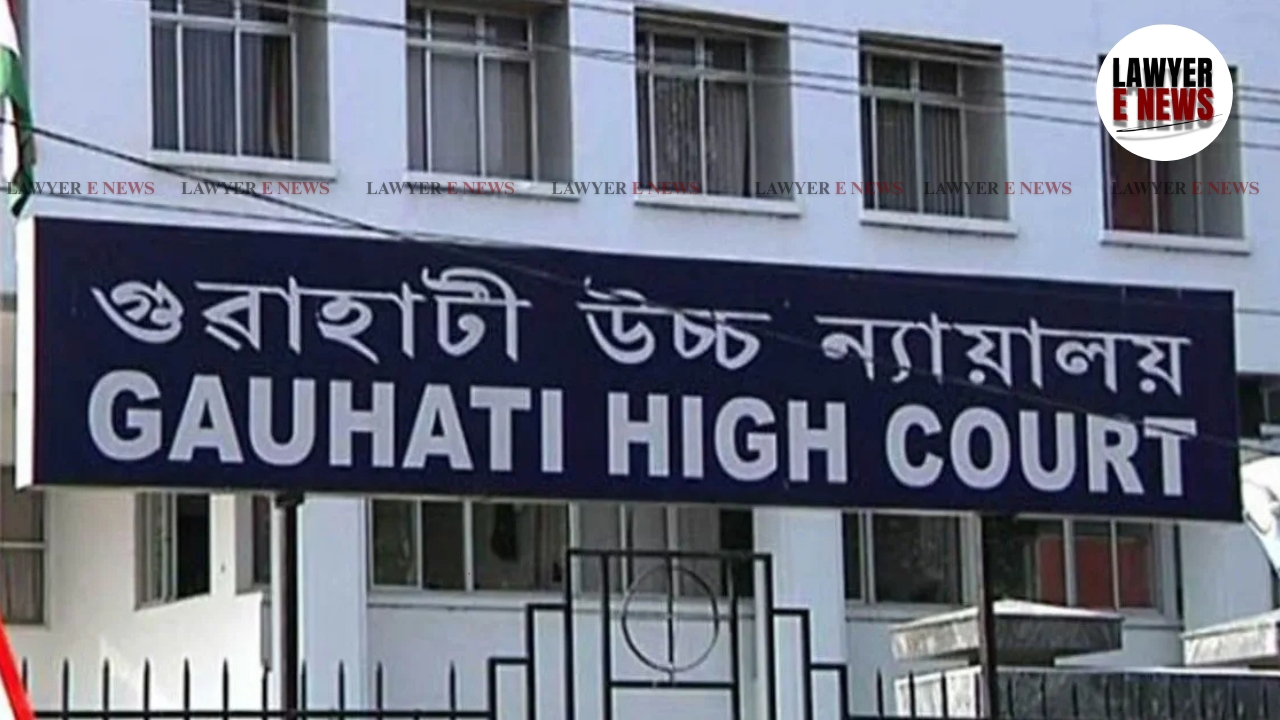
"We are of the considered opinion that if we apply the principle of ejusdem generis to Section 15(1)(a) of the Unlawful Activities (Prevention) Act, 1967, it appears that ‘stone’ does not fall in the means of same nature and characteristic as specifically indicated in the said provision like bombs, dynamite or other explosive substances," Gauhati High Court
The Gauhati High Court, in a significant verdict, has ruled that acts of stone-pelting or symbolic "Rail Roko" demonstrations during public protests do not qualify as "terrorist acts" under the Unlawful Activities (Prevention) Act (UAPA). A division bench comprising Justice Sanjay Kumar Medhi and Justice Mridul Kumar Kalita observed that while such actions may constitute offenses under the Indian Penal Code (IPC), they do not meet the high threshold required to invoke stringent anti-terror laws.
The case pertains to the widespread protests against the Citizenship Amendment Act (CAA) in Assam in December 2019. The National Investigation Agency (NIA) had filed a charge sheet against activist Akhil Gogoi and three others, alleging they orchestrated violent agitations at Chabua that led to stone-pelting and damage to public property. A Special NIA Court had previously discharged the accused of all charges in June 2021, prompting the NIA to prefer the present appeal.
The primary question before the Court was whether the materials on record were sufficient to frame charges under Section 16 of the UAPA against the respondents. The Court also examined whether the Special Judge erred in discharging the accused from various IPC offenses, including criminal conspiracy and attempt to murder, by conducting a "mini-trial" at the stage of framing charges.
The High Court began by emphasizing the distinct nature of the UAPA as a special statute intended to combat terrorism. It noted that because the Act provides for harsher consequences, courts must exercise greater care to ensure that an alleged offense falls strictly within the "four corners" of the legislation.
High Threshold Required For Invoking UAPA
The bench observed that to qualify as a "terrorist act" under Section 15 of the UAPA, the act must be done with the specific intent to threaten the unity, integrity, or security of India. The Court relied on Supreme Court precedents to hold that ordinary law and order problems, even if violent, should not be converted into UAPA cases if the ordinary penal law is adequate.
“The resort should be taken to the stringent provisions of Unlawful Activities (Prevention) Act, 1967 only in those cases where the law enforcing machinery finds the ordinary law to be inadequate or not sufficiently effective for tackling with the menace of ‘terrorist acts’.”
Stones Not Categorized As Lethal Means Under Section 15 UAPA
Applying the principle of ejusdem generis (of the same kind), the Court analyzed Section 15(1)(a) of the UAPA, which lists bombs, explosives, and lethal weapons as means for committing a terrorist act. The bench held that "stones" used by protesters do not share the same characteristics as the hazardous substances or weapons listed in the statute.
Court Applies Principle Of Ejusdem Generis To Weaponry
The Court noted that while stone-pelting might cause injury, it falls short of the ingredients necessary to constitute a terrorist act under the UAPA. The bench affirmed the trial court’s finding that the seizure of a single piece of stone was insufficient to sustain a charge of terrorism.
“The said act of throwing stones and injuring police personnel, though is sufficient to constitute offence under the provision of Indian Penal Code, same falls short of fulfilling the ingredients of offence of terrorist act as defined under Section 15 of the UAPA.”
Symbolic 'Rail Roko' Not A Threat To Economic Security
Addressing the NIA's contention that a rail blockade threatened the economic security of India, the Court observed that the "Rail Roko" program was called as a symbolic means of protest. It noted that no violent means were used to stall the trains and that such protests, often lasting only a few hours, cannot be equated with terrorism.
Protest Activities Distinguished From Terrorist Acts
The bench remarked that the right to protest is constitutionally guaranteed under Article 19, though it is subject to regulation if it becomes violent. However, it clarified that even a non-peaceful protest does not automatically enter the territory of a "terrorist act" unless there is specific evidence of a conspiracy to commit such an act.
“We are unable to discern in the subject charge-sheet the elemental factual ingredients that are a must to found the offences defined under Sections 15, 17 or 18 of UAPA.”
Trial Court Erred By Conducting 'Mini-Trial' For IPC Offenses
While upholding the discharge under the UAPA, the High Court found that the Special Judge had erred regarding the IPC charges. The Court held that at the stage of framing charges under Section 227 CrPC, a judge should not delve into the "reliability" or "veracity" of witness statements but should take them at face value to see if a prima facie case exists.
Witness Statements Sufficient To Frame IPC Charges
The Court pointed out that multiple witnesses had implicated Akhil Gogoi in leading the mob that injured the Officer-in-Charge of the Chabua Police Station. It held that the trial court's decision to seek corroboration and test the reliability of these witnesses at the discharge stage was beyond the scope of its jurisdiction.
“The trial court instead of taking the statements of the witnesses recorded during investigation, on its face value, embarked upon a journey of considering the reliability of statement of witnesses which is akin to mini trial and same is prohibited.”
The High Court partly allowed the appeal, setting aside the discharge order concerning the IPC offenses. The Court directed the transfer of the case to a regular court of competent jurisdiction to frame charges under Sections 120B, 143, 147, 148, 149, 307, 326, 333, 353, and 427 of the IPC. However, it confirmed the discharge of all respondents from the charges under Section 16 of the UAPA.
Date of Decision: May 25, 2026