-
by sayum
26 August 2026 10:38 AM







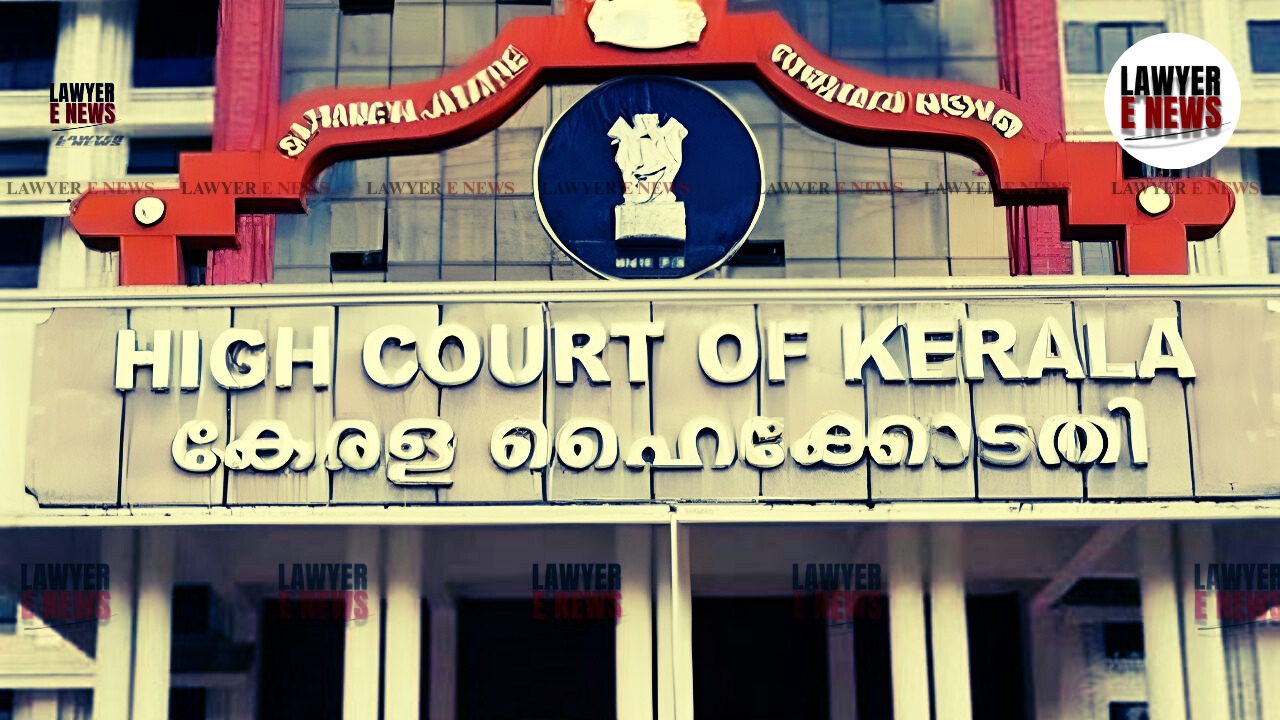
“Strong Suspicion Is Enough to Proceed to Trial — At Discharge Stage, Court Cannot Assess Guilt But Only Presence of Prima Facie Material”, Kerala High Court upheld the rejection of discharge pleas filed by two senior public servants in a major corruption and criminal breach of trust case involving HLL Lifecare Ltd. The Court ruled that both the Chairman & Managing Director (A1) and the General Manager (A2) had prima facie participated in a conspiracy that led to the wrongful release of ₹2 crore public funds without securing adequate guarantees.
Justice A. Badharudeen held that the materials on record clearly disclosed “active and conscious participation of the petitioners in altering the terms of the agreement to enable release of advance funds to a private party, which ultimately caused a wrongful loss of over ₹4 crore to a public sector undertaking.”
The Court thus dismissed the revisions and directed the Special CBI Court, Thiruvananthapuram, to proceed expeditiously with trial.
Discharge Stage Is Not for Assessing Innocence—Even Strong Suspicion Justifies Framing of Charges
The case originates from C.C. No. 5 of 2019, filed by the Central Bureau of Investigation, wherein it is alleged that between August 2007 and May 2008, A1 (M. Ayyappan, former CMD of HLL Lifecare Ltd.) and A2 (S. Girish Kumar, then General Manager) conspired with a private firm, M/s Rama Shipping Services, to divert ₹2 crore in advance payments for an iron ore export contract, by removing mandatory security requirements from the agreement.
Initially, an agreement dated 22.08.2007 mandated submission of a bank guarantee for release of advance. However, this clause was deleted in a revised agreement dated 06.02.2008. The advance of ₹2 crore was released based only on two post-dated cheques, which were later dishonoured. The total loss to the PSU was alleged to be over ₹4 crore including interest.
The petitioners had sought discharge under Sections 227 and 239 of the CrPC on the ground that the allegations were baseless, that the Board had authorized the venture, and that their role was only supervisory. They contended that the act of endorsing an email “for necessary action” did not amount to criminal intent or participation in conspiracy.
Rejecting these arguments, the Court observed:
“When the topmost head of a PSU forwards an internal recommendation for release of public funds — not addressed to him — with an endorsement ‘for necessary action’, it cannot be treated as mere official formality. Such conscious participation carries significant legal consequences.”
CMD’s Endorsement ‘For Necessary Action’ Not a Routine Act—Prima Facie Shows Facilitated Misappropriation
The Court laid particular emphasis on a critical email dated 06.02.2008 (D2), sent by A2 to the Finance Head (CW1), requesting release of ₹2 crore. Though the email was not addressed to A1, the CMD downloaded and printed the email and forwarded it with the endorsement “for necessary action”.
The Court held that:
“If the CMD had no role, he could have remained silent. Instead, he acted on an internal communication not addressed to him, thus exercising discretion, and more importantly, failing to verify whether a bank guarantee had been secured before endorsing release of funds.”
The Court further observed that this endorsement had two serious consequences:
Subordinates were likely to act on the CMD’s directive even if due diligence was lacking;
The CMD thereby enabled and facilitated the release of funds contrary to mandatory procedures.
The Court added:
“His interest in expediting the release of advance in a ‘hurry-burry’ manner, without insisting on a bank guarantee, is sufficient to indicate his participation in the conspiracy at this stage of proceedings.”
Statements of Witnesses Show Direct Involvement of Both Accused in Facilitating Illegality
The Court also relied on the statements of several witnesses to affirm that a strong prima facie case existed against both accused.
CW7 (a business intermediary) revealed that he personally introduced the private party (A3) to A1, the CMD, through a known contact, and later attended meetings where A1 personally discussed and facilitated the agreement for iron ore export.
CW8 corroborated this, stating that A1 had requested his help in retrieving the defaulted amount and had actively participated in post-default meetings involving the defaulter (A3).
CW25, Executive Secretary to CMD, confirmed that A1 had endorsed the D2 email “for necessary action” and had signed multiple internal notes related to the iron ore export contract. She also authenticated A1’s signature on various internal communications.
The Court held: “These statements, along with documentary records like D2 (email), D48 (minutes of meeting handing over portfolio to A2), and D56 (revised agreement), show more than a whisper of suspicion—they form a coherent chain pointing toward complicity.”
Plea of Lack of Authority by CMD Rejected—Annexure 5 Does Not Exonerate, But Confirms Delegated Powers
A1 had attempted to rely on Annexure 5, an internal “Delegation of Powers” memo, to argue that the General Manager (A2) held operational control over the concerned transactions, while the CMD was not directly responsible.
However, the Court refused to consider Annexure 5, noting it was a defence document not part of the prosecution’s evidence and hence could not be relied upon at the discharge stage. Nevertheless, even on a hypothetical perusal, the Court noted that:
“Annexure 5 itself shows that the Managing Director retained full signing powers over all contracts and agreements of the company. Hence, the plea of lack of involvement is untenable.”
Role of General Manager (A2) Also Clearly Established—He Authored the Email Requesting Release of ₹2 Crore
With regard to A2, the Court found his role equally direct. He was the author of the D2 email requesting the ₹2 crore release, signed the revised agreement diluting the bank guarantee clause, and was involved in all key stages of the transaction.
The Court held:
“The second accused cannot take refuge in procedural lapses. The records show deliberate deviation from protocol, and issuance of advance without protection, fully aware of the risks.”
The Court dismissed the argument that issuing blank cheques as security was a routine practice, holding that such financial imprudence in violation of contractual safeguards cannot be treated as harmless.
Discharge Pleas Dismissed, Trial to Proceed
Summarising the legal position, the Court held: “The materials on record raise strong suspicion against both accused. At the stage of discharge, it is sufficient to show that a prima facie case exists. It is not for the Court to meticulously evaluate innocence or draw final inferences on guilt.”
Accordingly, both Criminal Revision Petitions were dismissed. The interim stay on trial was vacated. The Special Judge was directed to expedite the framing of charges and conduct of the trial.
Date of Decision: 4 November 2025