-
by sayum
28 August 2026 12:24 PM








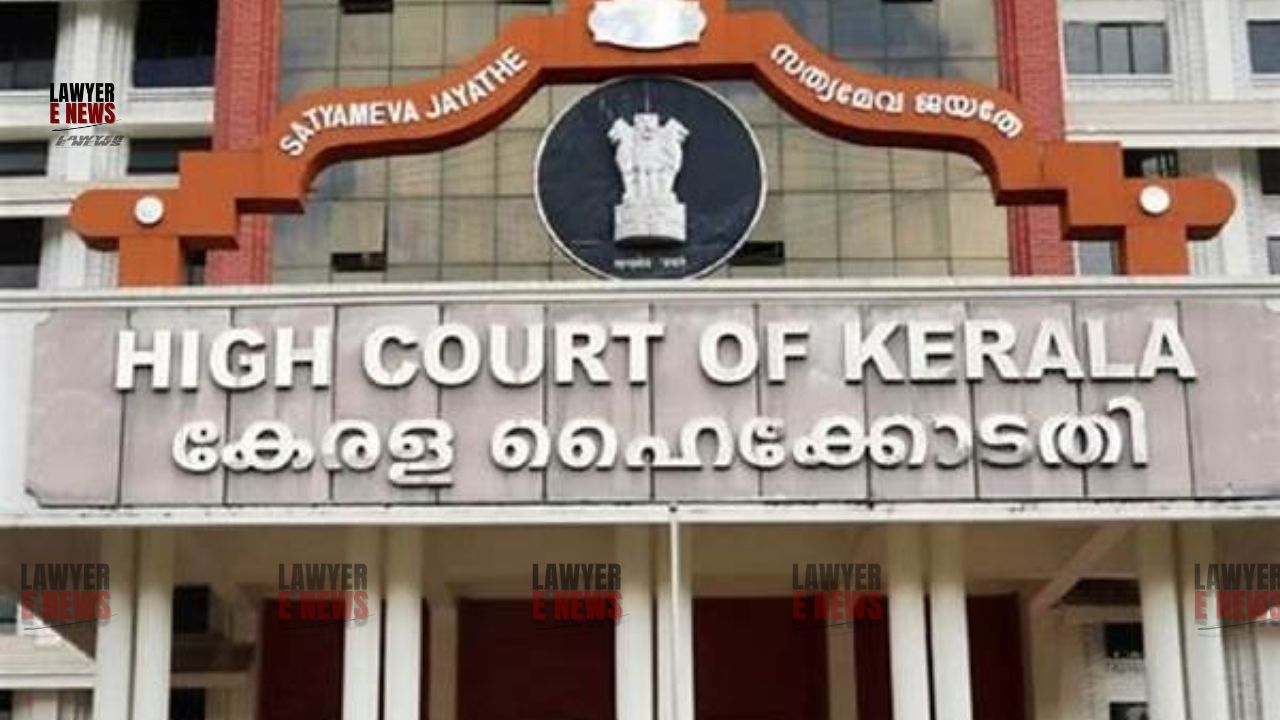
"Having occupied the premises, the defendant is necessarily liable to pay the licence fee or damages for use and occupation for the period of occupation," Kerala High Court, in a significant ruling dated June 3, 2026, held that a party in actual physical possession of a property is liable to pay damages for use and occupation regardless of the non-execution or non-registration of a formal lease deed.
A Division Bench comprising Justice Sathish Ninan and Justice P. Krishna Kumar observed that once a tenant occupies a premises and prevents the landlord from leasing it to third parties, they cannot escape the liability to pay the agreed-upon rent or licence fee.
The court noted that the liability to pay for the period of occupation arises from the fact of possession itself, and the absence of a registered instrument under Section 49 of the Indian Registration Act does not preclude the court from determining the terms of the arrangement through other evidence on record.
The dispute arose when the plaintiffs, owners of a commercial building, sued the defendant company for recovery of arrears of licence fees. The defendant had intended to take the premises on lease to run an automobile service centre and had purchased machinery from the previous tenant which remained on-site. Although a draft lease agreement was prepared at a monthly rent of Rs. 2,50,000, it was never signed or registered. The defendant later claimed they were not in actual possession and that the plaintiff had misrepresented that the premises were suitable for a workshop in a residential zone.
The primary question before the court was whether the evidence indicated that the defendant had taken actual physical possession of the premises. The court was also called upon to determine if the plaintiff could realize occupation charges in the absence of a registered lease deed, and whether the defendant’s plea of misrepresentation regarding statutory clearances held any merit.
Actual Physical Possession Established Through Conduct
The court found the defendant's contention that they were not in possession to be "apparently unsustainable." It noted that the defendant had purchased the entire machinery of the previous tenant and retained it within the premises. Furthermore, the court highlighted that the defendant had arranged security personnel for the building and was consistently paying electricity charges for the consumption at the premises from the commencement of the intended lease.
Evidence Of Possession Overwhelming
The Bench relied significantly on the report of the Advocate Commissioner, which stated that the keys to the premises were with the defendant's security personnel. The court observed that these materials were sufficient to find that the defendant was in actual physical possession from June 1, 2016. It was further noted that the defendant only vacated the premises and removed the machinery in April 2018 during the pendency of the suit.
"The keys of the premises was with the defendant's security personnel... materials are sufficient enough to find that the defendant was in actual physical possession."
Tenant Cannot Plead Landlord's Misrepresentation Without Due Diligence
Regarding the defendant's claim that the plaintiff misrepresented the availability of licences for the service centre, the court found no evidence to substantiate such a plea. It noted that the defendant’s own witness admitted during cross-examination that the information regarding previous licences was merely hearsay. The court emphasized that the building permit and occupancy certificate clearly evidenced that the structure was a commercial building.
Landlord Not Liable For Tenant's Failure To Enquire
The Bench held that it is the duty of the prospective tenant to make necessary enquiries and satisfy themselves regarding the suitability of a premises for their specific business. The court remarked that "the landlord cannot be found fault for tenant’s folly." It was observed that the defendant had not even applied to the authorities for the necessary permits before claiming they were unable to obtain them.
"When the defendant proposed to take a premises on lease, it was for him to make necessary enquiries and satisfy himself that the premises is suitable for his business."
Inadmissibility Of Unregistered Deed No Bar To Realising Damages
Addressing the legal hurdle of Section 49 of the Indian Registration Act, the court clarified that while an unregistered and unsigned document like the draft lease (Ext.A3) cannot be treated as a valid lease deed, it does not prevent the court from looking at other materials to determine the nature of the arrangement. The Bench held that the terms of the arrangement and the agreed rent were evident from the conduct of the parties and admissions made in the pleadings.
Quantum Of Occupation Charges Justified By Admission
The court noted that the defendant had admitted in their written statement that they had agreed to a monthly rent of Rs. 2,50,000. Furthermore, the defendant's witness admitted that the premises could have earned such a rent if leased to third parties. Consequently, the court held that the claim for recovery at the rate of Rs. 2,50,000 per month was fully justified as damages for use and occupation.
"The terms of the arrangement are evident from the other materials on record. Hence, the argument (based on Section 49 of the Registration Act) has no force and consequence."
The High Court concluded that the trial court was right in granting a decree for the realization of the monthly licence fee and damages from the date the defendant stopped paying until the date they finally vacated the premises. Finding no merit in the appeal, the Bench dismissed the same, confirming the interest rate of 6% per annum as reasonable.
Date of Decision: June 3, 2026