-
by sayum
04 August 2026 6:31 AM







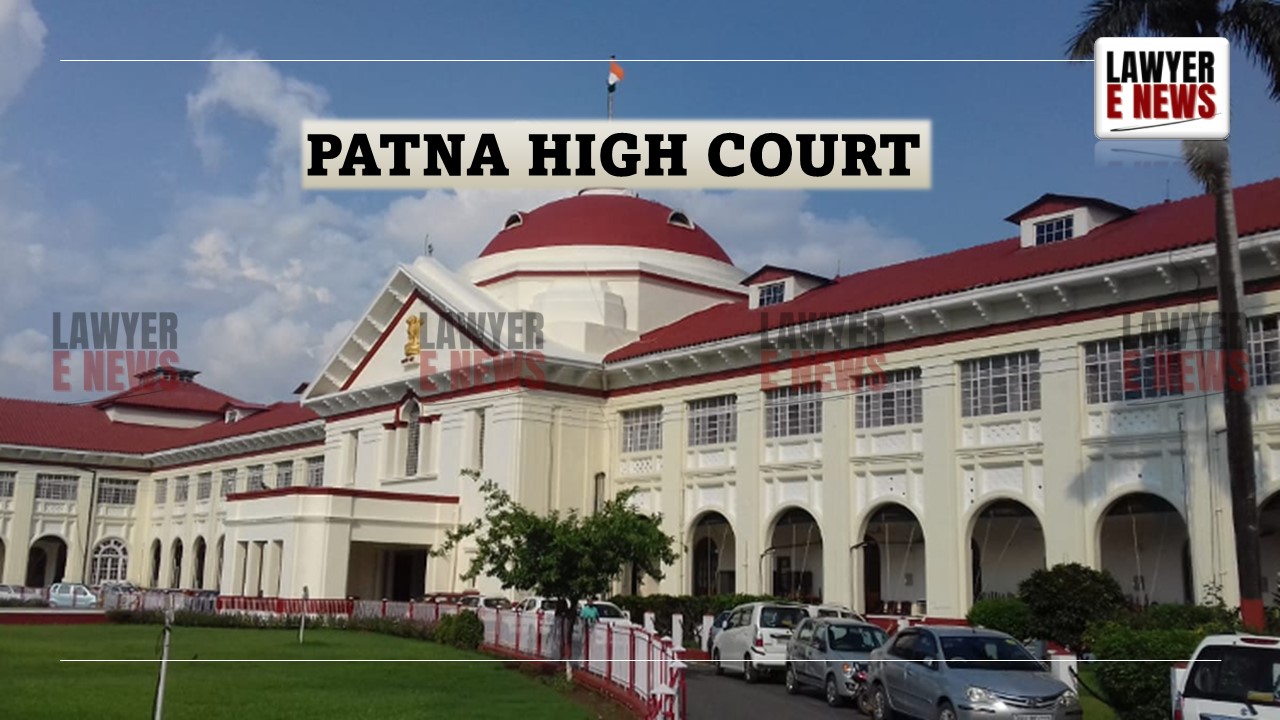
“Acts Done in Discharge of Official Duty Cannot Be Prosecuted Without Prior Sanction Under Section 197 CrPC” - Patna High Court delivered a significant ruling quashing the criminal proceedings initiated against Harpreet Kaur (then Superintendent of Police, Begusarai) and Rajkishor Singh (then Deputy Superintendent of Police). The proceedings arose from a 2014 protest in Begusarai, where the officers were accused of custodial torture during a civil agitation. Justice Chandra Shekhar Jha held that the prosecution, initiated without mandatory sanction under Section 197 of the Code of Criminal Procedure, and pursued after a decade-long delay, amounted to a gross abuse of judicial process.
The Court observed, “Sanction for prosecution was mandatorily required… Allegation admittedly raised in the background, while petitioner and her associate police personnel were discharging their official duty.”
The proceedings originated from a protest organized by the “Aparadh Virodhi Sangharsh Samiti” on 28 March 2014, in response to a tragic spate of kidnappings and the killing of a minor. According to the complaint, the protest, which had claimed wide civil society support, was disrupted by police action led by senior officers, who allegedly detained and physically assaulted the protestors, including a disabled man.
The complaint alleged, “Harpreet Kaur kicked the testicles of Zafir Khan with her boots, causing bleeding from his penis,” and that “Rajkishor Singh assaulted Mukund Kumar with a police rod, fracturing his hand.” The protestors were allegedly subjected to further threats and denied medical care despite a direction from the Chief Judicial Magistrate.
However, the Court took judicial notice of the context—namely, the enforcement of the Model Code of Conduct during the 2014 general elections, and the complainant’s background, who had already been named an accused in multiple FIRs including Begusarai Town PS Case Nos. 212, 213, and 221 of 2014.
“The complainant is a habitual offender, breaches peace and thus poses a challenge to law and order enforcing agency/police,” the Court noted.
The complaint was filed fifteen days after the incident, and cognizance was taken ten years later on 29 April 2024 by a Judicial Magistrate Second Class, without a fresh examination of procedural compliance under Section 197.
The High Court strongly rebuked the casual approach of the Magistrate in taking cognizance without sanction and after excessive delay.
“Continuation of enquiry for long ten years in complaint case in itself an eyebrow raising event,” Justice Jha remarked.
The Court found that the injuries relied upon by the complainant—namely pain in hand and body—were inconsistent with the grave allegations of genital assault.
“The injury report… suggests only bodily pain and pain in hand of injured Zafir Khan, prima facie negating the version of the complainant that he was assaulted on his penis by petitioner causing bleeding therefrom.”
Addressing the application of Section 197 CrPC, the Court held: “The nature of injury, as alleged through complaint, prima-facie not suggesting that the police personnel including the petitioners exceeded the limit particularly in view of strike/demonstration when Model Code of Conduct was in practice.”
Quoting the Supreme Court’s authoritative guidance in D.T. Virupakshappa v. C. Subash and State of Orissa v. Ganesh Chandra Jew, the Court reiterated: “The protection given under Section 197 is available only when the alleged act done by the public servant is reasonably connected with the discharge of his official duty and is not merely a cloak for doing the objectionable act… If in doing his official duty, he acted in excess… the excess will not be a sufficient ground to deprive the public servant of the protection.”
The Court criticized the Magistrate’s order for being “a mini-trial” rather than a prima facie evaluation and observed that it was passed by an officer who was not specially empowered under Section 190(2) CrPC, thereby violating statutory procedure.
Reiterating the position of law, the Court found that the actions of the petitioners fell squarely within their role as law enforcement officers acting under extraordinary circumstances.
“Allegation admittedly raised in the background, while petitioner and her associate police personnels were discharging their official duty, and therefore, sanction for prosecution was mandatorily required.”
Citing the Supreme Court’s holding in Shadakshari v. State of Karnataka (2024), the Court distinguished between acts connected to official duty and personal misconduct. Here, it held, the conduct—even if forceful—was directly linked to maintenance of public order during a politically sensitive time.
The Court concluded, “The sword of prosecution hanging on the petitioner since last ten years… in itself may be the sole ground to quash the present proceedings.”
In a decision underscoring the constitutional balance between police accountability and judicial restraint, the Patna High Court set aside the entire proceeding against the petitioners, finding the allegations lacked prosecutorial basis and were pursued in violation of procedural safeguards.
“The impugned cognizance order dated 29.04.2024… is hereby set-aside/quashed,” the Court ruled.
By reaffirming the sanctity of Section 197 CrPC, the judgment ensures that public servants acting in good faith within their official capacity are not hounded through litigation based on unverified and retaliatory allegations.
Date of Decision: 16 April 2025