-
by sayum
28 August 2026 8:44 AM







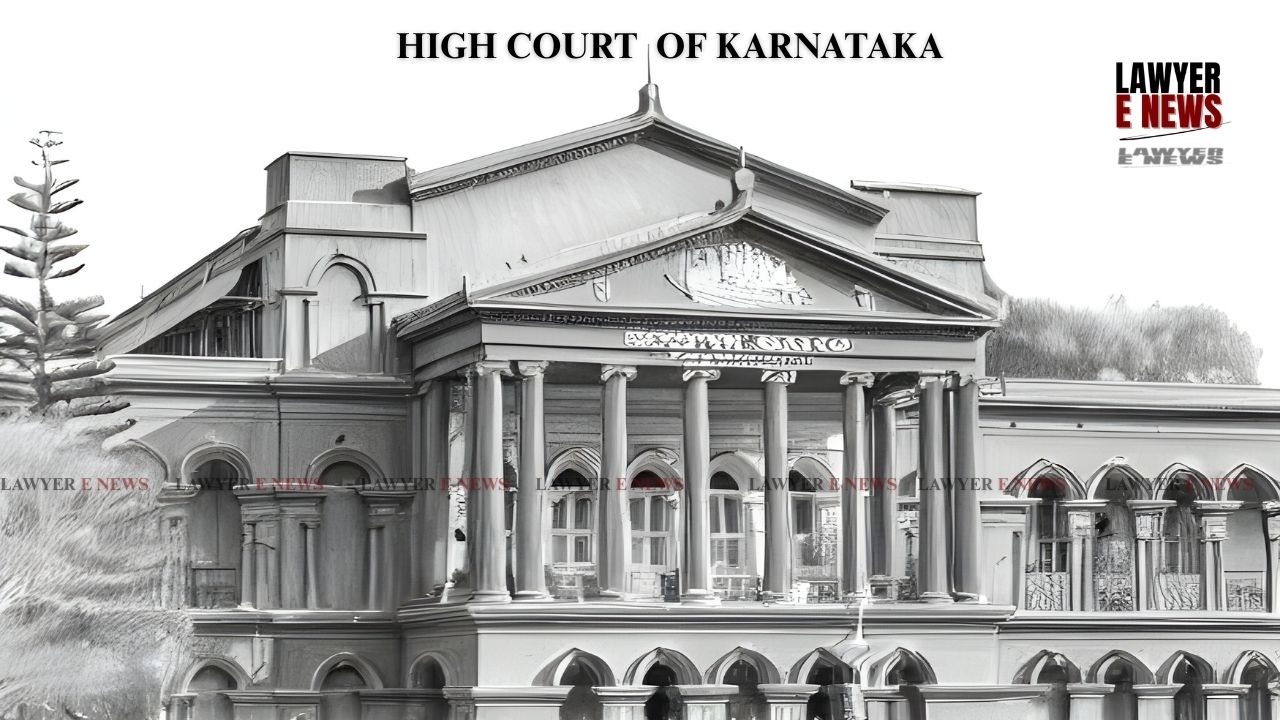
"Usage of the word ‘him’ would indicate that such evidence is required insofar as the officer who is proposed to be suspended and not the event itself," Karnataka High Court, in a significant ruling, held that the suspension of a government servant under Rule 10(1)(d) of the Karnataka Civil Services (CCA) Rules, 1957, requires specific prima facie evidence of gross dereliction of duty against the individual officer. A bench of Justice Suraj Govindaraj and Dr. Justice K. Manmadha Rao observed that the mere occurrence of a tragic event, such as the collapse of a wall, cannot be attributed to an officer as gross dereliction without specific evidence connecting the person to the lapse.
The petitioner, an Executive Engineer in the Health and Family Welfare Department, was placed under suspension following the collapse of a compound wall at a site under his jurisdiction. He challenged this suspension before the Karnataka State Administrative Tribunal (KSAT), which refused to grant an interim stay on the ground that an investigation by an enquiry committee was currently in progress. Aggrieved by the Tribunal's refusal to intervene, the petitioner approached the High Court.
The primary question before the court was whether the event of a wall collapse, by itself, constitutes "prima facie evidence of gross dereliction" against the petitioner as required under Rule 10(1)(d) of the CCA Rules. The court was also called upon to determine whether a suspension order could be passed before the technical committee, appointed to investigate the incident, had submitted its findings.
Statutory Requirements For Suspension Under CCA Rules
The court closely examined the language of clause (d) of sub-rule (1) of Rule 10 of the Karnataka Civil Services (Classification, Control and Appeal) Rules, 1957. It noted that for an officer to be suspended under this specific provision, there must be "prima facie evidence of gross dereliction of duty" against the individual. The petitioner’s counsel, relying on the Supreme Court's decision in State of Haryana vs. Dinesh Singh, argued that these requirements must be strictly satisfied.
The bench emphasized that the disciplinary authority must record prima facie evidence specifically against the officer in question. The court found that the suspension order dated May 1, 2026, failed to record such specific evidence, making the exercise of power under the CCA Rules legally untenable at that stage.
"Evidence Must Be Against The Officer, Not The Event"
Court Distinguishes Between Tragic Incidents And Individual Dereliction
In a crucial observation regarding the interpretation of disciplinary rules, the High Court highlighted the distinction between the occurrence of a tragedy and the personal liability of an officer. The bench noted that while the falling of a compound wall is a tragic event, it does not automatically translate into evidence of misconduct by the Executive Engineer in charge.
The court observed that the usage of the word "him" in Rule 10(1)(d) is of paramount importance. It signifies that the evidence collected must point directly toward the officer proposed to be suspended. Without such a link, the suspension lacks the necessary legal foundation required by the statute.
"The event of the falling of the compound wall by itself does not create any prima facie evidence of gross dereliction against the petitioner, but it is only the evidence of falling of the compound wall."
Suspension Cannot Precede Investigative Findings
Premature Action Without Technical Reports
The court took note of the fact that the Public Works Department had already constituted two committees—one for local investigation and another to technically examine the collapse. These committees were expected to submit their reports within seven days. The bench held that until these reports were on record and specifically implicated the petitioner, the power of suspension could not be exercised.
The judges reasoned that disciplinary proceedings could only be "contemplated" in the true sense after the committee reports provided a basis for such action. Exercising the power of suspension without waiting for the findings of the specialized committees was deemed an action taken without proper application of mind.
"It is for the committees to submit their report, indicating if there is a gross dereliction of duty by the Petitioner and if that be so, the respondents would be free to exercise their powers."
The High Court concluded that the Tribunal erred in refusing to stay the suspension while the investigation was still at a nascent stage. It clarified that while the State has the liberty to initiate action after receiving the inquiry report, an officer cannot be kept under suspension in the interim without any prima facie material on record. The court set aside the orders of both the KSAT and the Department of Health and Family Welfare Services.
Date of Decision: 21 May 2026