-
by sayum
25 August 2026 11:12 PM







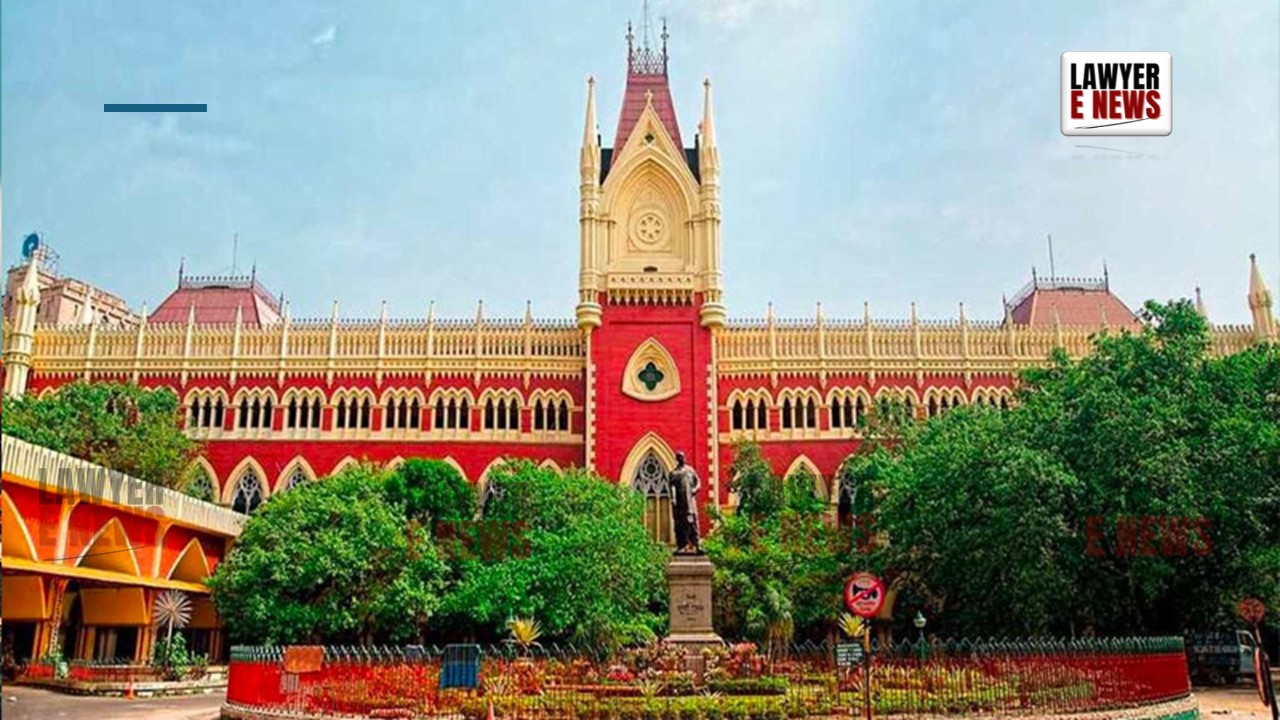
“Once the Supreme Court has declared a property to be non-Thika and recognized ownership, the municipal authority must reflect that in its records – no further inquiry survives” - In a strong affirmation of the binding nature of Supreme Court judgments, the Calcutta High Court held that Kolkata Municipal Corporation (KMC) must restore the mutation entry of a commercial property in the name of Mani Square Ltd., and delete the “T” prefix designating it as Thika land, as the Thika tenancy status had been conclusively quashed by the Apex Court in Nemai Chandra Kumar (Deceased) through LRs v. Mani Square Ltd., 2022 SCC OnLine SC 920.
In a detailed judgment rendered in a writ petition filed under Article 226 of the Constitution, Justice Gaurang Kanth held that once the ownership and classification of the property had been finally decided by the Supreme Court, municipal authorities could not claim incapacity to act or await civil suits on adverse possession to decide mutation status.
“The Supreme Court has, in effect, recognized the Petitioner as the owner of the property... The Respondent Corporation is duty-bound to rectify its records by reinstating the Petitioner’s name as the sole owner... and by deleting the erroneous prefix ‘T’ to restore its correct classification as a non-Thika property.” [Para 17]
“Municipal Records Must Speak the Language of the Supreme Court” – Mutation Ordered Despite Ongoing Civil Suits
The property in question — Holding No. 195, Picnic Garden Road, Kolkata — was leased in 1973 by its original owner to M/s Kumar Industries, a lease that expired in 1993. Following this, the lessees sought to claim Thika tenancy, and the Thika Controller allowed their claim in 2010. But this was reversed by the High Court in 2014, and finally, the Supreme Court in 2022 held conclusively that the property is not Thika land.
Despite this, the KMC failed to restore the name of Mani Square Ltd., which had purchased the property in 2007 and was granted mutation before it was reversed based on the Thika Controller's now-quashed order.
Justice Kanth directed: “The Respondent Corporation is directed to restore and record the mutation in respect of the premises... in the name of the Petitioner as the lawful owner in the municipal records.” [Para 36(2)]
“Pending Civil Suits Don’t Override Supreme Court Verdict” – Possessory Rights Not Equivalent to Title
Private respondents, the successors of the erstwhile lessees, argued that they had acquired title by adverse possession after the lease expired. They cited the pendency of a civil suit (T.S. (Comm) 04 of 2025) filed by them, and sought to block mutation until its outcome.
The Court rejected this contention, noting that while adverse possession claims may be adjudicated separately, they cannot derail the implementation of a final and binding Supreme Court judgment.
“Until such time, the mutation in favour of the Petitioner must remain operative, reflecting the ownership recognized by the Supreme Court.” [Para 34]
The Court clarified that KMC must act on the present legal status, and any change pursuant to a civil court decree can be effected later.
“Municipal Corporation Cannot Play Civil Court” – Title Already Recognized, No Scope for Re-evaluation
The KMC argued that it had no jurisdiction to adjudicate title and that the matter was sub judice. But the Court held that this argument collapses when the highest court has already decided the issue.
“In the present case, the Supreme Court has effectively recognized the Petitioner as the owner... Therefore, as the lawful owner, the Petitioner bears the primary liability for property tax, and the municipal records must accurately reflect this legal position.” [Para 32]
The original mutation in favour of Mani Square Ltd. was granted in 2008, but was reversed after the Thika Controller’s 2010 order, which has now been declared illegal. The Court noted that such reversal was done without notice and violated natural justice.
“Availability of Statutory Remedy No Bar When Supreme Court Order is Ignored” – Article 226 Jurisdiction Invoked
While the private respondents challenged the maintainability of the writ petition, arguing that KMC Taxation Rules, 1987 provided a statutory remedy, the Court held that when an authority refuses to act on a final judgment, a writ is fully maintainable:
“Given the Supreme Court’s determination... it is appropriate for this Court to intervene and decide the matter to prevent further prejudice and ensure compliance with law.” [Para 35]
Final Directions of the Court – Municipal Records Must Reflect Legal Reality, Not Procedural Paralysis
Justice Gaurang Kanth allowed the writ petition and issued the following directions:
“1. The premises... shall be identified and recorded as a non-Thika property in the Municipal records...
Date of Decision: 06.11.2025