-
by sayum
28 July 2026 1:44 PM







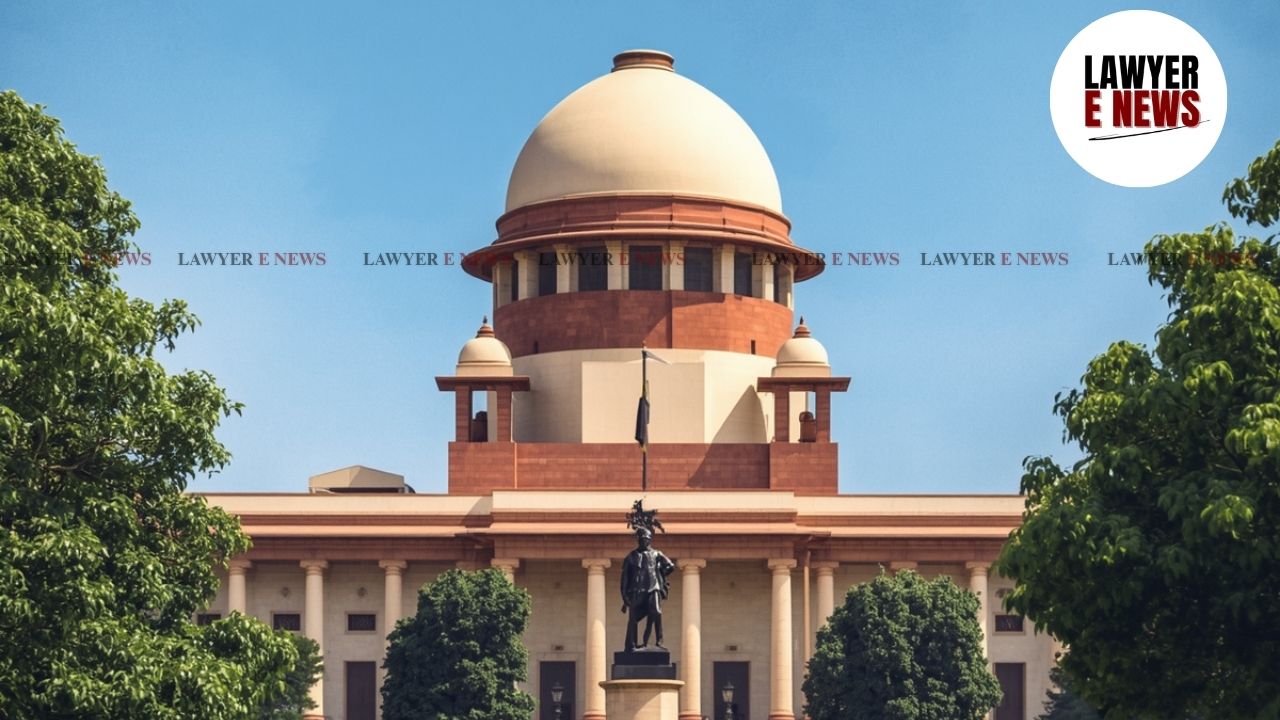
"To compel the parties to remain bound in a marriage that exists only on paper would serve no legitimate purpose. We are, therefore, satisfied that this is an appropriate case for the exercise of jurisdiction under Article 142 of the Constitution of India," Supreme Court, in a notable judgment delivered on May 27, 2026, has exercised its plenary powers under Article 142 of the Constitution of India to dissolve a marriage on the grounds of irretrievable breakdown.
A bench comprising Justice Vikram Nath and Justice Sandeep Mehta observed that when matrimonial ties have been severed in every meaningful sense and the parties have lived separately for several years, maintaining the legal bond serves no purpose. The Court proceeded to grant a decree of divorce notwithstanding the wife’s opposition to the same.
The appellant-husband, an Indian Army officer, and the respondent-wife, a qualified doctor, were married in April 2017 but separated shortly thereafter due to marital discord. Following the separation, the parties engaged in extensive litigation, including proceedings under the Army Act, the Domestic Violence Act, and Section 125 of the CrPC. Although a settlement was reached in 2019 for divorce by mutual consent, the respondent-wife subsequently withdrew her consent after receiving partial alimony, leading to the dismissal of the divorce petition by the Family Court and the High Court of Allahabad.
The primary question before the Court was whether it should exercise its jurisdiction under Article 142 to dissolve the marriage on the ground of irretrievable breakdown despite the wife's refusal to grant consent. The Court was also required to determine the fair and just amount of permanent alimony that would constitute a final settlement of all past and future claims between the parties.
Court Notes Irretrievable Breakdown Of Matrimonial Ties
The Court observed that the parties had been living separately for over eight years and that the record demonstrated long-standing acrimony. It noted that the multiplicity of civil and criminal proceedings initiated by both sides indicated that the relationship had reached a point of no return.
The bench emphasized that the ties of matrimony had long since been severed in every meaningful sense. It held that in such circumstances, forcing the parties to remain legally wedded when the marriage exists only on paper would be an exercise in futility.
Wife's Opposition To Decree Not An Absolute Bar
The respondent-wife appeared before the Court and expressed her desire for a divorce only through a contested petition on the grounds of adultery, rather than a decree under Article 142. She argued that the husband should not be allowed to take advantage of his own wrongs.
However, the Court noted that even if the wife intended to pursue a contested petition, the reality remained that there was no scope for reconciliation. The bench observed that continuing the litigation would only prolong the agony of both parties without any possibility of reviving the marriage.
"We are, therefore, satisfied that this is an appropriate case for the exercise of jurisdiction under Article 142 of the Constitution of India."
Determination Of Just And Adequate Permanent Alimony
Regarding the financial settlement, the Court took into account the earning capacity of both parties, their respective standards of living, the duration of the marriage, and the years of separation. While the parties had originally agreed on a sum of Rs. 32 Lakhs during mediation, the Court found it necessary to fix a more comprehensive sum to ensure the wife's financial security.
The bench determined that a sum of Rs. 50,00,000/- (Rupees Fifty Lakhs only) would be a fair and adequate amount for permanent alimony. The Court clarified that this would be a one-time, full, and final settlement of all claims, past and future, arising from the marriage.
"Such a determination is necessary to bring genuine finality to the litigation and to ensure that neither party is left with any residual claim against the other."
Closure Of All Pending Proceedings
To ensure complete justice, the Court directed the closure of all pending cases between the parties. This included a complaint under the DV Act pending before the Court of Judicial Magistrate, Noida, and maintenance proceedings under Section 125 and Section 128 of the CrPC.
The Court also ordered the disposal of contempt petitions pending in relation to the original divorce proceedings. The Registry was directed to communicate this order to the respective Courts for passing formal orders of closure, ensuring that no further steps would be taken in any of the listed litigations.
The Supreme Court allowed the appeal and dissolved the marriage subject to the payment of the enhanced alimony. The husband was directed to pay the sum of Rs. 50 Lakhs in two equal instalments of Rs. 25 Lakhs each, with the final payment due by September 15, 2026. The Court concluded that this exercise of power was essential to bring an end to a dead marriage and provide both parties the opportunity to move forward.
Date of Decision: May 27, 2026