-
by sayum
04 August 2026 10:20 AM







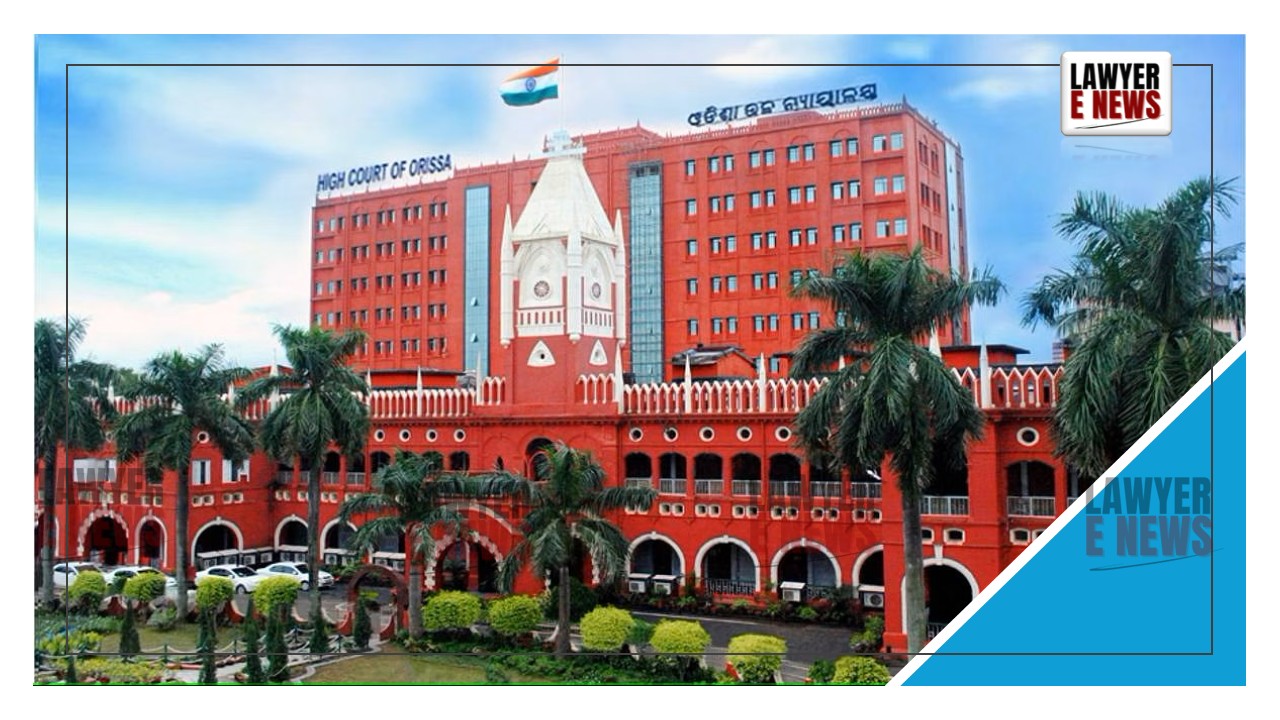
Even If Affidavit Is Missing, Triable Allegations Cannot Be Thrown Out—Petition Must Be Tried on Merits - Orissa High Court declined to reject an election petition filed against sitting MLA Tankadhar Tripathy, holding that the allegations raised—including suppression of criminal antecedents, non-disclosure of assets, and election irregularities—constituted serious and triable issues that deserved to be tested through evidence.
Justice Sashikanta Mishra, rejecting the objections raised under Order VII Rule 11 and Order VI Rule 16 CPC, observed: “The pleadings disclose material facts all of which are triable issues and therefore constitute valid cause of action. The contentions raised by the sole respondent are bereft of merit.”
“Where There Is Substantial Compliance, Technical Imperfection Does Not Defeat Substantive Justice”
A key objection raised by the respondent MLA was the alleged failure of the petitioner to file an affidavit in Form 25 as required under Section 83(1)(c) of the Representation of People Act, 1951, in support of the allegations of corrupt practice. It was urged that this omission was fatal to the petition.
The Court, however, held that the defect was curable and could not lead to dismissal of the petition at the threshold. It relied on Supreme Court rulings including Thangjam Arun Kumar v. Yumkham Erabot Singh and A. Manju v. Prajwal Revanna, and clarified: “The requirement of filing an affidavit under Section 83(1)(c) is not mandatory in nature. If there is substantial compliance, the defect is curable. The petitioner can be granted an opportunity to file the affidavit.”
Granting three weeks to file the requisite affidavit, the Court made it clear that such procedural irregularities do not override the right to trial when allegations are serious.
“Non-Disclosure of Criminal Cases, Financial Details Are Matters of Substance—They Affect Informed Electoral Choice”
The petition accused the respondent of concealing four pending criminal cases, and understating assets and liabilities in the mandatory Form 26 affidavit. The MLA argued that these claims lacked material particulars and had no bearing on the election result.
Rejecting this, the Court observed: “The concealment of criminal antecedents and assets not only constitutes undue influence but also interferes with the right of the electorate to make an informed choice.”
Citing Krishnamoorthy v. Sivakumar and Resurgence India v. Election Commission, the Court underscored the constitutional principle that transparency in a candidate’s profile is essential to free and fair elections.
“Every Procedural Allegation Relating to Nomination, Counting and EVMs Is Supported by Concrete Detail—Petition Cannot Be Brushed Aside as Vague”
The petition had also raised objections to the acceptance of nomination, non-supply of Form 17(C) at 43 polling stations, mismatch in EVM serial numbers, rejection of valid postal ballots, and favourable treatment to another candidate’s faulty affidavit.
The respondent argued that these were vague, lacked evidence, and pertained to others not made party to the petition.
The Court decisively found otherwise: “The allegations are supported by specific polling station numbers, document references, and numerical data. These are clearly triable issues which cannot be dismissed as vague.”
On the question of non-joinder of candidate Amita Biswal, whose nomination affidavit was also challenged, the Court clarified: “No relief is claimed against her, and no corrupt practice is alleged. Therefore, she is not a necessary party under Section 82 of the Act.”
“Copy of Election Petition Must Be a True Copy—But Insignificant Omissions Do Not Invalidate the Petition”
The respondent had also objected that the certified copy of the petition served upon him was defective, as it did not bear the seal and signature of the Oath Commissioner on every page, thereby violating Section 81(3) of the Act.
The Court dismissed this technical objection, citing T.M. Jacob v. C. Poulose, holding that: “The true copy need not be an exact facsimile. What is required is substantial identity, not mechanical perfection. Minor technical irregularities which do not cause prejudice are not fatal.”
When Allegations Are Serious, Election Petition Must Be Heard—Court Cannot Shut the Door on Trial
Summing up, the Orissa High Court refused to accept the plea that the petition was barred by procedural lapses, emphasizing that courts must adopt a liberal approach in matters of electoral transparency and voter rights.
Justice Sashikanta Mishra concluded: “This Court is satisfied that the allegations in the petition constitute triable issues and cannot be brushed aside as vague or non-specific. The petition must proceed to trial.”
This ruling affirms that technicalities cannot be allowed to override substantive allegations in election disputes, especially when those involve transparency, misrepresentation, and possible violation of voters’ trust. The Orissa High Court’s verdict reiterates that procedural perfection is not the gatekeeper of electoral justice—substance is.
In the Court’s own words: “What is at stake is not just a seat, but the integrity of the electoral process. When that is questioned with sufficient material, courts must hear, not shut out.”
Date of Decision: 21 March 2025