-
by sayum
28 August 2026 10:07 AM







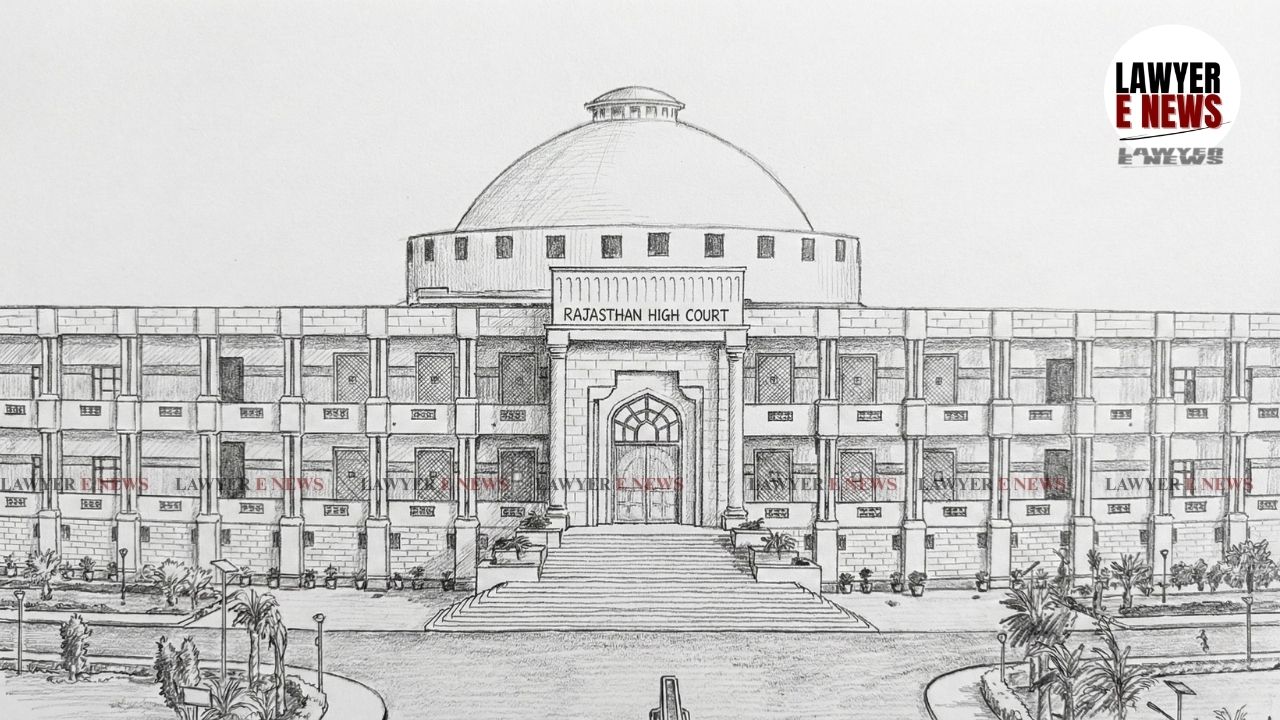
"A superior Police Officer has the authority to direct further investigation in the matter, if any evidence is available on the record, prior to the stage of submission of charge-sheet against the accused person, " Rajasthan High Court, in a significant ruling dated May 25, 2026, held that superior police officers, including the Superintendent of Police (SP), are legally competent to order further investigation before a police report is submitted to the Magistrate.
A bench of Justice Anoop Kumar Dhand observed that under Section 36 of the CrPC, superior officers are conferred with the same powers as the officer-in-charge of a police station, allowing them to supervise investigations to ensure integrity and quality.
The case arose from an FIR registered at Police Station Malakhera, Alwar, under Sections 498A and 304B of the IPC following the unnatural death of a woman named Rihana. While initial statements of twelve witnesses did not implicate the petitioner, Taimoor, the Superintendent of Police (SP), Alwar, found the initial investigation unsatisfactory and directed the Additional SP to conduct further investigation. The petitioner challenged these proceedings, arguing that the SP lacked the authority to order further investigation and that the police were conducting a "re-investigation" under the garb of further investigation.
The primary question before the court was whether the Superintendent of Police can issue an order for conducting further investigation prior to the submission of a report under Section 173 CrPC before the concerned Court. The court also examined the scope of Section 36 of the CrPC regarding the powers of superior police officers in supervising criminal probes.
Fair Investigation Is A Facet Of Article 21
The Court began by emphasizing that the right to a fair investigation is a fundamental right enshrined under the Constitution of India. It noted that fairness in action must be mandatorily followed in every criminal investigation.
The bench observed that free and fair investigation and trial are enshrined in Articles 14, 21, and 39-A of the Constitution. "The right to a fair investigation is not only a constitutional right but also a natural right as well," the Court remarked, adding that any procedure obstructing a fair trial violates the basic features of the Constitution.
Superior Officers Empowered Under Section 36 CrPC
The Court delved into the statutory framework of Chapter XII of the CrPC, specifically focusing on Section 36, which deals with the powers of superior police officers.
"The legislative intendment of Section 36 of CrPC is that all the superior rank police officers above SHO including the Superintendent of Police should involve in supervising the investigation to ensure the integrity and quality."
The bench clarified that superior officers exercise the same powers throughout their local area as an officer-in-charge exercises within their station. Therefore, it is permissible for any superior officer to take over or direct the investigation to ensure that the probe is conducted in an impartial manner.
Court Permission Not Needed Before Charge-sheet Submission
The petitioner had argued that the power to order further investigation lies only with the concerned Courts. However, the High Court rejected this contention, distinguishing between the stages of investigation.
The Court held that while a Magistrate's permission might be required after a charge-sheet is filed, a superior officer has the inherent authority to direct further investigation if the original charge-sheet has not yet been submitted to the Court.
"A Superior Officer had the authority to direct for further investigation and permission for conducting further investigation is not required to be obtained from the Court, if the original charge-sheet is not submitted."
Validity of SP Alwar's Order
Applying these principles to the facts, the Court found that the SP Alwar had passed the order for further investigation on February 21, 2019, which was well before the charge-sheet was submitted against the other co-accused persons on April 10, 2019.
The Court noted that the SP found the earlier investigation "unsatisfactory" and acted within his jurisdiction to ensure a prima facie case was properly examined. Since the investigation against the petitioner was still pending under Section 173(8) CrPC, the Court found no illegality in the SP’s directions.
The High Court concluded that there was no merit in the petition to quash the proceedings. It dismissed the misc. petition but granted the petitioner liberty to submit a representation before the investigating authorities for a fair probe. The Court reiterated that the power of investigation is vested in the police, and superior officers must supervise it to uphold the Rule of Law.
Date of Decision: 25 May 2026