-
by sayum
04 August 2026 9:39 AM







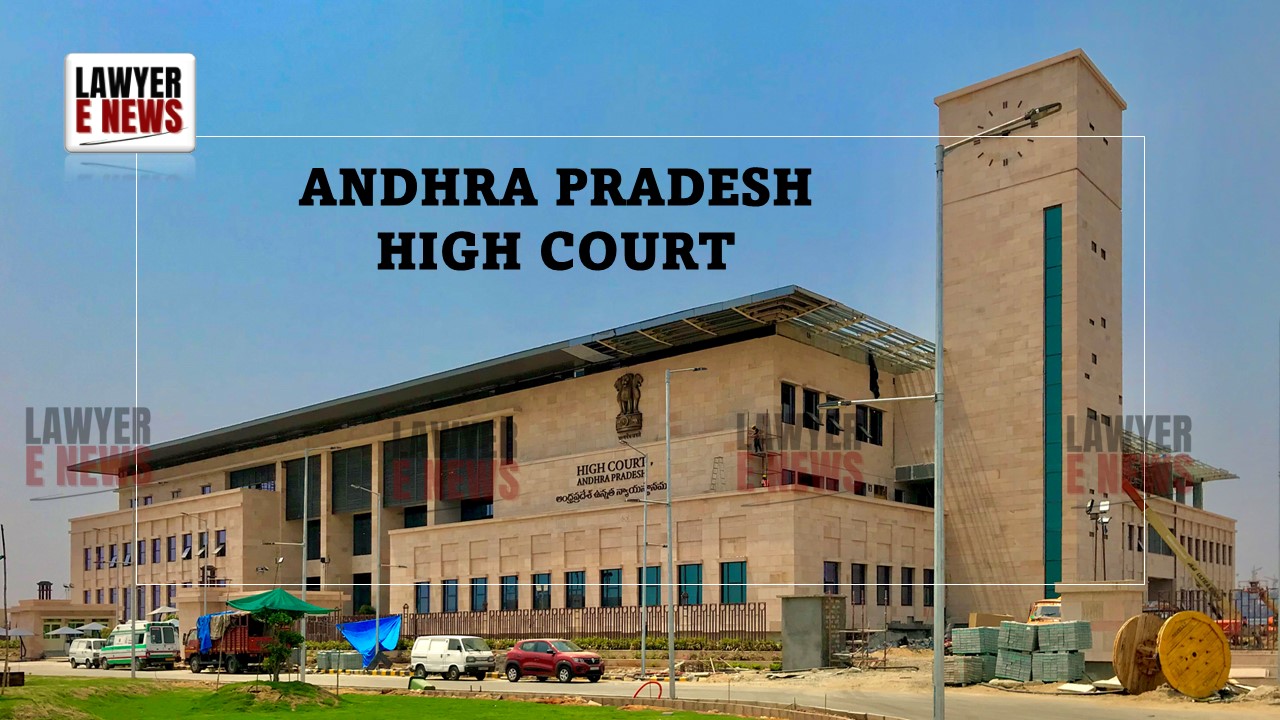
“Specific performance being an equitable remedy, cannot be granted to a party who suppresses material facts and comes to court with unclean hands” – Andhra Pradesh High Court at Amaravati, comprising Justice Ninala Jayasurya and Justice Sumathi Jagadam, set aside a Trial Court’s decree for specific performance of a sale agreement. The Court held that the failure to seek a declaratory relief against a termination notice rendered the specific performance suit not maintainable in law. The ruling reinforced the principle that a party seeking equitable relief must approach the court with full disclosure and clean hands.
The case stemmed from a property dispute over 6.03 acres of land situated in Nellore, for which an Agreement of Sale dated 24.07.2003 was executed between the appellant Iska Vijaya Kumar Reddy and respondent N. Vijaya Krishna, for a total sale consideration of ₹91,65,600. An advance of ₹30,00,000 was paid, and further payments totaling ₹49,00,000 were allegedly made via demand drafts.
However, following a breakdown in further payment and alleged delay, the vendor issued a termination notice on 16.04.2004. Despite this, the buyer filed O.S. No. 37 of 2004 seeking specific performance, without challenging the validity of the termination notice. The vendor, in turn, filed O.S. No. 62 of 2006 seeking permanent injunction against interference.
The key issue before the High Court was whether a suit for specific performance of an agreement of sale is maintainable when the contract has been terminated, and no declaratory relief is sought to invalidate the termination.
The Court firmly answered in the negative, stating: “In the absence of such prayer by the plaintiff, the original suit filed by him before the Trial Court for grant of decree for specific performance in respect of the suit schedule property on the basis of agreement of sale and consequential relief of decree for permanent injunction is not maintainable in law.”
The Bench relied on the Supreme Court ruling in I.S. Sikandar (Dead) by LRs v. K. Subramani (2013) 15 SCC 27, which held that a plaintiff must first challenge the cancellation of the contract to sustain a suit for specific performance.
The Court also observed that the plaintiff deliberately suppressed the receipt of the termination notice and projected a false version in pleadings, noting: “The plaintiff feigned ignorance... in the cross-examination it was elicited that the notice was served... yet, this was not disclosed in the plaint, amounting to suppression of material facts.”
The Bench stressed that specific performance is a discretionary remedy, not a matter of right, and held: “Specific performance being equitable relief, must be refused where the party has approached the Court with false pleadings and unclean hands.”
The Court overruled the Trial Court’s finding that time was not the essence of the contract, and that the contract termination was invalid. It ruled: “The learned Trial Court, without examining these aspects in the correct perspective, let alone by framing an appropriate issue, granted the relief of Specific Performance and the same is not sustainable.”
On the issue of readiness and willingness, the Court found that mere assertions without documentary support were insufficient: “The plaintiff merely stated in the affidavit that he is ready and willing, but failed to substantiate with proof of financial capacity to pay the remaining ₹12,65,000.”
Additionally, it held that the Agreement of Sale was not binding on co-owners (D2 to D5), including the vendor’s mother and sons, since they had not signed the agreement and had a legitimate share in the ancestral property.
The Andhra Pradesh High Court has decisively held that specific performance cannot be granted when the agreement has been terminated and such termination is not challenged. The ruling reinforces the dual necessity of procedural rigor and equitable conduct in suits invoking Specific Relief.
As the Bench concluded: “The conduct of the plaintiff disentitles him from securing the relief of Specific Performance… A person who comes to court with a false plea is not entitled to equitable relief.”
Date of Decision: 10th April, 2025