-
by sayum
28 August 2026 12:24 PM








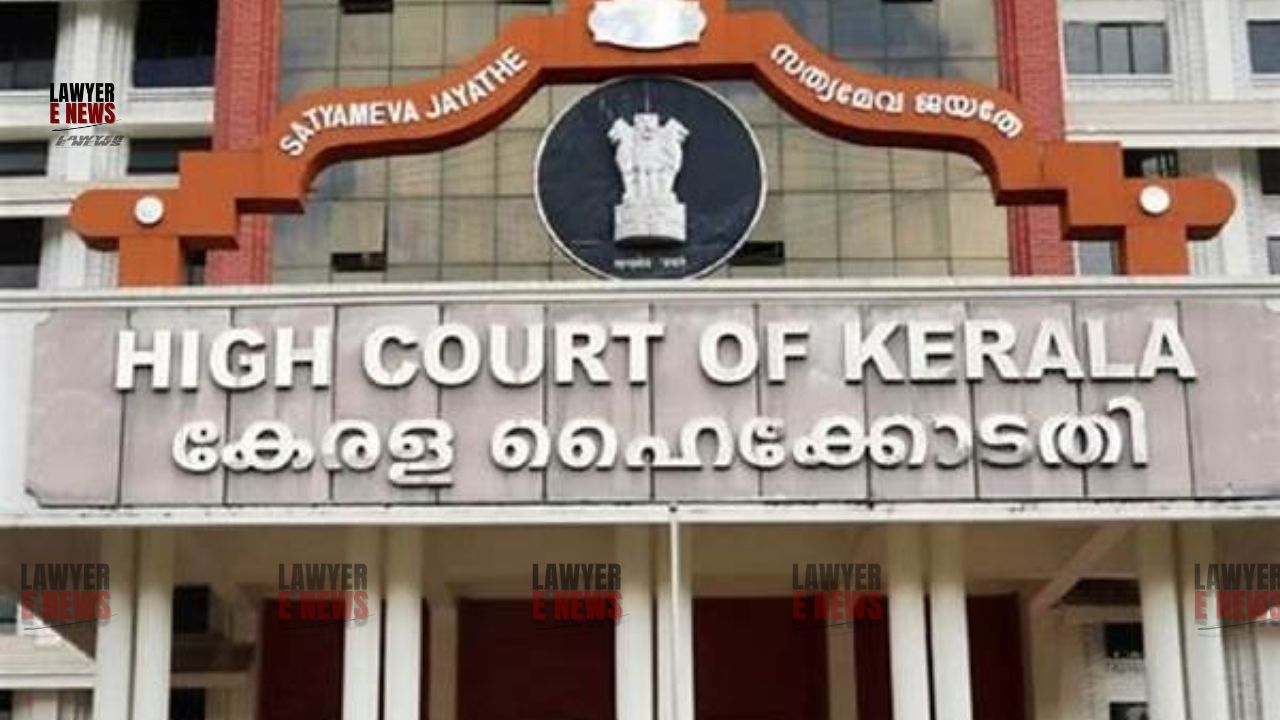
"A nominee is only ‘the hand to receive’ on behalf of all the heirs entitled to the assets under the law of succession and that nomination with the Society does not affect the right of the legal heirs," Kerala High Court, in a significant ruling, held that a suit for partition involving multiple properties situated within the jurisdiction of different courts can be instituted in any court within whose local limits any portion of the property is situated.
A bench of Justice Sathish Ninan and Justice P. Krishna Kumar observed that Section 17 of the CPC engrafts an exception to the general rule in Section 16, allowing for a consolidated trial to avoid multiplicity of proceedings. The Court further reiterated that a nominee in a co-operative society does not become the absolute owner of the property but merely holds it as a trustee for all legal heirs.
The case arose from a preliminary decree for partition passed by the Sub Court, Chavakkad, involving various properties, including a residential flat in Mumbai. The appellant, who was the second defendant, challenged the decree primarily on the grounds of territorial jurisdiction and his status as a nominee for the Mumbai property. The plaintiffs, being the legal heirs of late Rajendran (one of the six children of the original owner), sought their 1/6th share in the estate.
The primary questions before the court were whether the Chavakkad court had territorial jurisdiction to partition a property situated in Mumbai and whether a nomination made in favor of one heir excludes other legal heirs from claiming a share in the property. The court was also called upon to determine if a dispute between legal heirs regarding the title to a member's assets constitutes a "dispute" under the Co-operative Societies Act.
Court Explains Interplay Between Sections 16 and 17 of the CPC
The Court noted that while Section 16(b) of the CPC generally requires a suit for partition to be filed where the immovable property is situated, Section 17 provides an essential exception. The bench observed that the word ‘property’ in Section 17, when read with the General Clauses Act, includes the plural ‘properties’.
The bench held that a suit in respect of immovable properties situated in the jurisdiction of different courts may be instituted in any court within whose local limits any portion of the property is situated. The Court emphasized that the mere existence of one item or even a portion of any of the items within the territorial limits is sufficient to confer jurisdiction on the court for the entire suit.
"The mere existence of one item out of several items of properties or even a portion of any of the items, within the territorial limits, would be sufficient to confer jurisdiction on the Court."
Objection To Territorial Jurisdiction Cannot Be Raised For The First Time In Appeal
Regarding the appellant's challenge to the trial court's jurisdiction, the High Court pointed out that Section 21(1) of the CPC prohibits such contentions from being raised for the first time before the Appellate Court. The judges noted that any such objection must be raised in the court of first instance at the earliest possible opportunity.
The Court further clarified that under Section 99 of the CPC, a decree cannot be reversed in appeal due to errors or irregularities that do not affect the merits of the case or the jurisdiction of the court. It was held that the term "jurisdiction" in Section 99 does not include territorial jurisdiction, which is considered a technicality if not raised timely.
Nominee Is Merely A "Hand To Receive" Assets On Behalf Of All Heirs
The appellant contended that since the original owner had nominated him in the Co-operative Society, he had become the absolute owner of the Mumbai flat. The Court squarely rejected this argument by relying on the Supreme Court precedent in Indrani Wahi v. Registrar of Coop. Societies and others.
The bench reiterated that a nominee is only the ‘hand to receive’ the assets on behalf of all the heirs entitled to the succession. The Court held that the nomination does not affect the substantive rights of the legal heirs under the law of succession, and the property remains liable for partition among all eligible members of the family.
"A nominee is only ‘the hand to receive’ on behalf of all the heirs entitled to the assets under the law of succession and that nomination with the Society does not affect the right of the legal heirs."
Title Disputes Between Heirs Not Barred By Co-operative Societies Act
The appellant also argued that the suit was barred under Section 100 read with Section 69 of the Kerala Co-operative Societies Act, claiming the matter was a "dispute" that should be settled by an Arbitration Court. The High Court disagreed, stating that a "dispute" under the Act must touch upon the business, constitution, or management of the Society.
The Court observed that the current suit is one for partition between legal heirs regarding their inter se title to the assets of a deceased member. Such a dispute has nothing to do with the business of the Society and therefore falls within the jurisdiction of the Civil Court rather than the Co-operative Arbitration Court.
Equitable Allotment To Be Considered During Final Decree Proceedings
While dismissing the appeal against the preliminary decree, the Court took note of the appellant’s submission that he is a resident of Mumbai and has expended funds to maintain the apartment. The appellant sought an equitable allotment of the Mumbai flat to himself during the final division of properties.
The High Court left this plea of equity open, directing that it be considered by the trial court during the final decree proceedings. The bench noted that it had no reason to assume the trial court would not consider such valid equitable claims when passing the final orders for the physical division of the estate.
In conclusion, the High Court affirmed the preliminary decree for partition, holding that the trial court possessed the necessary jurisdiction and that the legal heirs were rightfully entitled to their respective shares regardless of the nomination. The appeal was dismissed without costs.
Date of Decision: 25 May 2026