-
by sayum
28 August 2026 10:07 AM







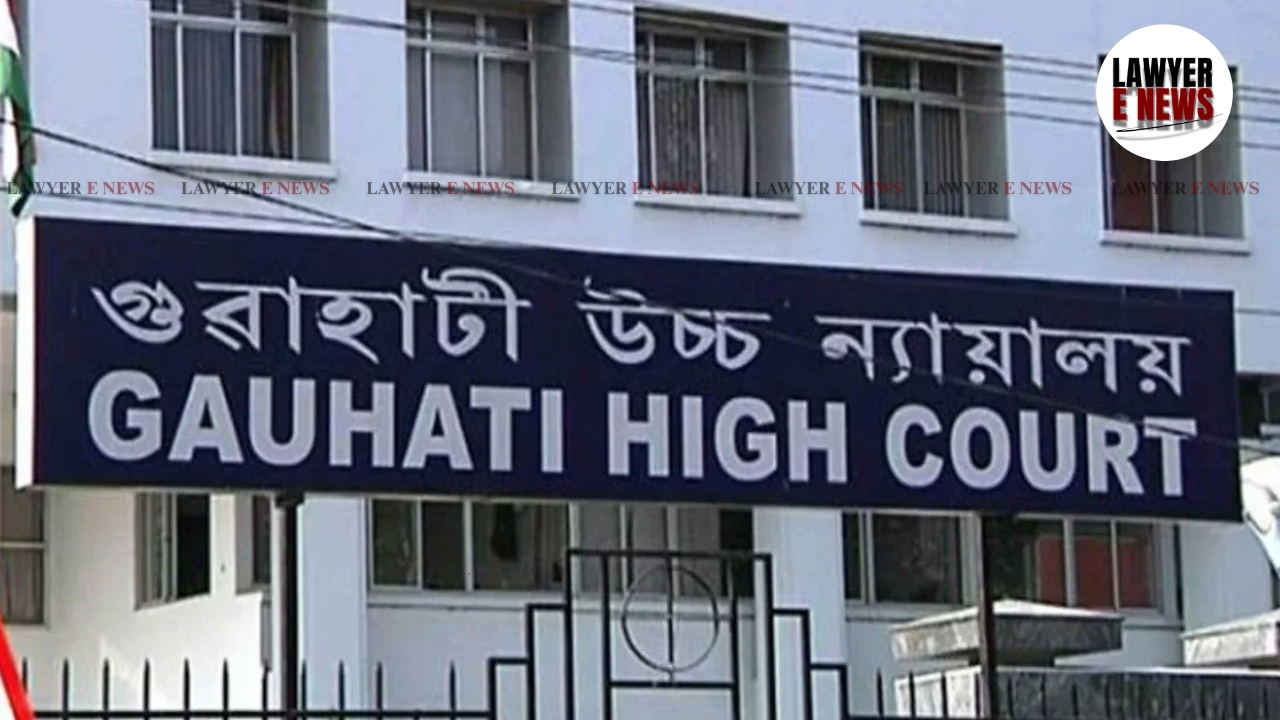
"If the possession is not at all handed over to the defendants, Section 34 does not bar a declaratory suit, and the question of seeking consequential of recovery of possession does not arise, while the plaintiff had prayed for the consequential relief of permanent injunction, " Gauhati High Court, in a significant judgment, has clarified that the proviso to Section 34 of the Specific Relief Act (SRA) does not bar a suit for a bare declaration of title if the plaintiff remains in actual possession of the suit property.
A Single Bench of Justice Robin Phukan observed that the requirement to seek the consequential relief of "recovery of possession" only arises when the plaintiff has been dispossessed, and in cases where possession was never handed over to the defendants, a suit for declaration coupled with a permanent injunction is maintainable.
The dispute originated from a land transaction where the plaintiff, late Deena Nath Baruah, agreed to sell 12 Bighas of land to the defendants. While the plaintiff intended to execute Sale Deeds upon receiving the full consideration, he later discovered that the defendants had fraudulently executed three Gift Deeds in their favour instead of Sale Deeds. The plaintiff alleged that the defendants took advantage of his simplicity and old age, representing themselves as his brothers to register the gift deeds without paying the remaining consideration of Rs. 41,000/-.
The plaintiff subsequently filed a suit for declaration of right, title, and interest, and for the cancellation of the alleged Gift Deeds. Both the Trial Court and the First Appellate Court ruled in favour of the plaintiff, prompting the defendants to approach the High Court in a Regular Second Appeal under Section 100 of the CPC.
The primary question before the court was whether the suit was maintainable in view of the proviso to Section 34 of the SRA, given that the plaintiff had not specifically prayed for the recovery of possession. The court also examined whether the courts below were justified in cancelling the deeds on the grounds of fraud and undue influence, and whether the burden of proof was correctly shifted to the defendants.
Maintainability Of Declaratory Suit Under Section 34 SRA
The Court addressed the appellants' contention that a mere declaratory decree without the consequential relief of recovery of possession is non-executable and barred by the proviso to Section 34 of the SRA. The bench noted that while the proviso bars a court from granting a bare declaration when the plaintiff is in a position to ask for further relief, this bar is conditional upon the plaintiff being out of possession.
The Court observed that in the present case, the evidence concurrently established that the plaintiff never handed over possession of the suit land to the defendants. The bench held that since the plaintiff was still in possession, the question of seeking "recovery of possession" as a consequential relief did not arise. The prayer for a permanent injunction was deemed sufficient consequential relief to satisfy the requirements of the Act.
"If the possession is not at all handed over to the defendants, Section 34 does not bar a declaratory suit, and the question of seeking consequential of recovery of possession does not arise."
New Pleas In Second Appeal Not Permissible
The High Court further observed that the challenge to the maintainability of the suit under Section 34 of the SRA was a new plea that was neither raised before the Trial Court nor the First Appellate Court. Relying on the precedent set in Panchugopal Barua vs. Umesh Chandra Goswami, the Court reiterated that a new plea cannot be raised in a second appeal for the first time.
"It is well settled that new plea cannot be raised in the second appeal for the first time."
Fraud and Shifting Burden of Proof
The Court then dealt with the issue of fraud and the burden of proof under the Indian Evidence Act. The appellants argued that since the deeds contained recitals stating they were executed in a sound state of mind, the lower courts erred in cancelling them. However, the High Court found that the plaintiff had specifically pleaded and proved that his signatures were obtained tactfully without allowing him to peruse the contents of the documents.
The bench held that once the plaintiff discharged the initial burden of proving that the transaction was tainted by fraud, the onus shifted to the defendants to prove that the execution was voluntary and the gift was accepted by the donee as per Section 122 of the Transfer of Property Act. The defendants, the Court noted, failed to discharge this liability.
"When the plaintiff herein has discharged the initial burden, then it shifts to the defendant, which the defendant/appellant herein, had failed to discharge."
Interference With Concurrent Findings Of Fact
Finally, the Court emphasized that under Section 100 CPC, the High Court should not interfere with the concurrent findings of fact arrived at by the courts below unless they are perverse or based on no evidence. Citing Hero Vinoth (minor) vs. Seshammal, the Court noted that an inference of fact from the recitals of a document is a question of fact, and since both lower courts found the Gift Deeds to be sham and fraudulent, no substantial question of law was involved.
"The nature of the fraud is apparent on the face of the record... the learned first appellate Court is fully justified in declaring the gift deed as invalid."
The High Court concluded that the intention of the plaintiff was clearly to sell the land and not to gift it, and the defendants' act of preparing Gift Deeds instead of Sale Deeds constituted a clear case of fraud. Finding no merit in the appeal, the Court dismissed the same and upheld the judgments of the lower courts.
Date of Decision: 26 May 2026